Skip to content

Forms and shapes

The shapes a tensile structure comes in.

Ten forms cover almost everything built in practice. Each one carries its load a different way, which decides where your columns land, where the water goes and what it costs.

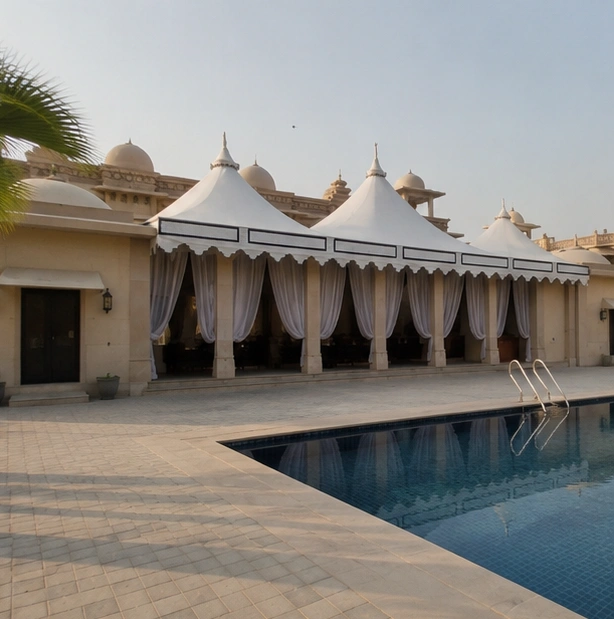
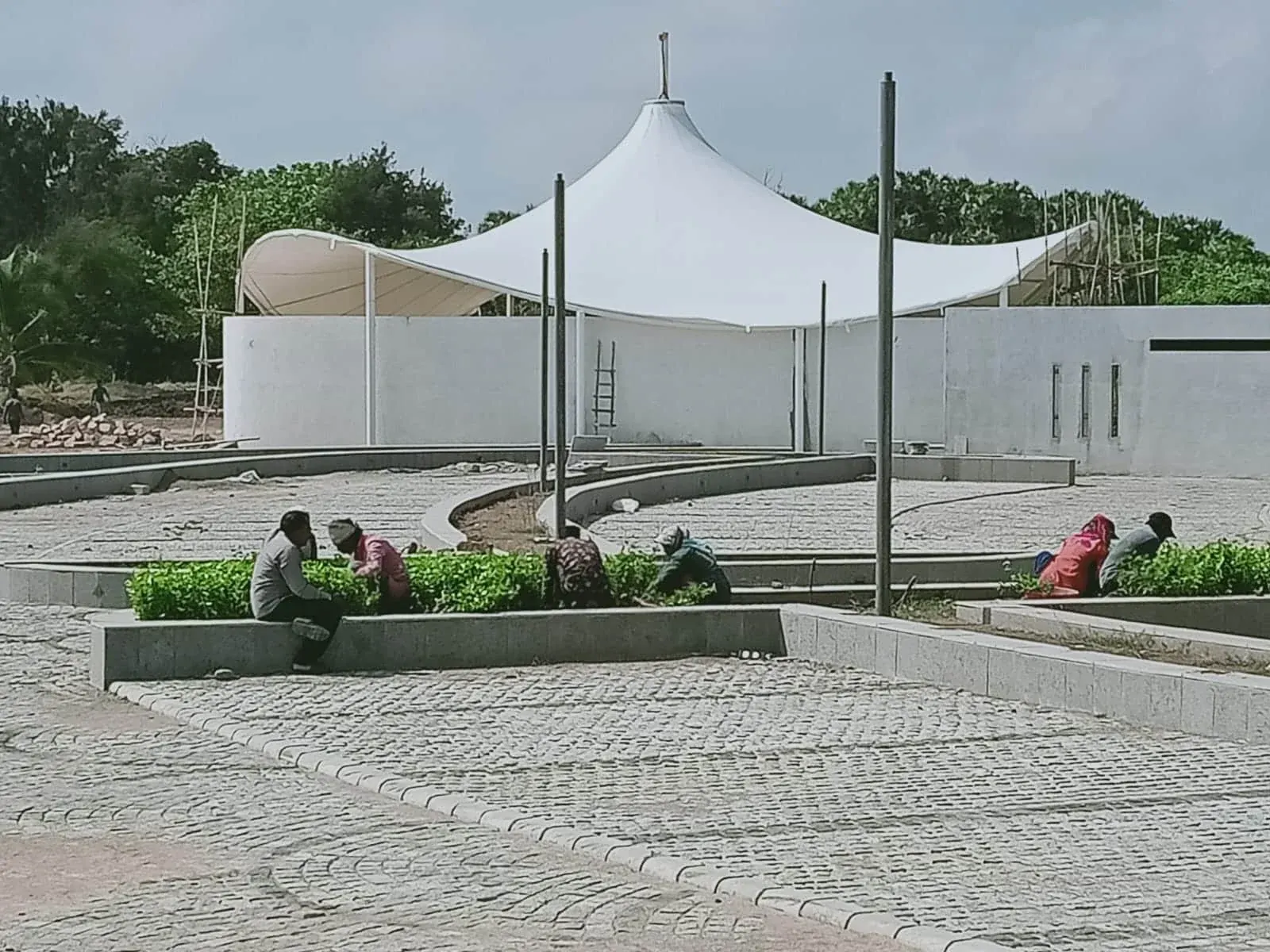
Conical membrane pavilion over a landscaped plazaConical Pavilion, Diu

In short

Reviewed October 2026

What shapes do tensile structures come in?

Ten forms cover almost everything built in practice: cantilever, conical, inverted umbrella, hypar (the saddle), barrel vault, ridge and valley, mast-supported, cable net, dome and free-standing pavilion. They differ in how the load reaches the ground, which decides where the columns and foundations go, how the water leaves, and what it costs. Most sites suit more than one, so the final choice is usually architectural — but the double curvature, the drainage falls and the foundation positions are not negotiable.

Forms in practice
Ten, and most sites suit several
What never changes
Double curvature and the falls
Usually decides cost
Foundations, not fabric
Price range
₹280–2,500 / sq ft + GST

Fabric has no stiffness of its own. Every one of these shapes is a different way of curving a surface two ways at once, so that pulling it tight is what makes it rigid.

01

Cantilever

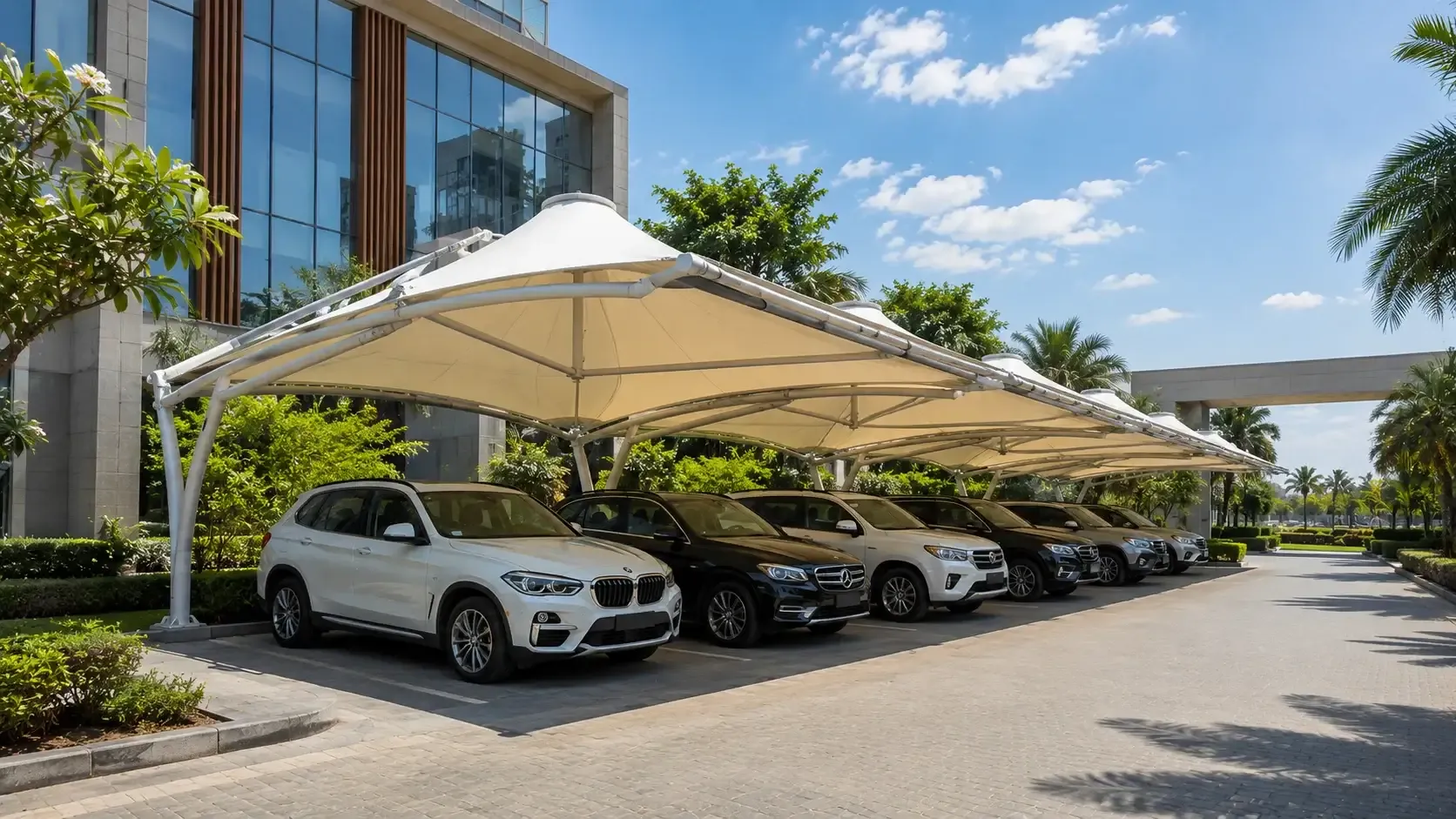
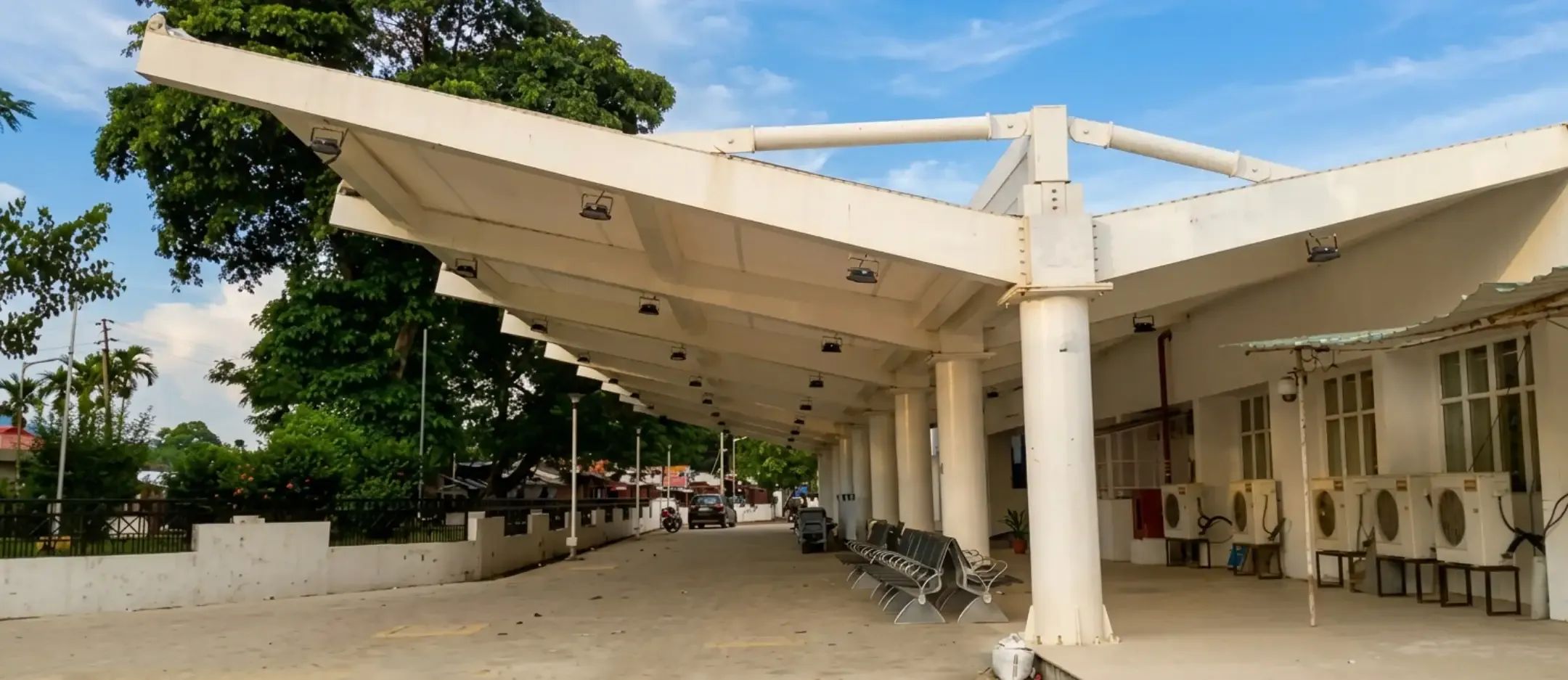
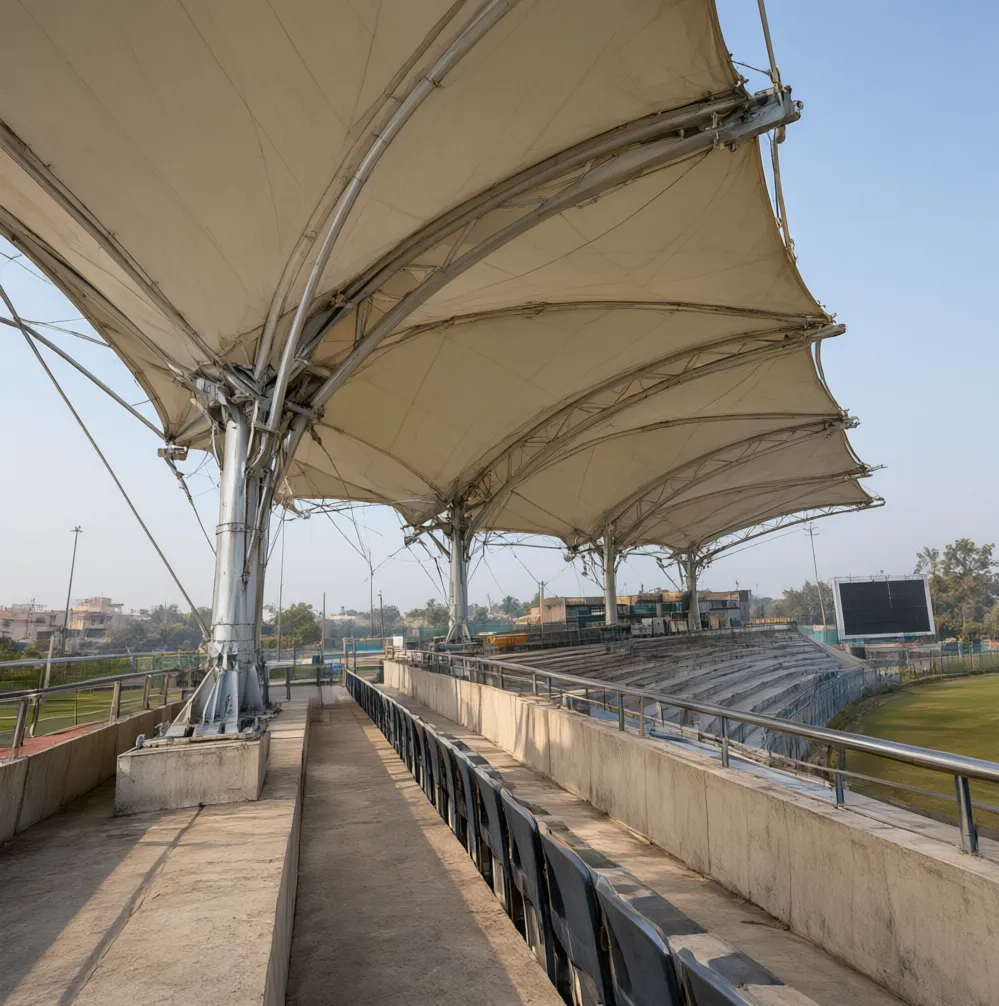
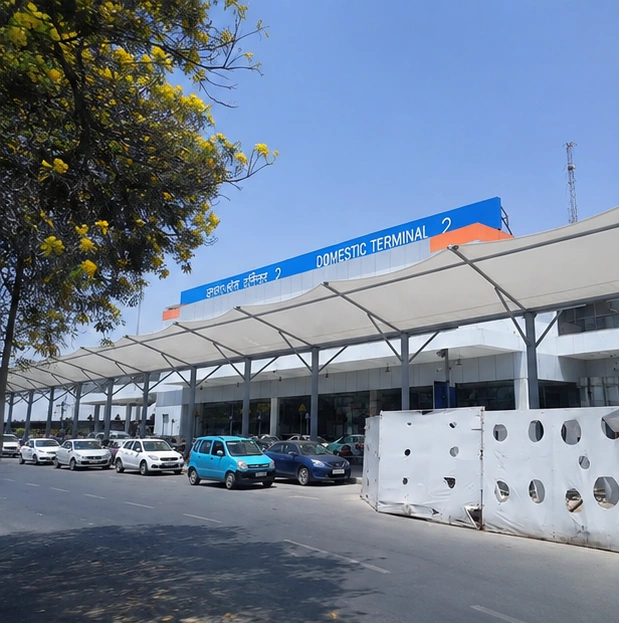
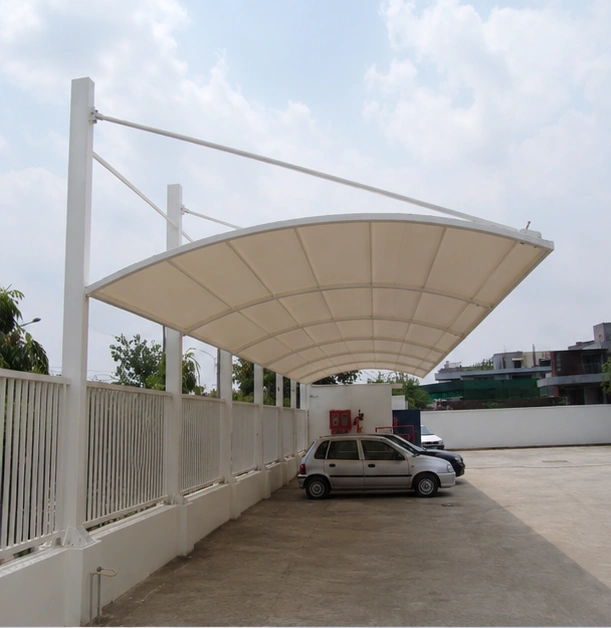
One line of columns behind the covered area, with the membrane reaching forward over it and nothing in front. The most common form we build, by a wide margin.

Where we build it
How it carries load
The roof hangs off one column line, so every footing resists a bending moment as well as uplift. That makes the foundations the expensive part, not the steel.
Where it suits
Car parks, walkways against a boundary, loading docks, spectator stands — anywhere a column in front would be in the way.
What to watch
Reach. Past roughly 6 to 8 m of overhang the footing grows faster than the saving on columns, and a propped or butterfly form gets cheaper.
Cost
Low to moderate. Efficient on steel, demanding on foundations.
02

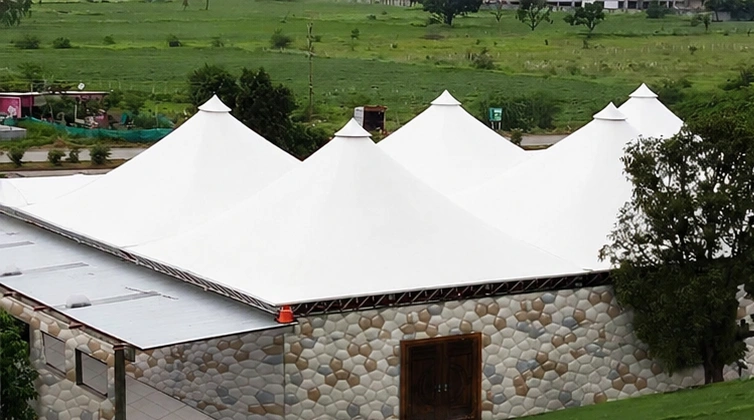
Conical

Also called peak, tent, pagoda

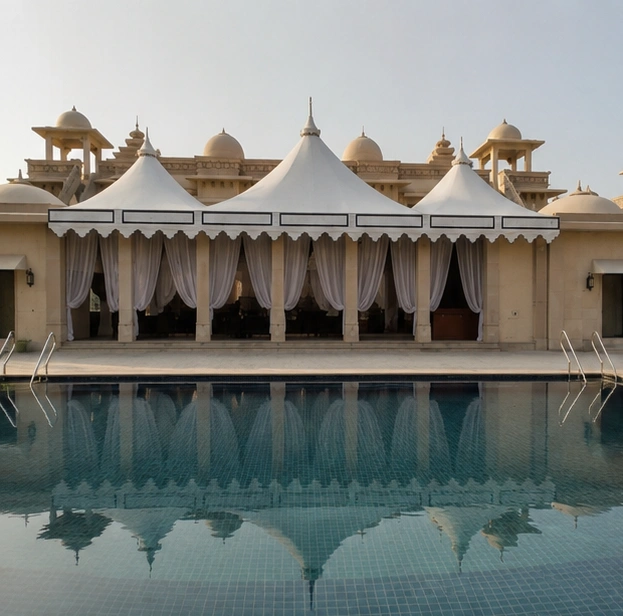
A membrane pulled up to a high point on a central mast or a ring, falling away to anchor points around it. The shape most people picture when they hear tensile structure.

Where we build it
How it carries load
The cone is stiff because the surface curves two ways at once. Load runs down the surface to the perimeter and up the mast as compression.
Where it suits
Entrances, plazas, pool decks, banquet lawns, pavilions. Anywhere the roof is meant to be looked at as well as sheltered under.
What to watch
Rainwater runs to the perimeter and has to go somewhere. On a multi-cone roof the valleys between cones are where ponding starts if the falls are too shallow.
Cost
Moderate. More fabric per square metre covered than a flat form, and the mast needs a proper foundation.

03

Inverted umbrella

Also called funnel

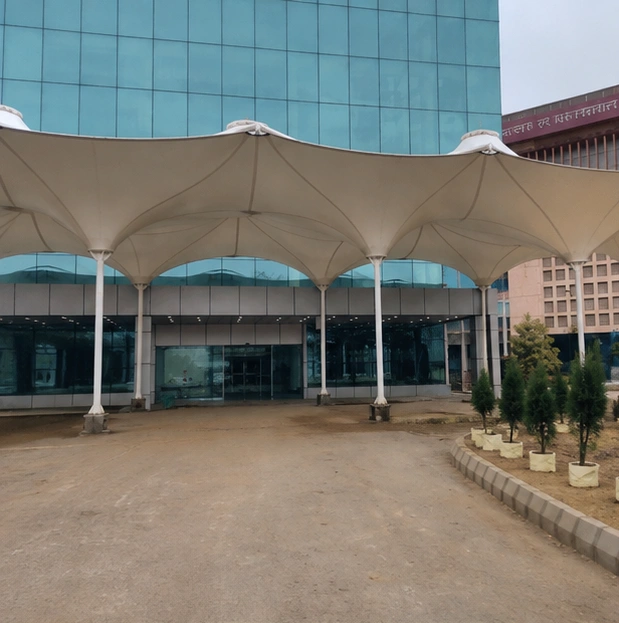
A cone turned upside down: low in the middle on a single central column, rising to the corners. Water runs inward and down through the column.

How it carries load
One column carries everything, so the connection at the head and the footing beneath it are the whole design.
Where it suits
Repeating grids over large open areas, courtyards and plazas where a forest of perimeter columns would be unwelcome.
What to watch
The drainage path runs inside the column. It must be sized and accessible, because a blockage has nowhere else to go.
Cost
Moderate to high. Elegant, and unforgiving of a cheap central connection.

04

Hypar

Also called hyperbolic paraboloid, saddle

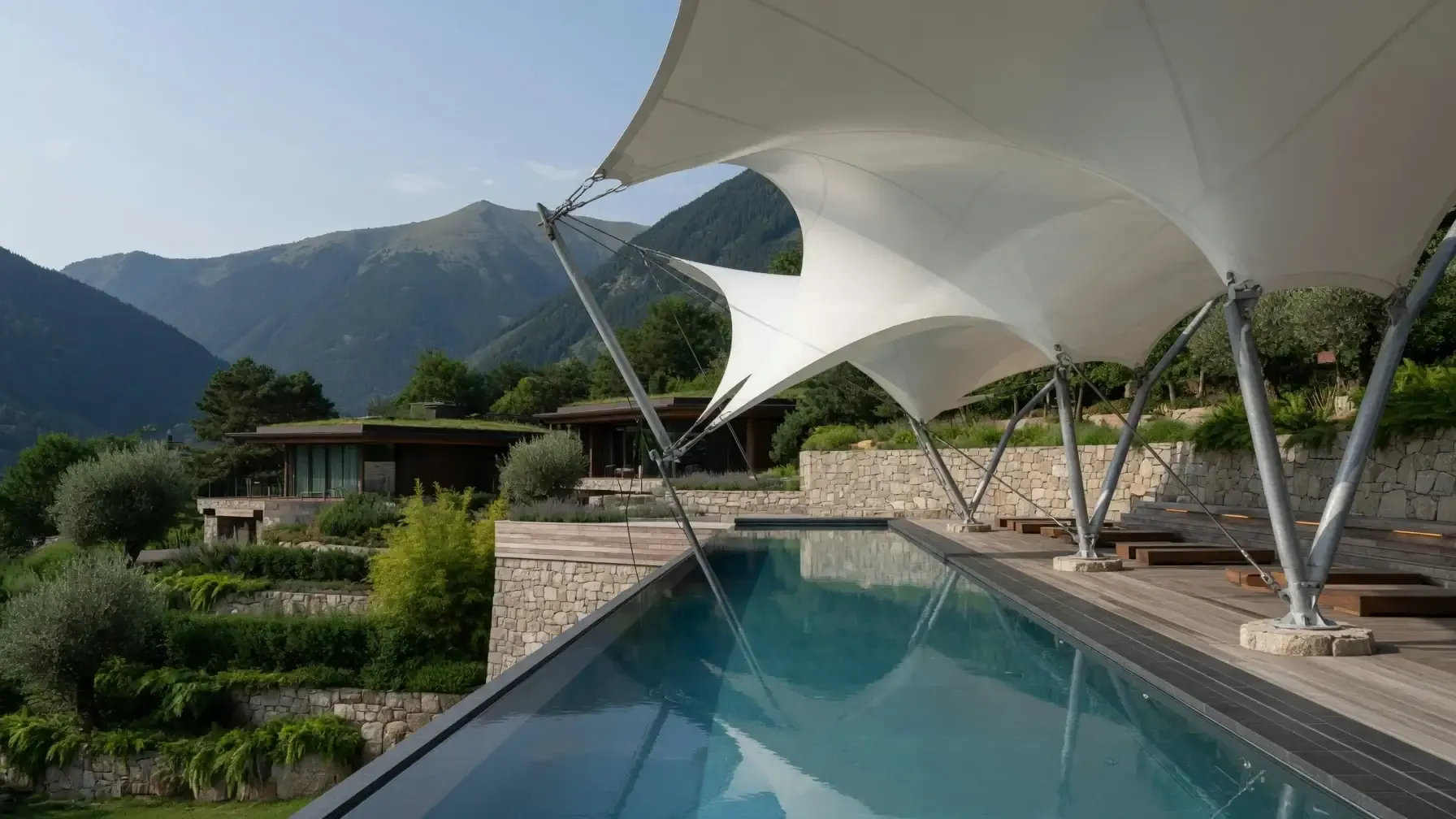
Four corners, two pulled high and two pulled low, giving a surface that curves up one way and down the other. The purest tensile shape there is.

Where we build it
How it carries load
The opposing curvature is what makes it stiff. One direction resists downward load, the other resists uplift, and neither needs a frame underneath.
Where it suits
Shade sails, courtyards, walkway bays, entrance features. Excellent where wind is the governing case, because the shape itself fights uplift.
What to watch
The corner forces are large and go in awkward directions. Anchors and their foundations are the engineering, not the fabric.
Cost
Low to moderate per square metre, and it rises sharply with the corner heights.

05

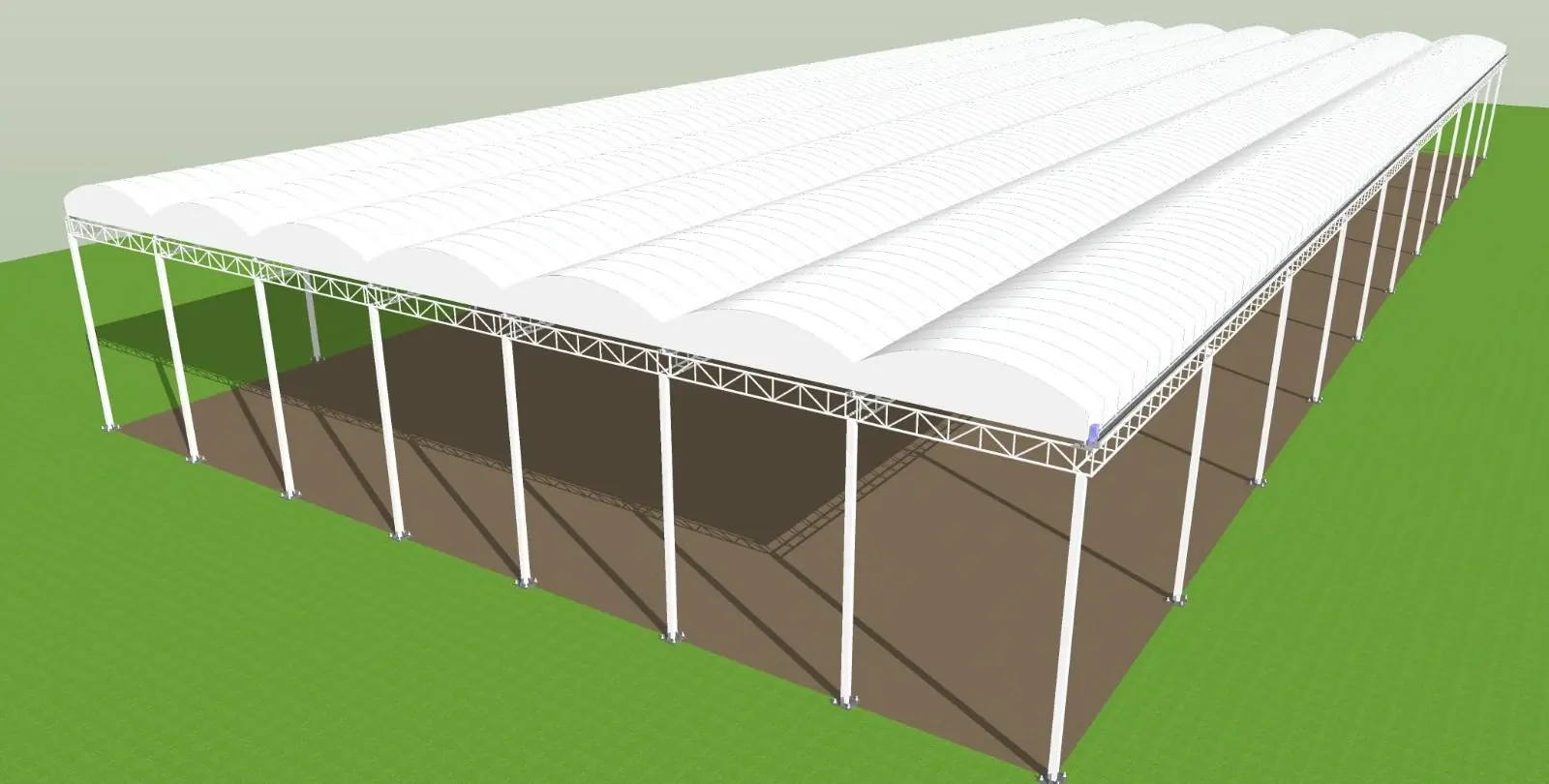
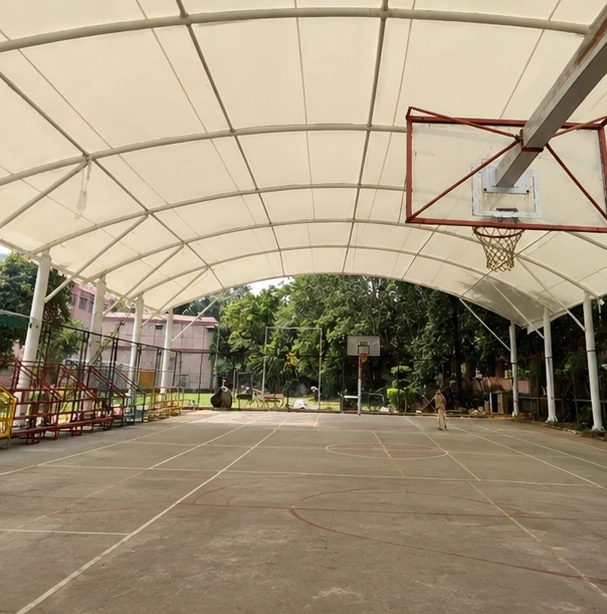
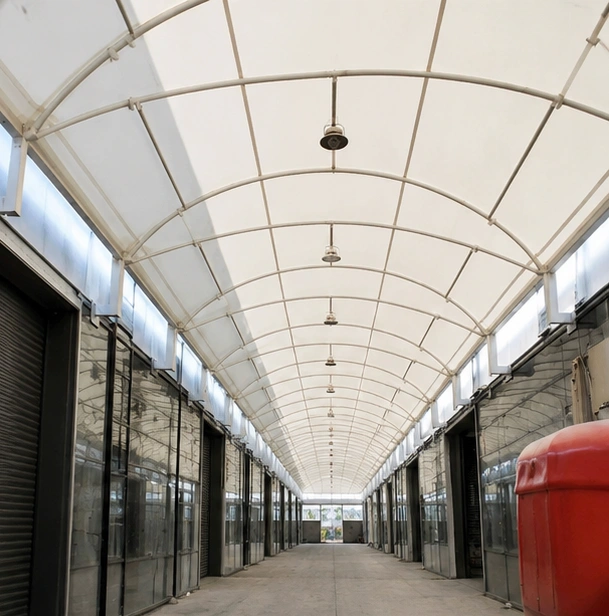
Barrel vault

Also called arch supported

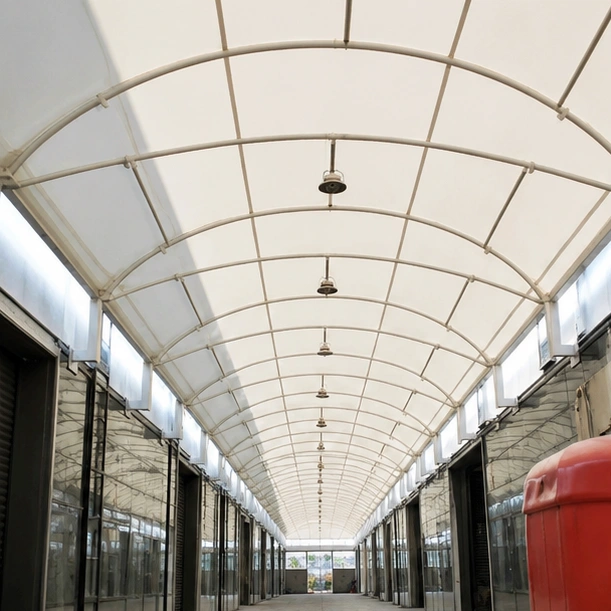
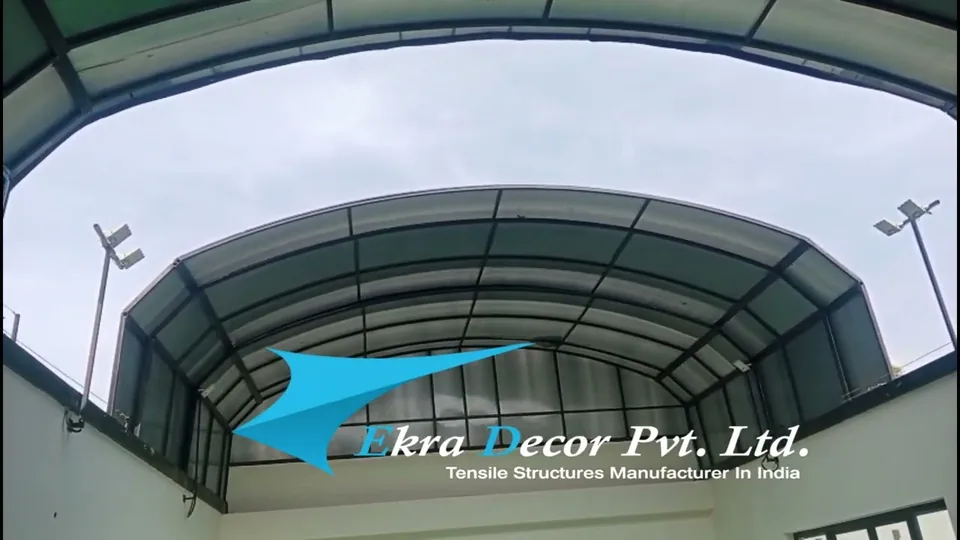
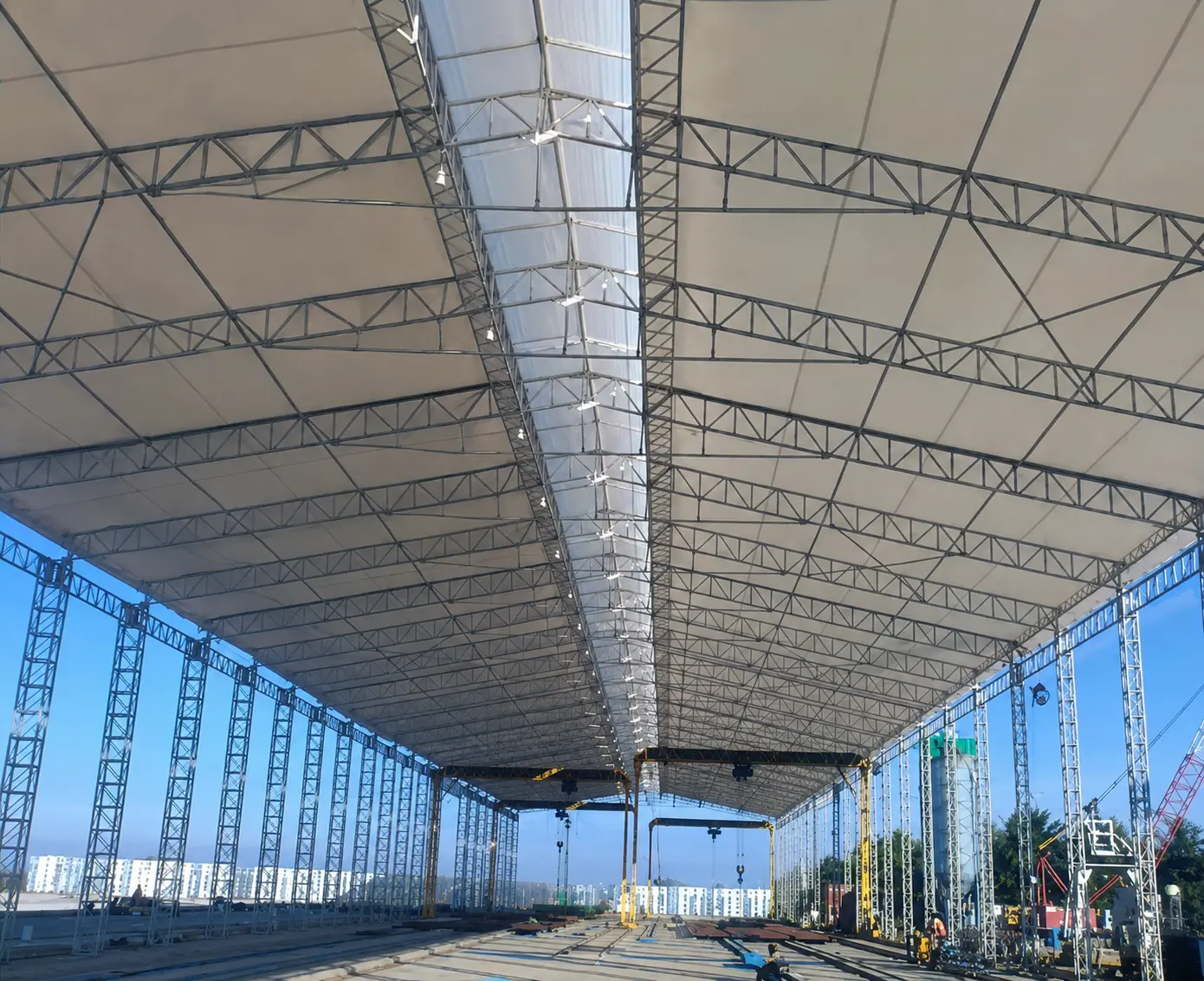
A membrane stretched over a series of arches, making a continuous tunnel. Curved one way only, so it is pre-tensioned across the arches to make up for it.

Where we build it
How it carries load
The arches take the load in compression and the membrane spans between them in tension. Closer arches, lighter fabric; wider arches, heavier everything.
Where it suits
Walkways, covered streets, loading areas, industrial roofs, cricket nets — any long run that has to be covered end to end.
What to watch
Single curvature means the fabric has to be tensioned hard across the arches or it flutters. This is the form most often built badly.
Cost
Low per square metre over a long run. It is a repeating bay, so it gets cheaper the more of it you build.

06

Ridge and valley

Also called wave

Alternating high ridge cables and low valley cables running across the span, so the roof reads as a series of waves. A way of covering a wide area without a mast in the middle of it.

Where we build it
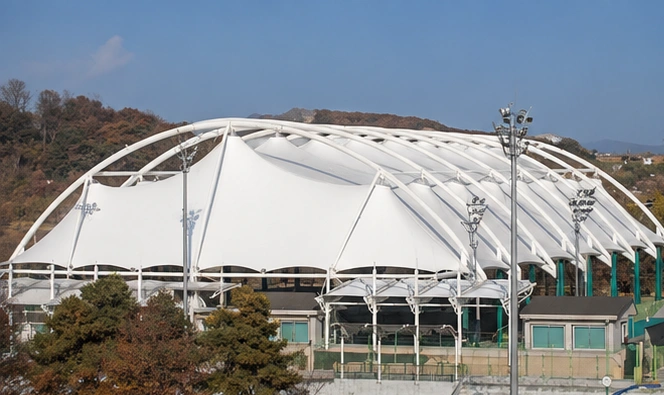
How it carries load
Ridges hold the surface up, valleys pull it down, and the opposition between them gives the double curvature that makes the roof stiff.
Where it suits
Large clear spans: atria, auditoria, assembly grounds, stadium roofs, long industrial bays.
What to watch
Every valley is a drainage channel carrying a lot of water. Sizing and outlet positions are the critical detail, and the falls must be set so no valley ever ponds.
Cost
Moderate to high. It is the form for genuinely large spans, and the cable and edge detailing is where the cost sits.

07

Mast supported

One or more masts standing clear of the roof, with cables running from the mast heads down to the membrane. The roof hangs rather than sits.

How it carries load
The masts take compression, the cables take tension, and the membrane spans between the suspension points. Almost no bending anywhere.
Where it suits
Very large spans, stadium roofs, civic landmarks. Anywhere the structure is meant to be seen from a distance.
What to watch
The mast base and the backstay anchors carry enormous loads, and the backstays need room on the site. Plan where they land before the form is settled.
Cost
High. This is a landmark form and it is priced like one.

08

Cable net

A grid of cables in two directions carrying a membrane or cladding, pre-stressed against a stiff edge ring or arch.

Where we build it
How it carries load
The cable grid does the structural work and the covering simply follows it, which is what allows spans no single membrane could manage.
Where it suits
Stadium roofs, large civic structures, facades and skylights. Often paired with ETFE cushions rather than fabric.
What to watch
It is a different discipline from a fabric roof, with much longer design and approval times. Worth saying so early.
Cost
The highest here, and worth it only at a scale where nothing else works.

09

Dome

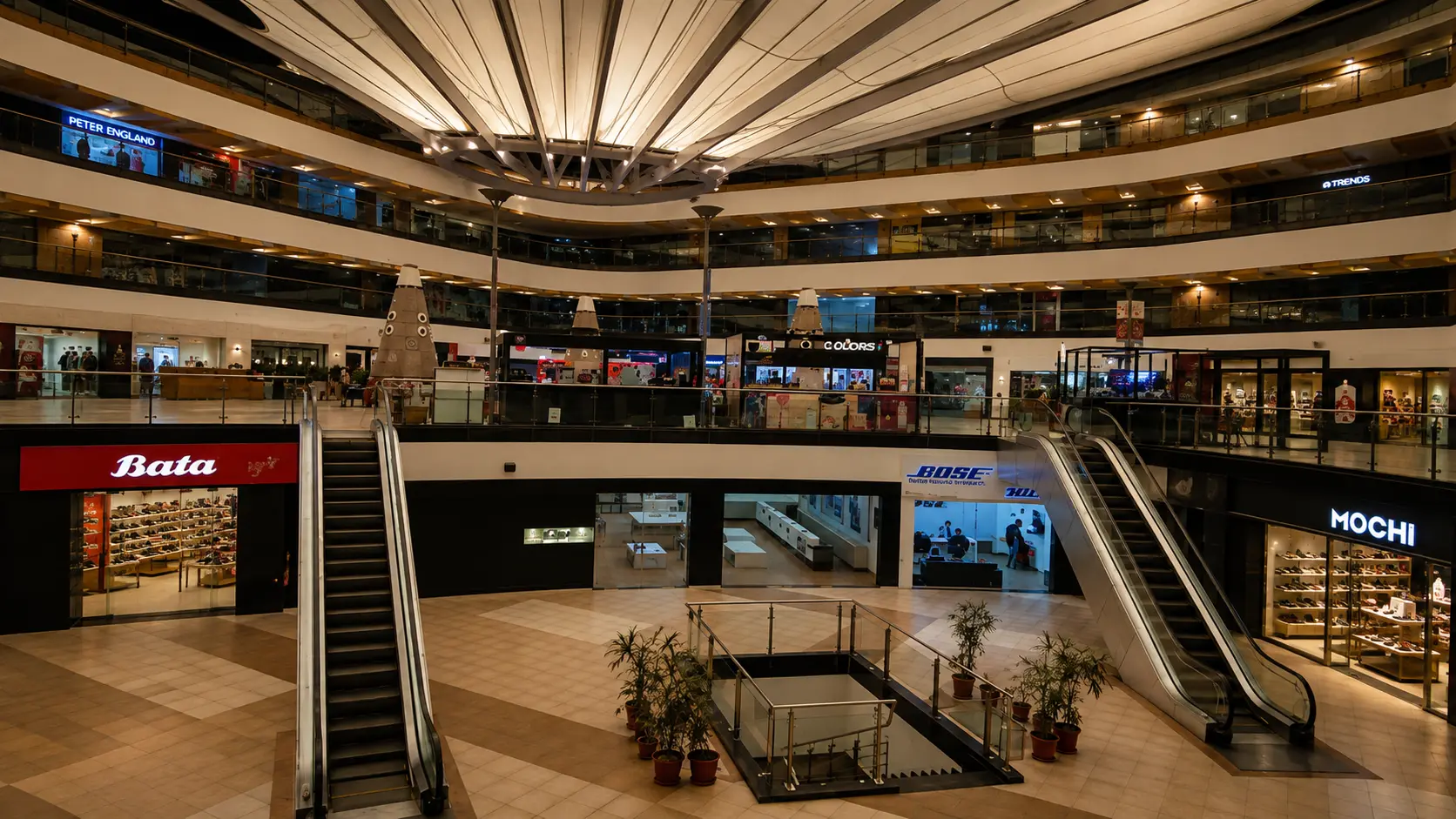
A membrane over a radial frame or a cable grid, closing a circular or elliptical plan. Air-supported variants exist, though we build the framed kind.

Where we build it
How it carries load
Load runs radially to the perimeter ring, which takes it in tension around the circumference.
Where it suits
Auditoria, sports halls, pavilions, places of assembly on a round plan.
What to watch
The perimeter ring is the whole structure. On a large dome it becomes a significant piece of engineering in its own right.
Cost
Moderate to high, and strongly driven by diameter.

10

Pavilion

Also called umbrella, gazebo

A free-standing roof on its own columns, not attached to any building. Usually a cone, a hypar or a small vault, built as a complete object.

Where we build it
How it carries load
Whatever the underlying shape dictates, with the added condition that it must stand alone against wind from any direction.
Where it suits
Gardens, lawns, resorts, seating areas, wedding venues, campus courtyards.
What to watch
With no building to brace against, uplift and overturning govern the footings, and they are often larger than the size of the structure suggests.
Cost
Low to moderate, and dominated by the foundations rather than the roof.

Questions

Choosing a shape.

The glossary defines these terms in a line each. This is the part that matters when you are deciding.

Glossary of terms
  1. A cantilever or a barrel vault over a long run, because both are a single engineered bay repeated. The cost per square metre falls the more of it you build. A one-off cone or hypar costs more per square metre covered, because the shape is bespoke and the foundations do not get reused.

  2. A hypar has four corners, two high and two low, giving a saddle that curves up one way and down the other. A cone is pulled up to a single high point on a mast or ring and falls away all round it. Both are stiff for the same reason — the surface curves in two directions — but a cone needs a mast and a central foundation, while a hypar needs four well-anchored corners and nothing in the middle.

  3. Because fabric has no stiffness of its own. A surface curving two opposite ways has one set of fibres resisting downward load and the other resisting uplift, and pre-tensioning both means the roof never goes slack. A roof curved only one way, like a barrel vault, has to be tensioned hard across the arches to make up for it, and a flat one flutters and ponds.

  4. Within limits, and more often than people expect. Several forms will cover the same area safely, so the choice between them is usually architectural. What cannot be negotiated is the double curvature, the drainage falls and where the foundations land. We will tell you early if a shape you want is going to be expensive for a structural reason rather than an aesthetic one.

  5. A cone or a steep cantilever, because water leaves the surface quickly and in one direction. The forms to watch are ridge and valley, and multi-cone roofs, where every valley is a drainage channel carrying a lot of water to a few outlets. Those are fine when the falls and outlets are sized properly, and they are the first thing to go wrong when they are not.

  6. A hypar, because the shape itself fights uplift: the downward-curving direction is already in tension against exactly the load wind applies. Tall forms with large clear surfaces — masts, big cones, pavilions standing alone — catch more wind and need heavier anchoring. In every case the design wind pressure is worked out for your site under IS 875 (Part 3) rather than taken from a figure against the city's name.

Start a project

Not sure which shape? Send us the site and the span.

Tell us the area to cover, what sits around it and what it is for. We come back with the forms that suit, what each would cost, and why we would pick one.

or call +91 93159 45187
CallWhatsApp