01
What is a tensile structure?
A tensile structure is a roof or canopy made of a fabric membrane pulled tight between steel masts, frames and cables. The membrane is curved in two directions at once, like a saddle or a cone, and that curvature plus pre-tension is what makes it stiff. It weighs a fraction of a concrete or sheet-metal roof and can span large areas with few columns.
Unlike a conventional roof, which resists load by being stiff, a membrane can only carry load by pulling. So the fabric is not a covering laid over a structure; it is part of the structure. That is why the shape comes first and the steel is designed around it, and why the membrane grade is a structural choice as well as an architectural one.
02
How does a tensile structure work?
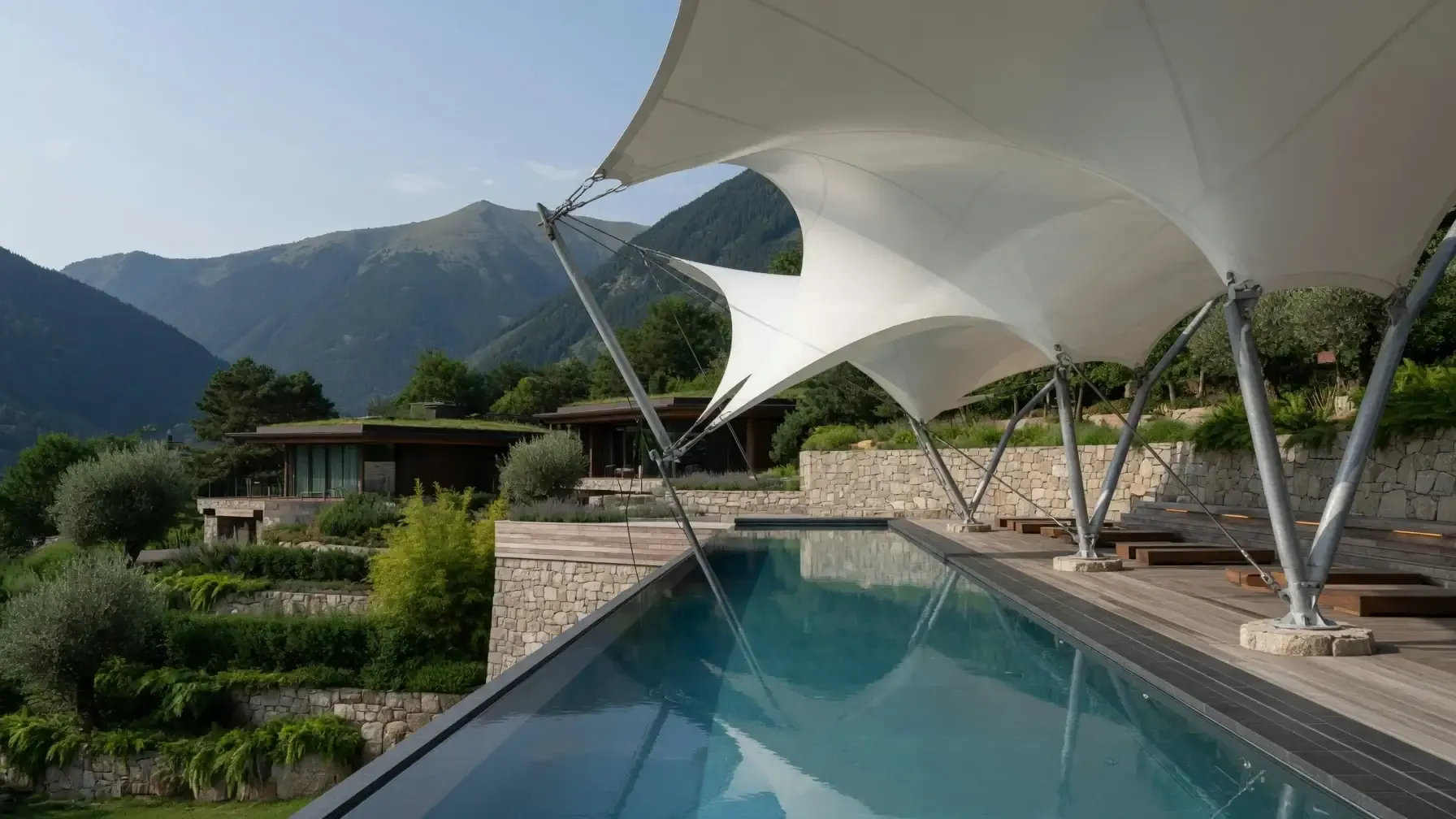
The membrane is shaped so it curves up one way and down the other (an anticlastic surface) and is then pre-tensioned. Downward loads such as rain are carried by one curvature and upward wind suction by the other, so the surface stays taut and drains itself. Because the roof is so light, wind uplift, not weight, usually decides the size of the steel and the footings.
A flat membrane would simply sag and pond water. Double curvature, worked out by computer form-finding, keeps every part of the surface in balanced tension. The 3D shape is then cut into flat panels (patterning), welded together and stretched onto the frame on site to its design pre-stress.
In India the design wind pressure for each site comes from IS 875 (Part 3). Steel is designed to IS 800, footings to IS 456 and galvanising to IS 4759 / IS 2629. See how we engineer a structure.
03
What are the main types of tensile structure?
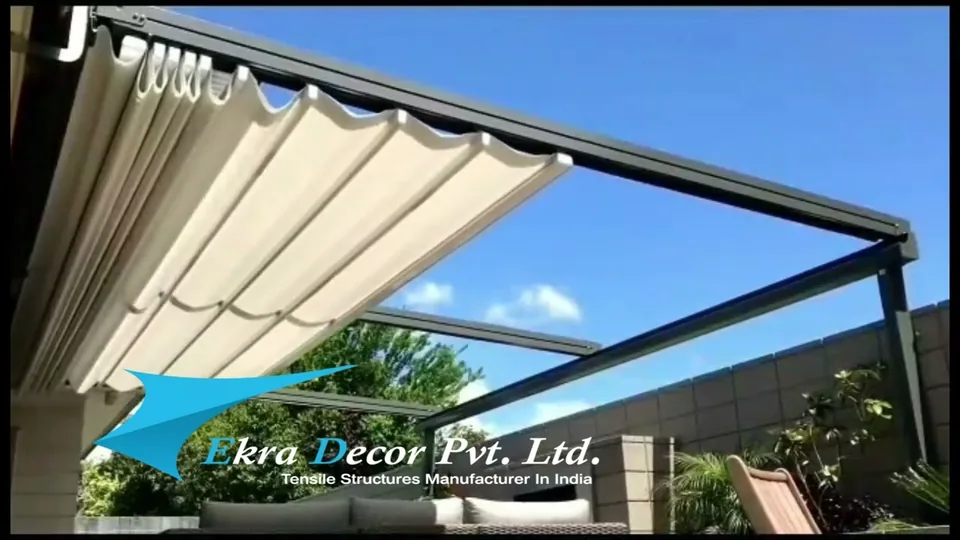
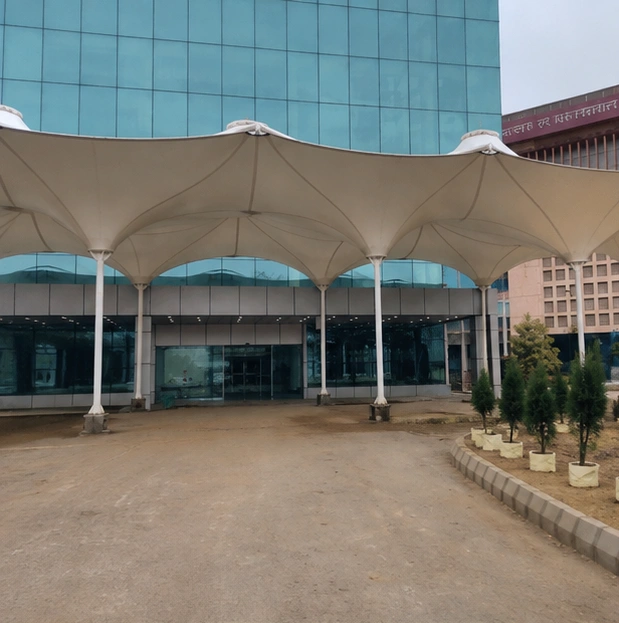
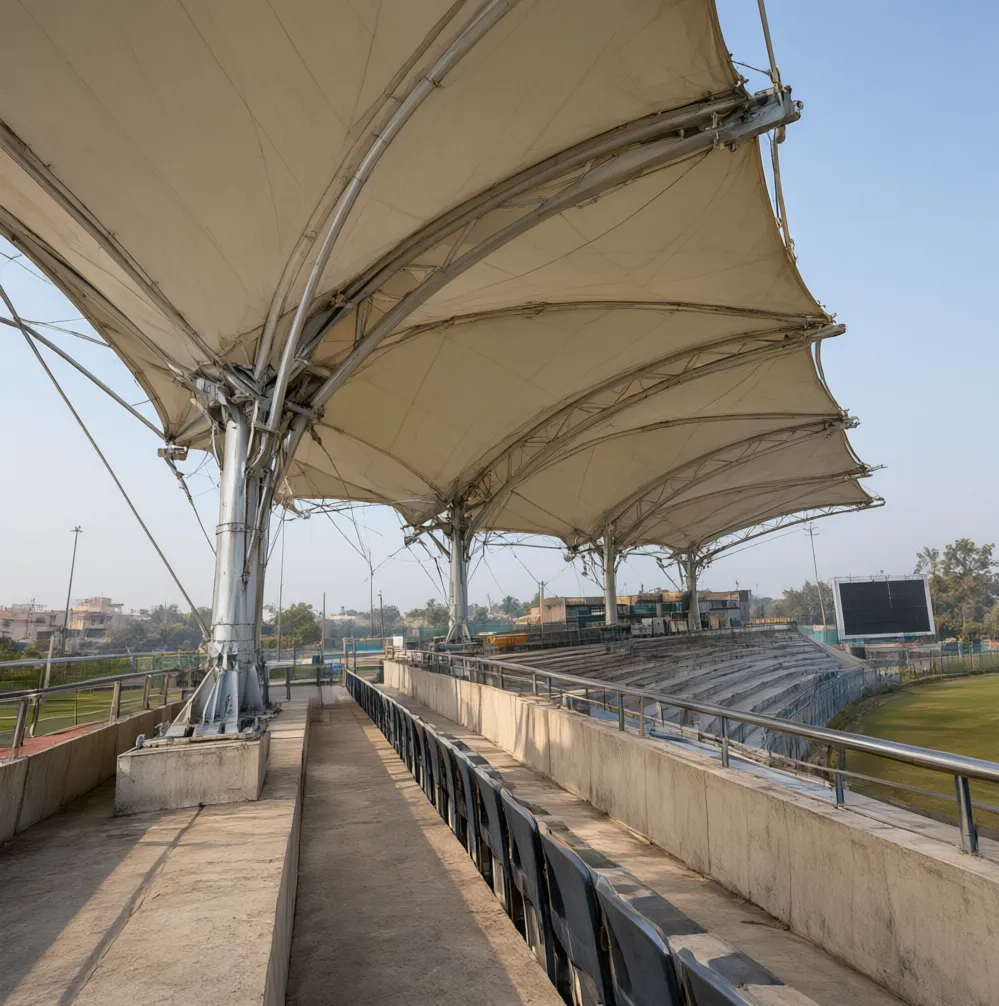
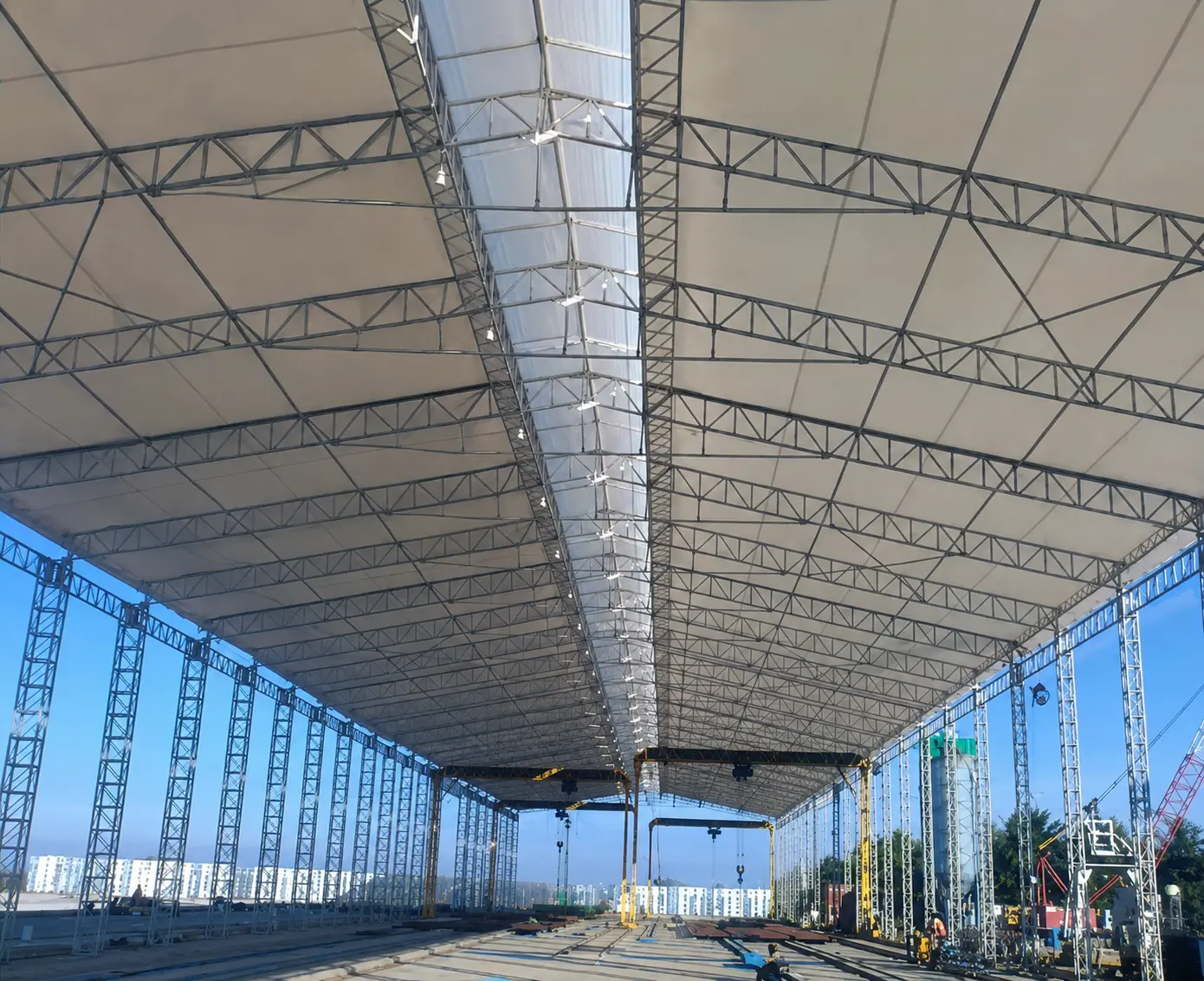
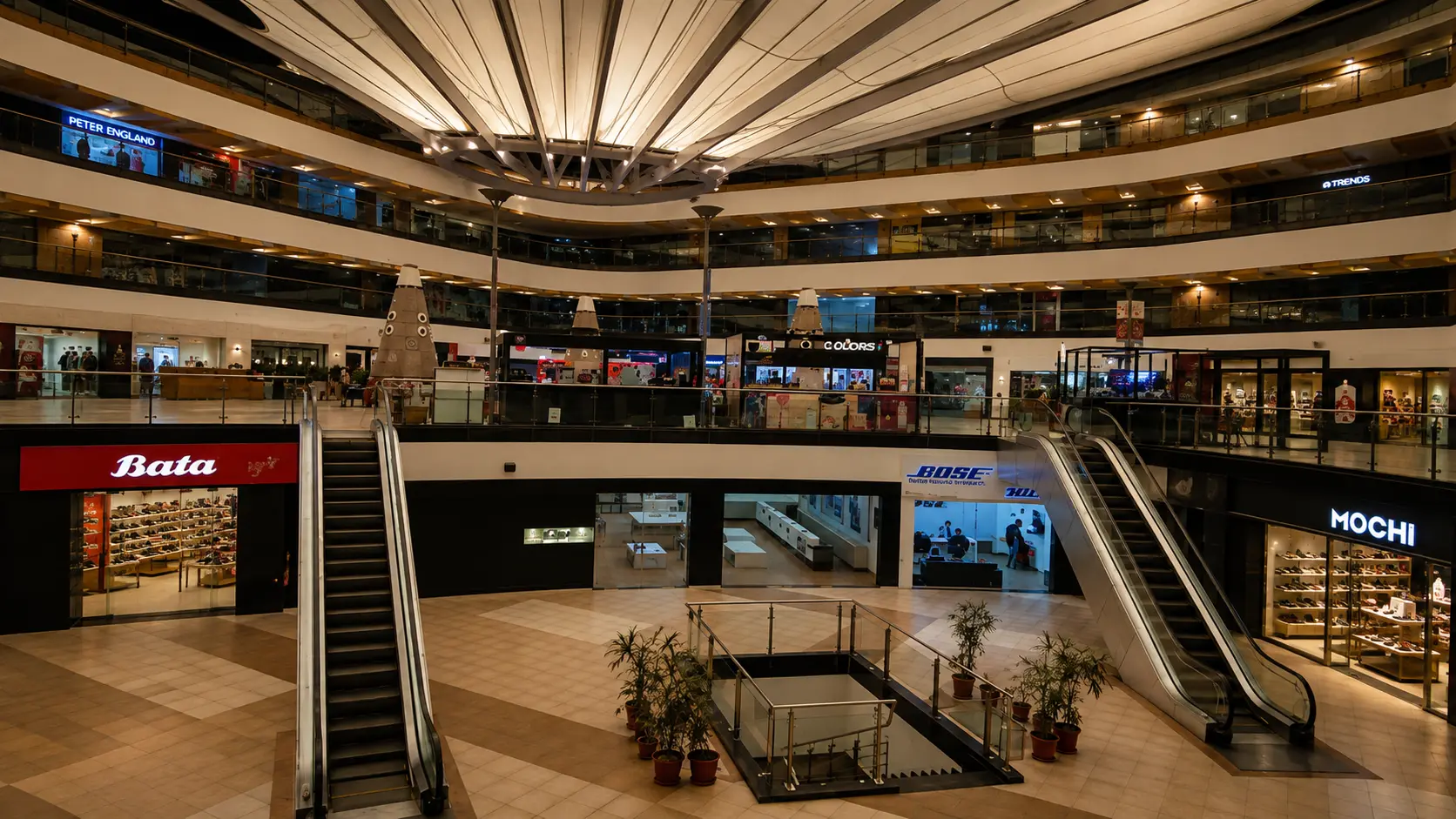
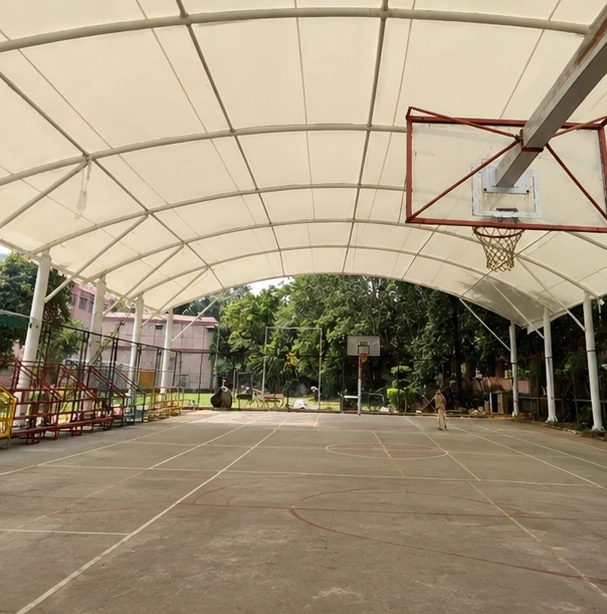
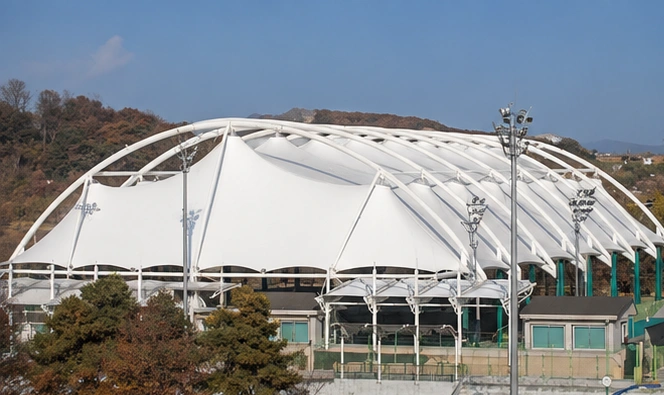
By shape, most tensile structures are a hypar (saddle), a cone, a barrel vault or arch, a ridge-and-valley roof, or a cantilever. By use, the common ones in India are car parking shades, walkway and entrance canopies, gazebos, pool covers, stadium and court roofs, industrial roofs, atrium covers and retractable roofs.
- Hypar (saddle): two high and two low corners; efficient over a square bay.
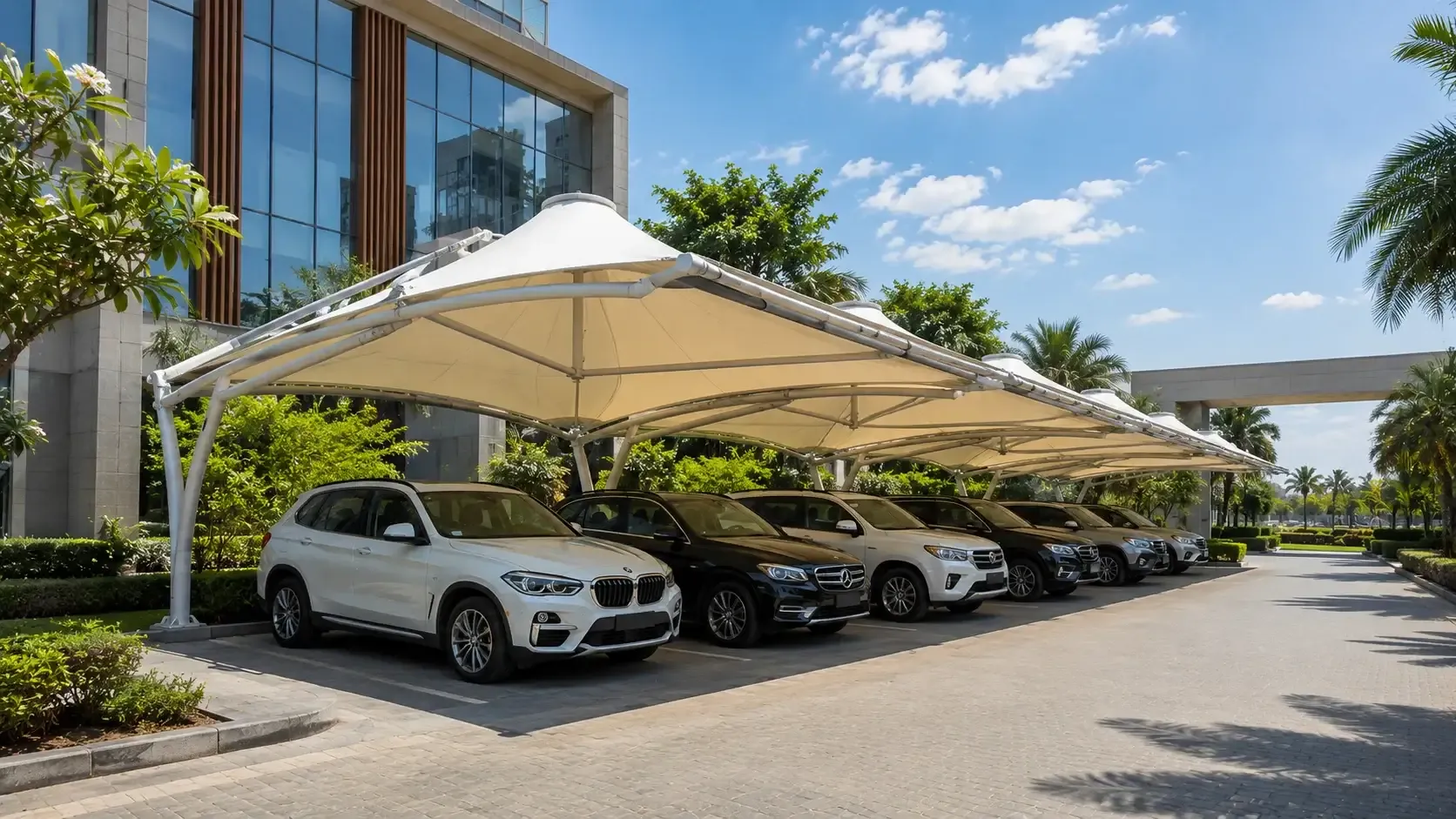
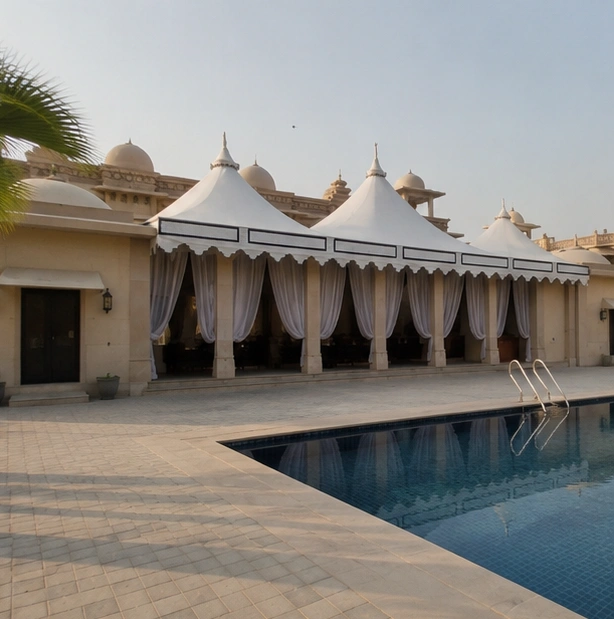
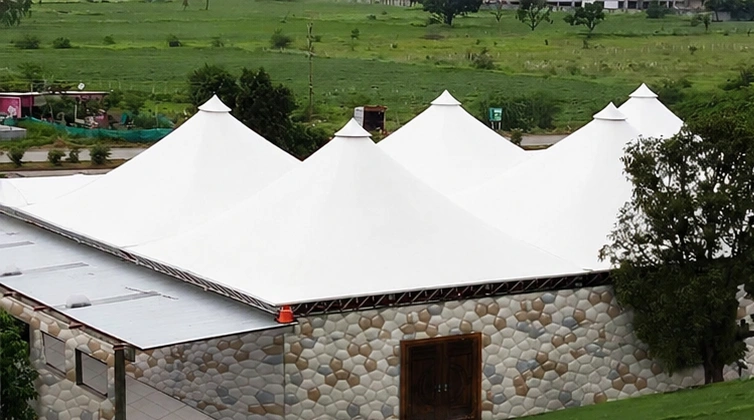
- Conical: the membrane drawn up to a ring on a mast; self-draining and easy to recognise.
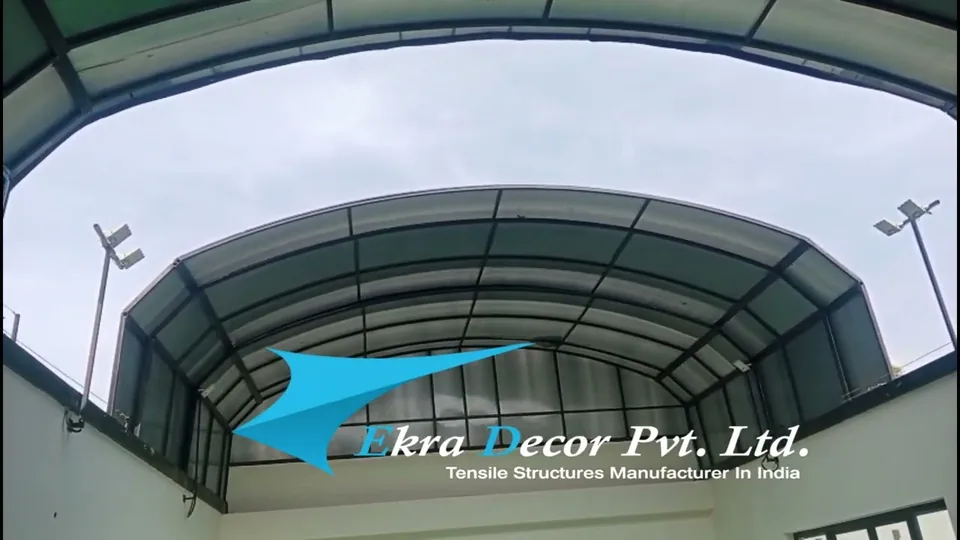
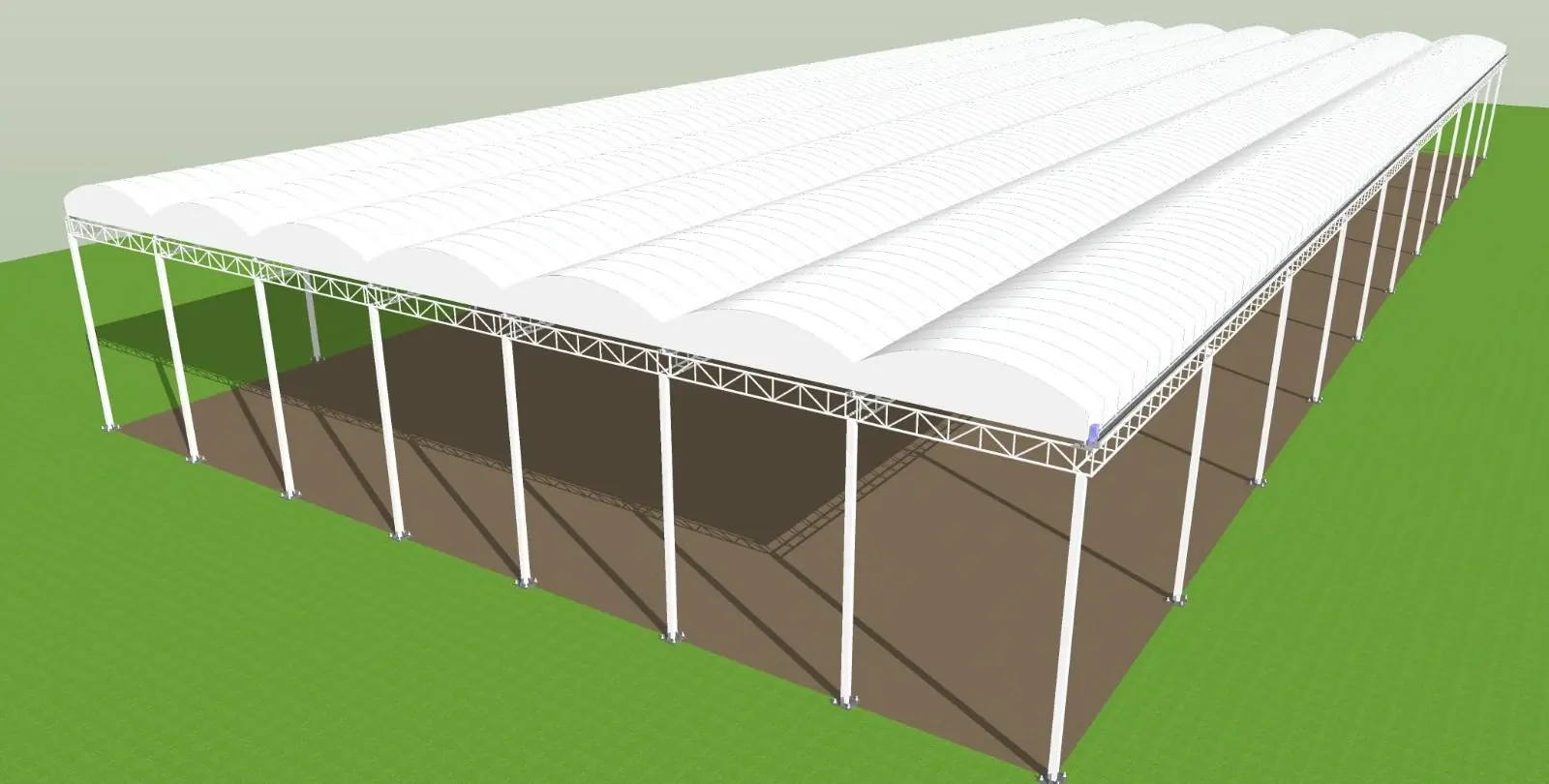
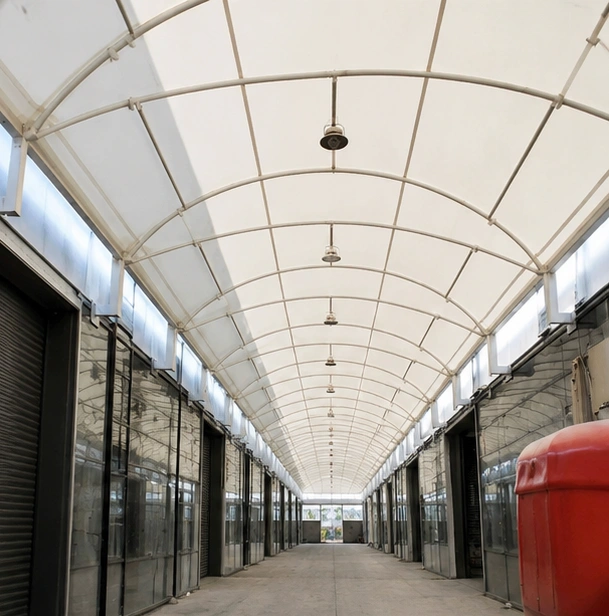
- Barrel vault / arch: a curved membrane over arches, repeated along a length.
- Ridge and valley: alternating high and low cables for very wide roofs.
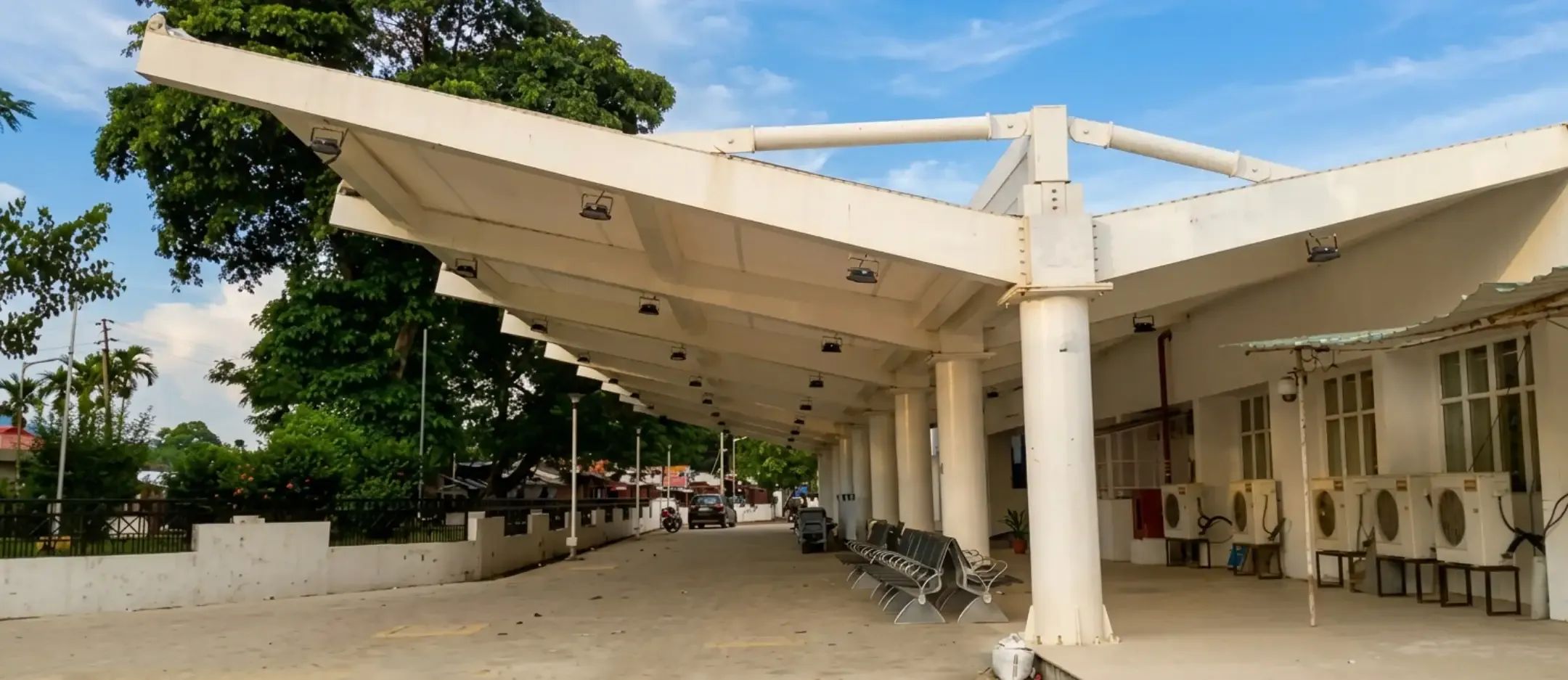
- Cantilever: supported on one side only, so the other edge stays open, as over car parks and stands.
- By use: car parking, walkways, pools, stadiums, industrial and more.
04
What is a tensile structure made of?
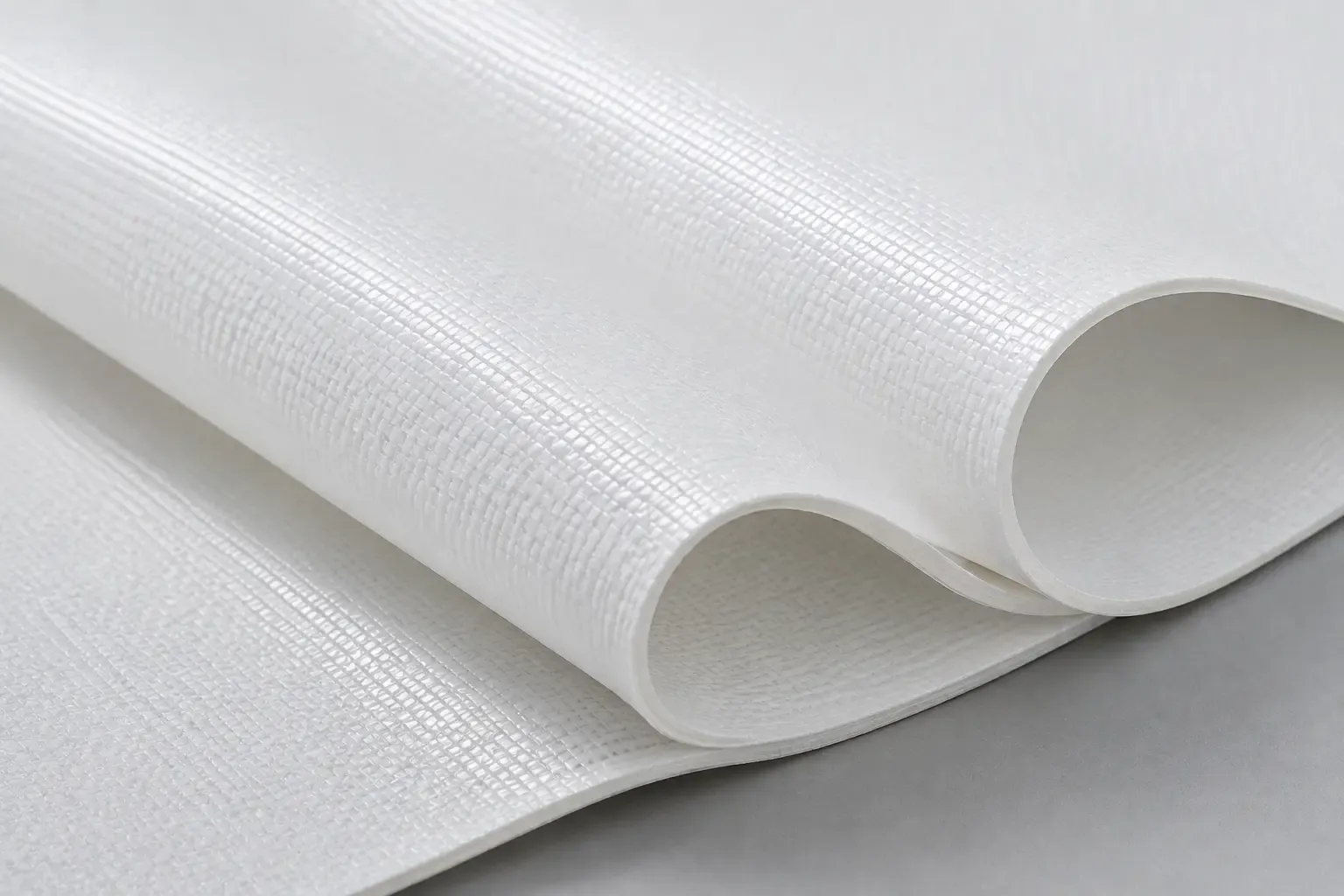
A coated architectural membrane, a galvanised steel frame, steel cables and fittings, and concrete footings. The membrane is usually PVC-coated polyester, the same fabric with a PVDF finish, PTFE-coated glass fibre for non-combustible and long-life roofs, or ETFE film where transparency is the point. HDPE shade net is used for shade only, because it is not waterproof.
Each membrane differs in light, fire class, life and cost. See the membrane comparison, or the pages on PVC, PVDF, PTFE and ETFE.
05
How much does a tensile structure cost in India?
Most installed tensile structures in India cost between ₹280 and ₹2,500 per square foot plus GST. A PVC car parking shade sits at the economical end; a large clear span in PTFE sits well above it. Span and form, steel, foundations, height, site access, scale and the membrane grade decide where a project lands.
Most of the total is steel and installation; the membrane is usually a minority. Always ask for an itemised quote with design, steel, membrane, foundations and installation as separate lines. More in the cost guide.
06
How long does a tensile structure last?
The galvanised steel frame lasts for decades. The membrane is a wear layer: PVC with an acrylic lacquer typically lasts 15–20 years, PVDF-finished PVC around 20–25, and PTFE-coated glass 25–30 years and more. When a membrane wears out, a new one is fitted to the same frame.
Life depends heavily on upkeep. A slack, dirty membrane wears years faster. A workable schedule: clear drains quarterly, wash every 6–12 months, inspect and re-tension annually. See maintenance and repair.
07
How long does it take to build a tensile structure?
Most of the work happens in the workshop, so site time is short. As examples from our projects: about 10,000 sq ft at Vikram Solar took 30 days from survey to tensioning, a 2,250 m² resort structure took about 40 days, and the 20,000 m² Siemens roof in Goa took about two months.
Steel is cut, welded and galvanised and the membrane is patterned and welded off site. On site that leaves footings, erection and tensioning. Approvals, foundations in difficult ground and phasing around a working site add time. See completed projects.
08
Is a tensile structure safe in strong wind and heavy rain?
Yes, when it is engineered for the site. The design wind pressure is worked out for each location under IS 875 (Part 3), with 150 km/h as our standard design basis, checked against the site's own figure. Double curvature keeps the membrane from fluttering, and the form is shaped so rain drains to defined points instead of ponding.
Under-designed anchorage is the most common flaw in cheap canopies. Ask any contractor what wind speed your structure is designed for and how the footings were sized. A quote with no answer has not designed the foundations.
09
What are the advantages and limitations?
Tensile roofs span far with few columns, weigh little, let diffuse daylight through, stay cooler underneath than sheet metal, go up quickly and can take almost any shape. They are not insulated, they are audible in heavy rain, they cannot carry solar panels or foot traffic, and repairs need a specialist.
Advantages
- Long column-free spans on less steel
- Diffuse daylight, no dark covered areas
- Cooler underneath than uninsulated sheeting
- Fast to build; most work is off site
- Sculptural forms that read as architecture
Limitations
- A single skin, not a thermal envelope
- Louder than a solid roof in heavy rain
- No rooftop solar, plant or foot traffic
- Repairs are specialist welded patches
- The membrane is replaced once or twice in the frame's life
10
Tensile structure or something else?
Choose tensile for large or column-free spans, spaces that must stay open and dry, and roofs that should look designed. A shade sail is cheaper for small shade-only areas. Polycarbonate suits small, simple spans. Metal sheeting is better when the space must be enclosed, insulated or carry solar panels.
Side-by-side comparisons: tensile vs polycarbonate vs shade sail and tensile vs metal roofing.
11
How do you choose a tensile structure contractor?
Ask for the design wind speed for your site, an itemised quote with the membrane grade named, separate written warranties for the structure and the membrane, the handover documents you will receive, and completed projects you can check. Verify the company's registrations independently before you pay an advance.
- 1. What wind speed is my structure designed for, and to which code?
- 2. Is the quote itemised: design, steel, membrane, foundations, installation?
- 3. Which membrane grade and mill? Is it named in the order?
- 4. What does the warranty cover, for how long, and is it yours or the mill's?
- 5. Will I get as-built drawings, mill certificates and a stability certificate?
- 6. Can I see completed projects like mine, and check the company's registrations?
- Our answers to all six are on this site. Our registrations, with ways to verify them, are on the certifications page.