Material 01 — PVC-coated polyester
PVC membrane.
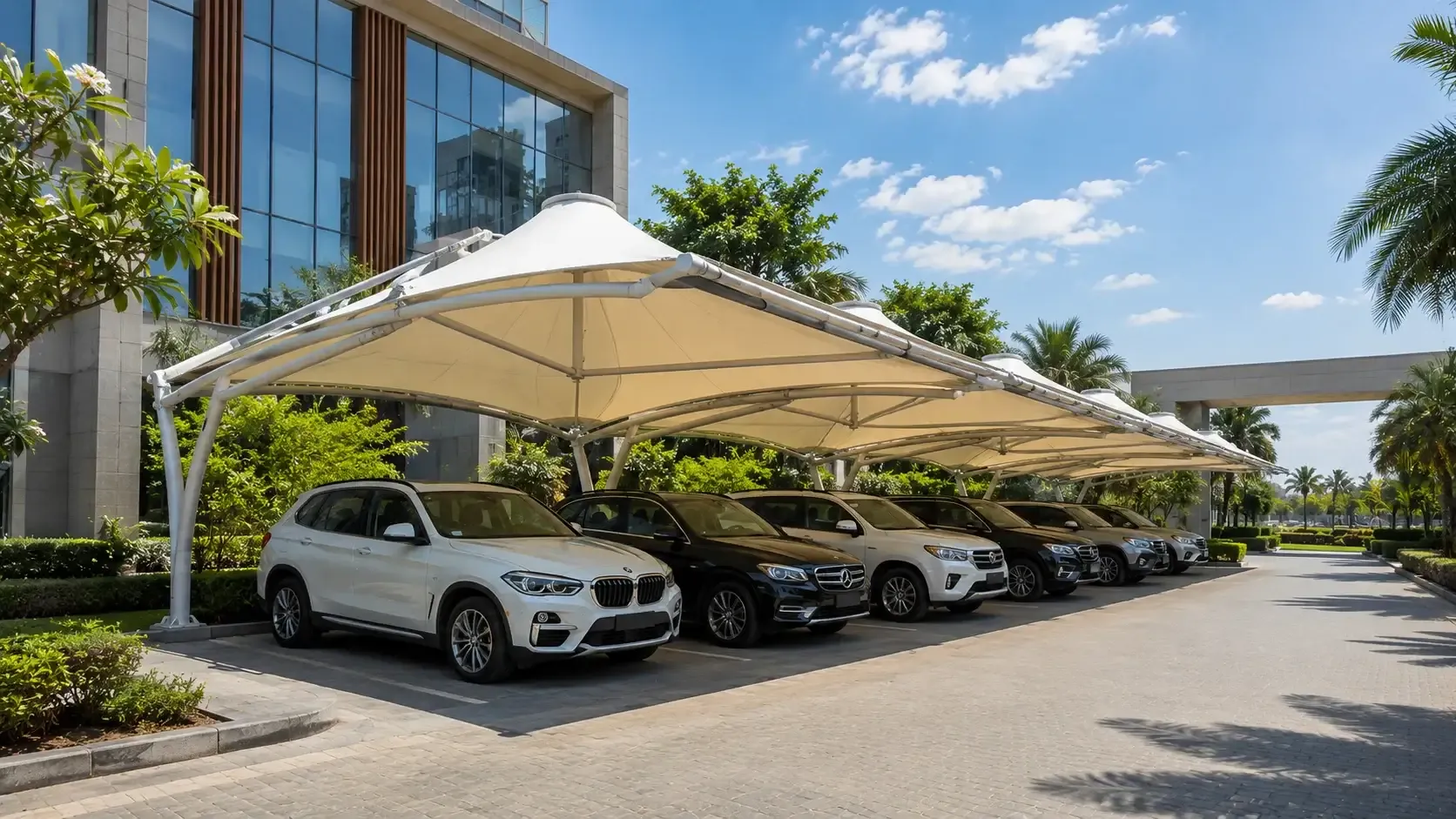
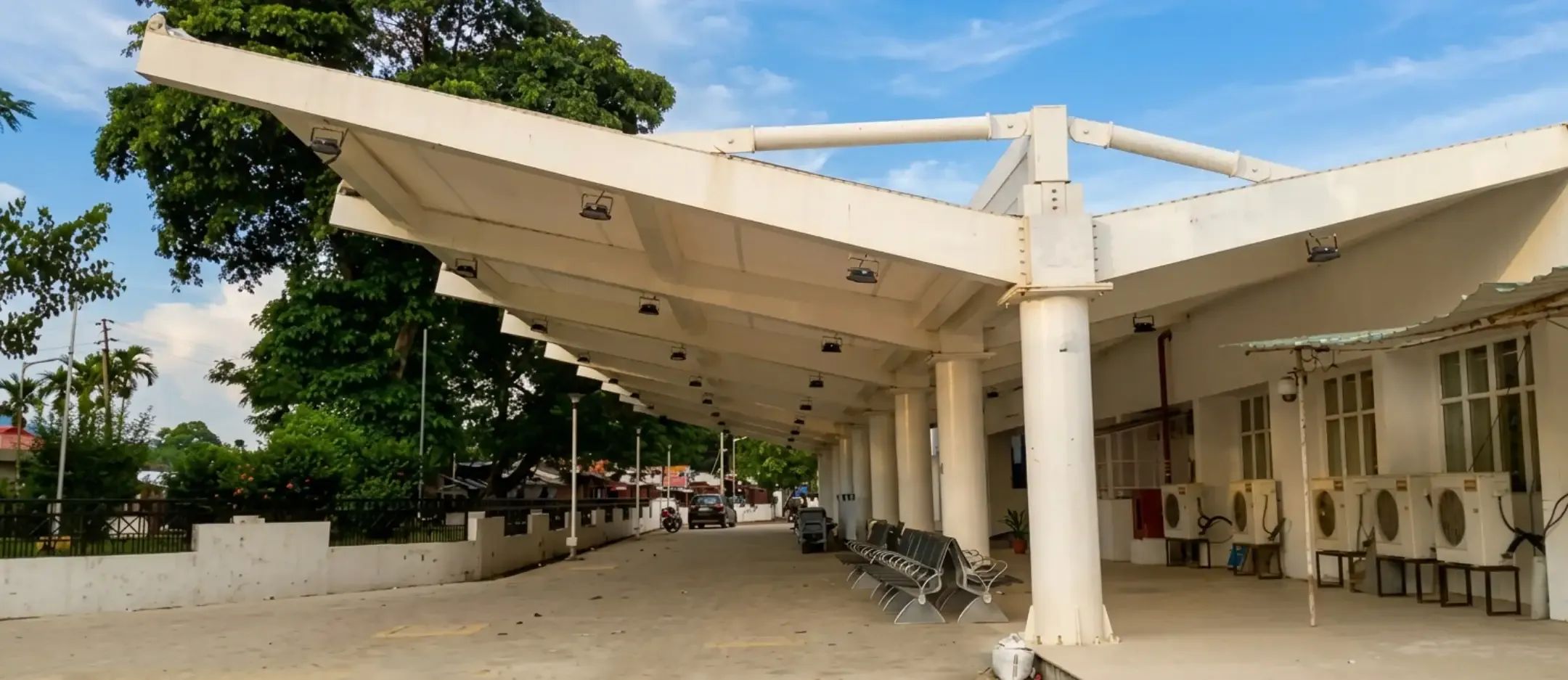
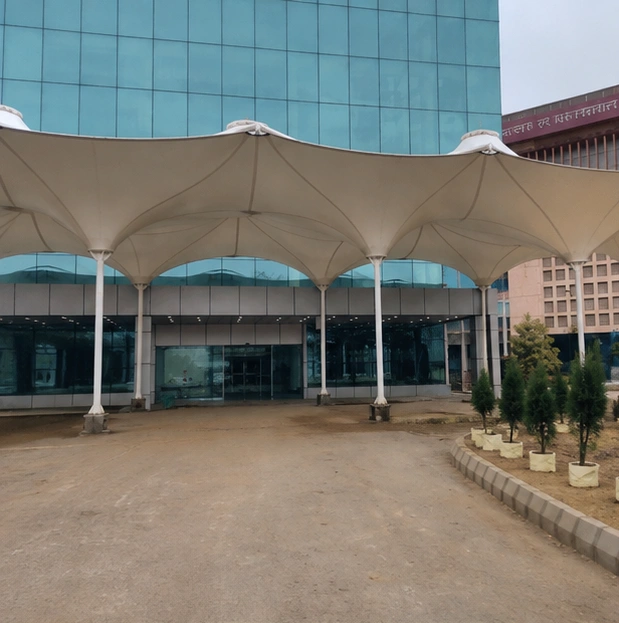
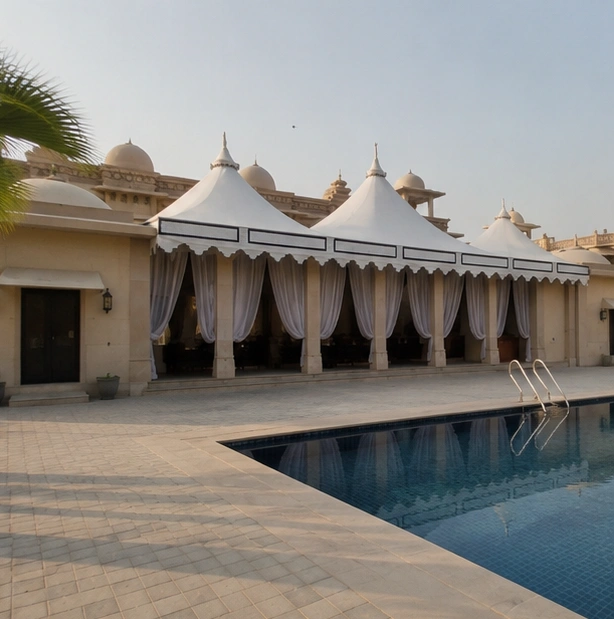
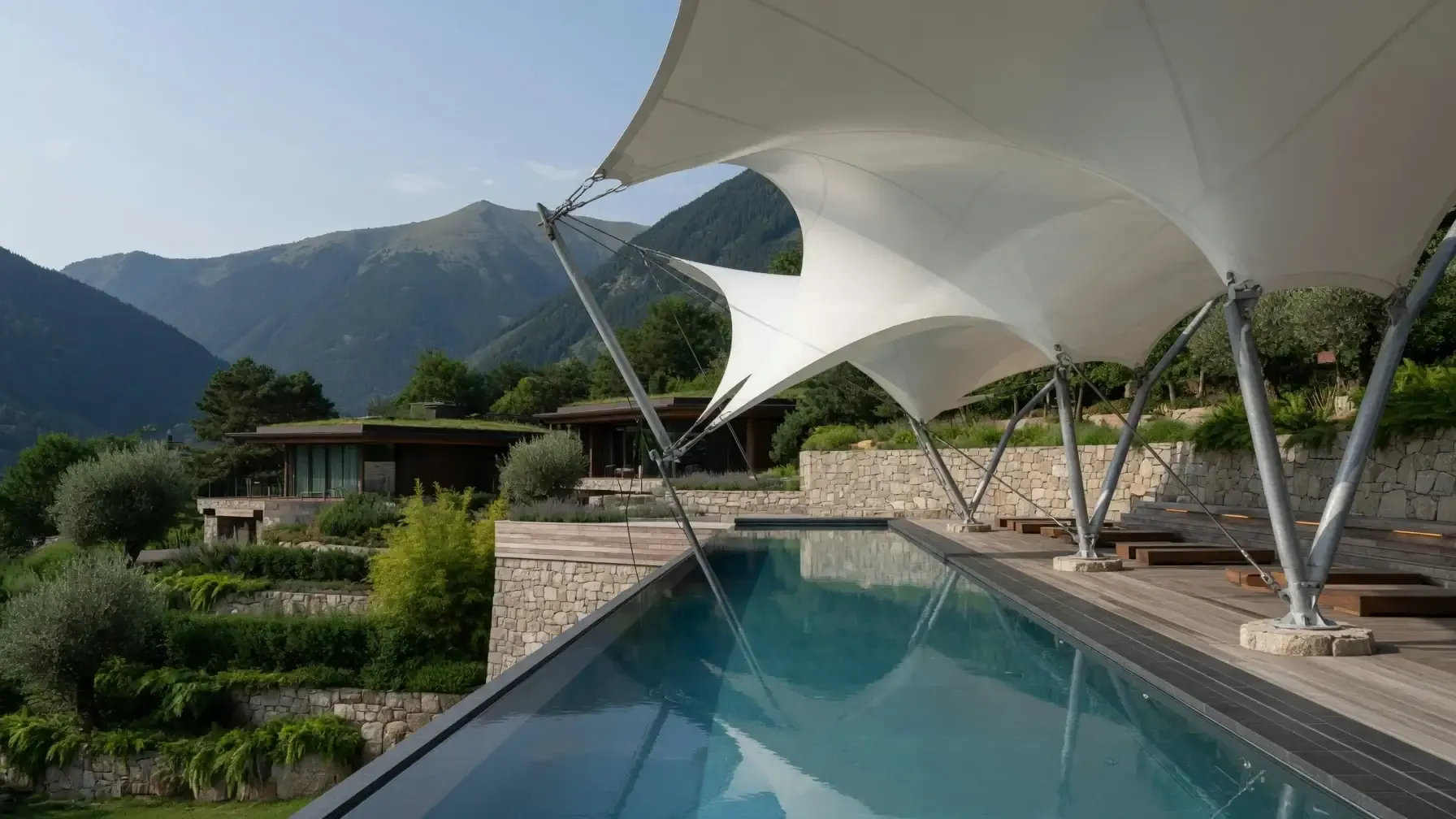
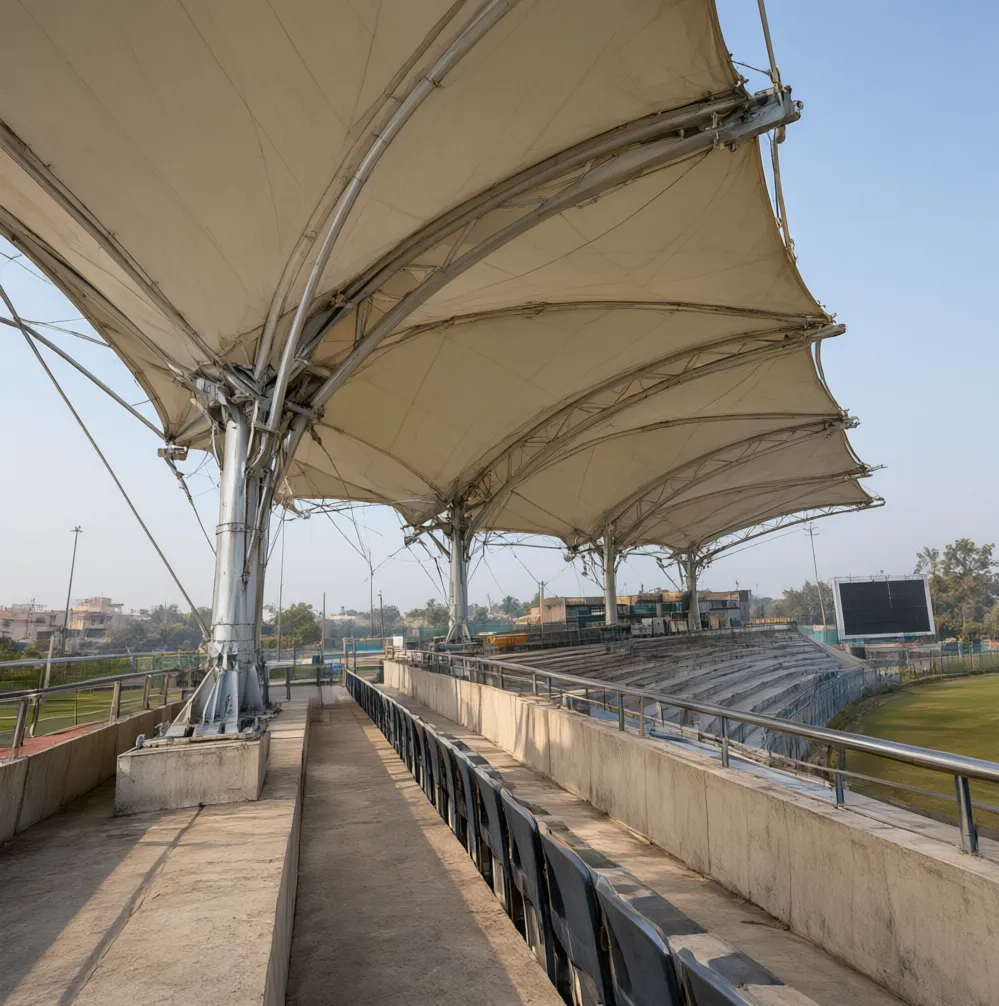
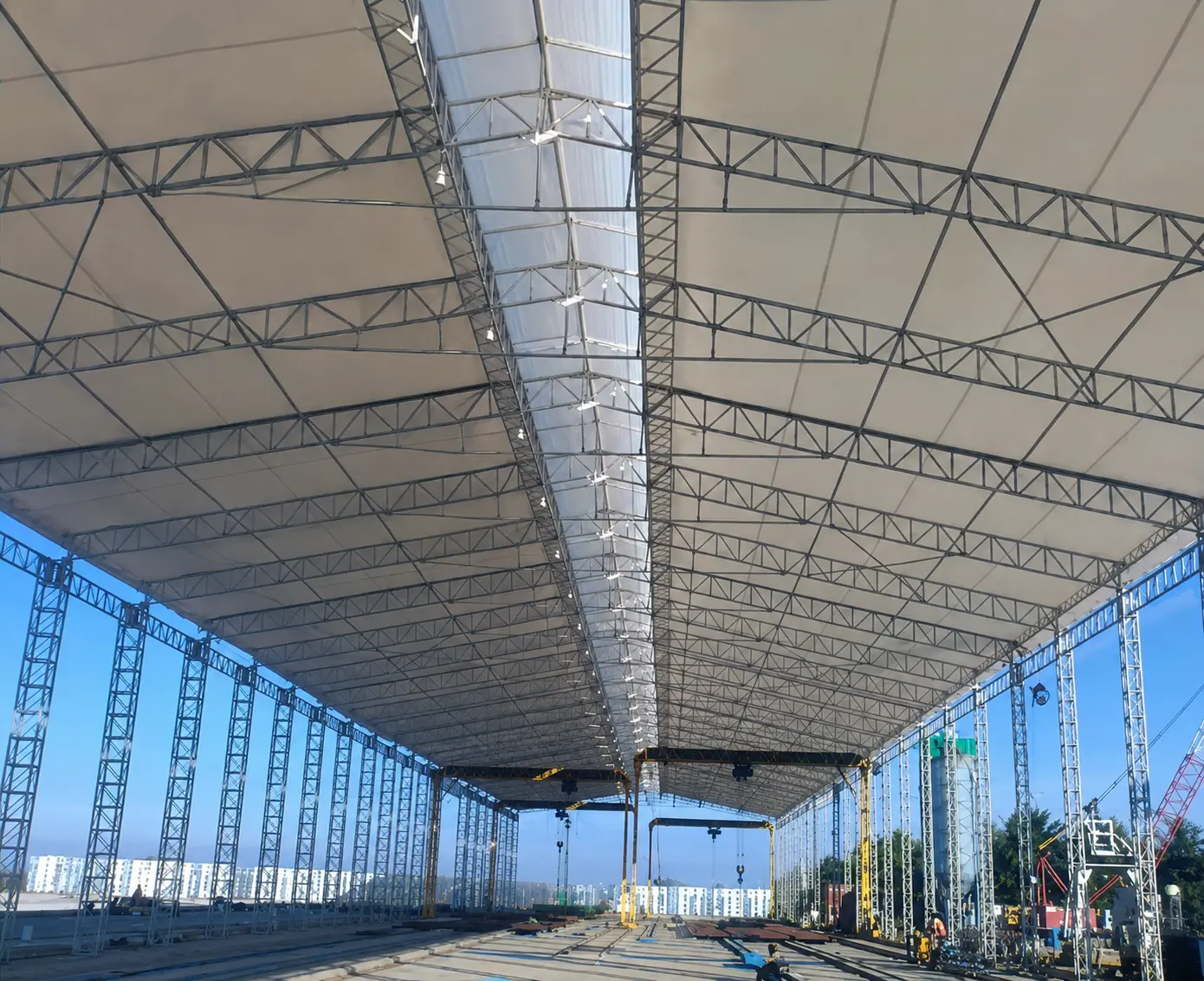
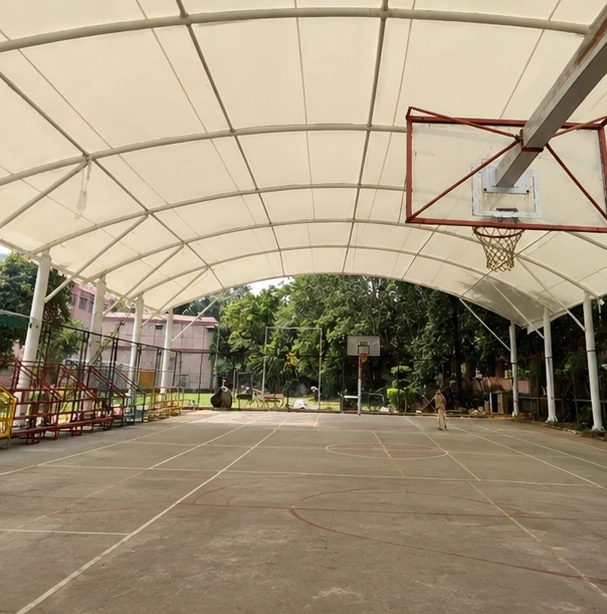
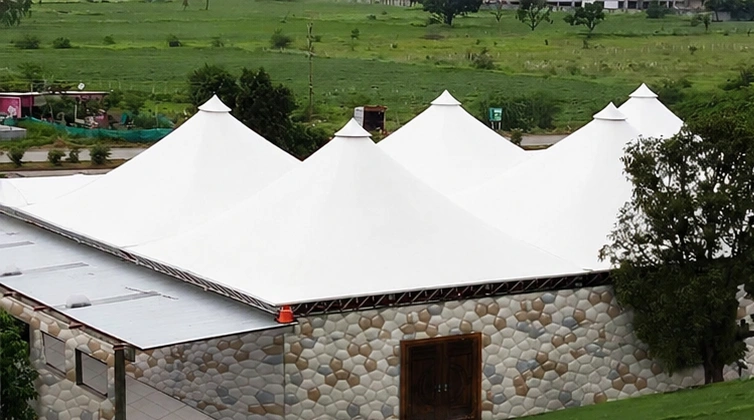
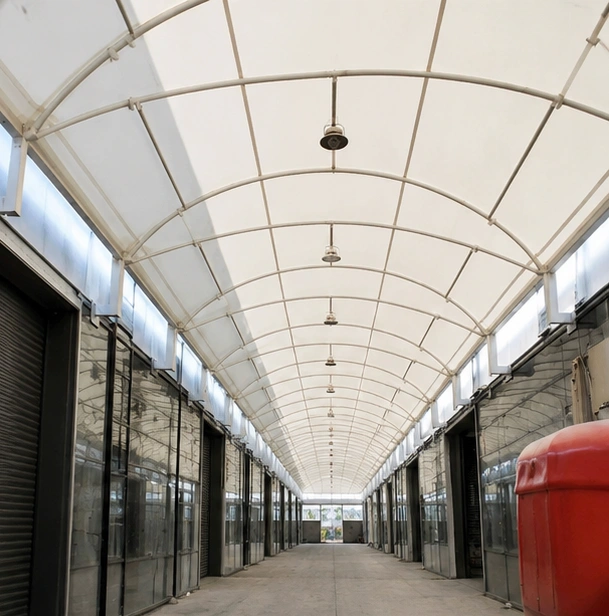
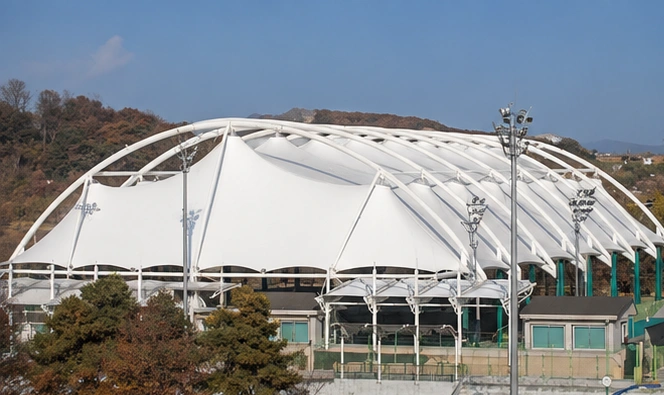
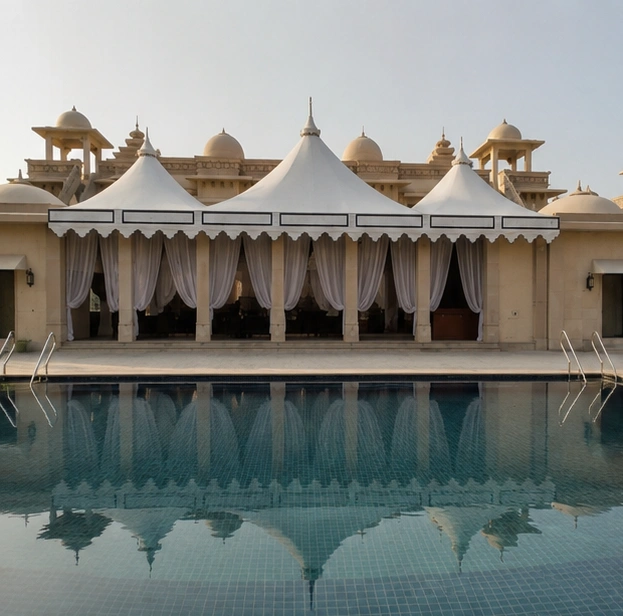
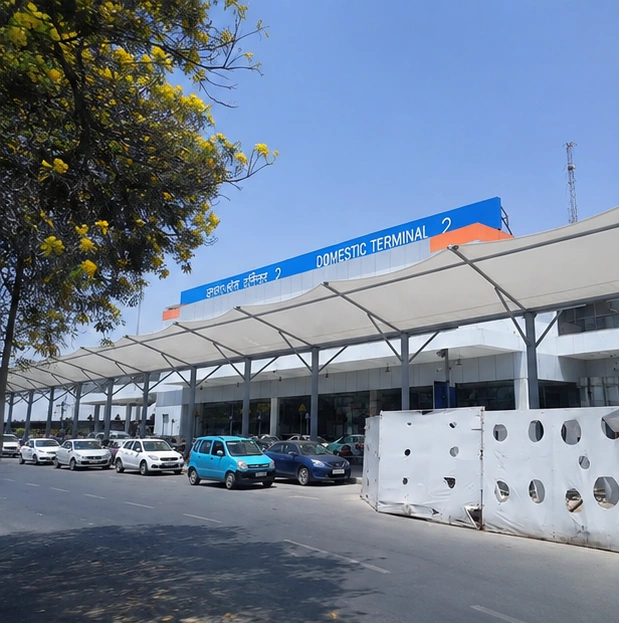
The workhorse of tensile architecture: a woven polyester cloth coated both sides in PVC and finished with a lacquer. Most car parks, walkways and canopies are built in it.
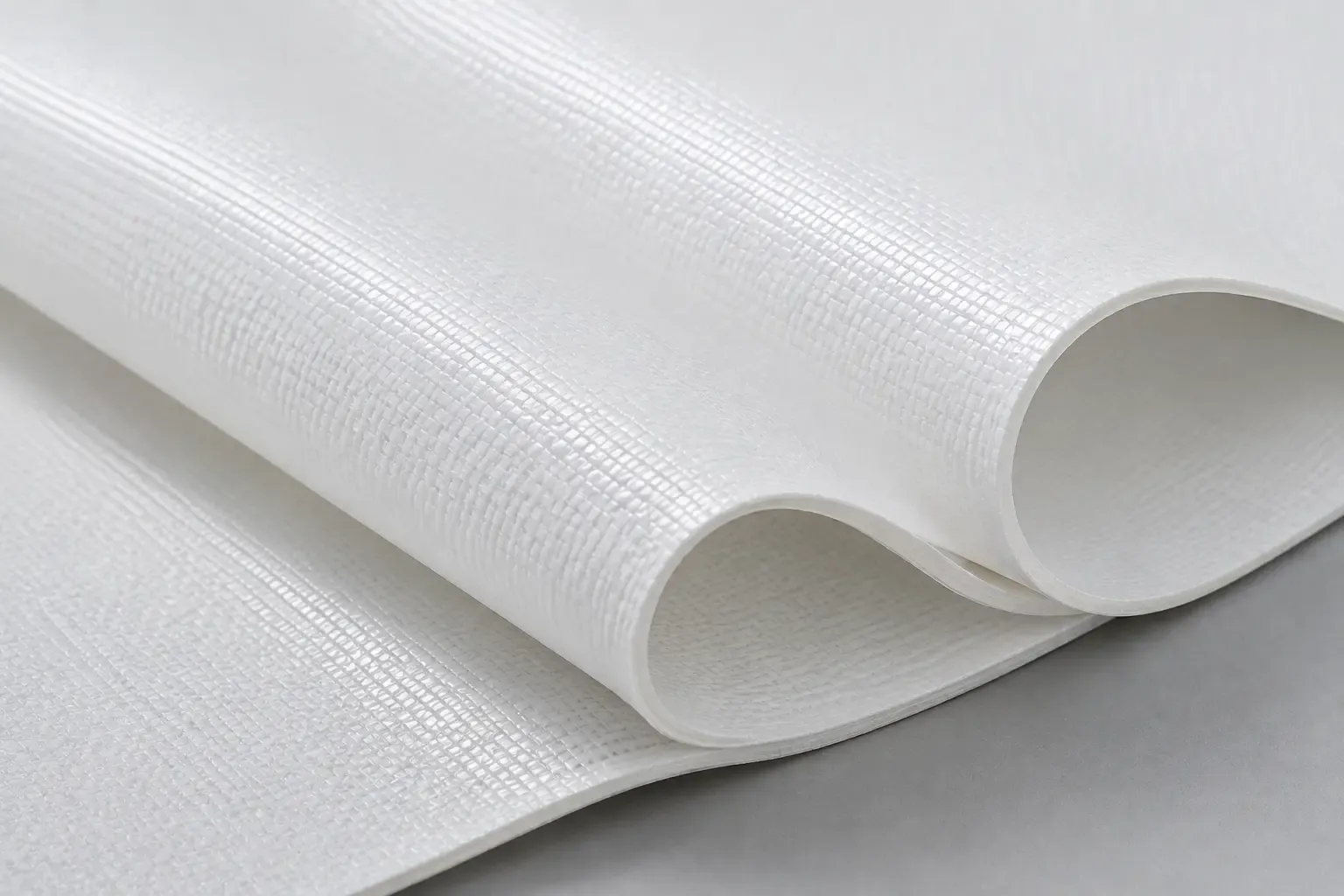 Illustrative
Why it is used
It costs the least, fabricates fastest, comes in almost any colour, folds for transport and welds into seams as strong as the cloth itself.
How it is built up
Layer by layer.
- 01
Polyester weave
High-tenacity yarn woven into the base cloth. It carries all of the tension, but it is a plastic yarn, so it creeps a little and needs protecting from UV.
- 02
PVC coating
Coated onto both faces and fused. It waterproofs the cloth, protects the yarn and gives the colour.
- 03
Top lacquer
A thin acrylic, PVDF or PVF layer that does no structural work. It decides how long the surface stays clean and bright.
Typical characteristics
The numbers, with their caveats.
- Coated weight
- ≈ 700–1,400 g/m² across Types I–V
- Light transmission
- ≈ 5–15%, fully diffused
- Fire
- Commonly DIN 4102 B1 / EN 13501-1 B-class: self-extinguishing, not non-combustible
- Service life
- ≈ 15–20 years with acrylic lacquer; ≈ 25 years with a PVDF finish
Typical ranges for the material class. The exact figure comes from the datasheet of the product we specify, checked against your project's structural and fire requirements.
Grades and options
Sold in weight bands, Type I to Type V.
Type I
≈ 700–900 g/m². Small canopies, shade sails, walkway bays and short spans.
Type II
≈ 900–1,050 g/m². The general-purpose grade for car-park bays, gazebos and mid-size canopies.
Type III
≈ 1,050–1,200 g/m². Larger cantilevers, longer clear spans and higher design loads.
Types IV–V
The heaviest grades, for the widest spans and highest loads.
Choose it for
- Car parks, walkways and everyday canopies
- Projects where colour choice matters
- Budget-led work where the fabric is a minority of the cost
Look elsewhere when
- A non-combustible fire class is required
- A 30-year design life is specified
- Maximum daylight is the point
FAQ
Common questions.
Typically 15 to 20 years with a standard acrylic lacquer, and around 25 with a PVDF finish, if it is kept clean and correctly tensioned.
No. It is flame-retardant and self-extinguishing, commonly B1 or B-class, but it is not non-combustible. Where an authority requires non-combustible construction, PTFE-coated glass is the answer.
Start a project
Not sure which membrane? Tell us what it has to do.
Tell us where it is, roughly how big, and what it has to cover. We come back with questions, options and the next step, which is usually a site survey.
or call +91 93159 45187