Retractable roofs · India
Roofs that open and close again.
Cover for May afternoons, dust storms and the monsoon. Open sky on a clear evening. We design, fabricate, test and install retractable roofs in fabric and polycarbonate, run by hand or by motor.
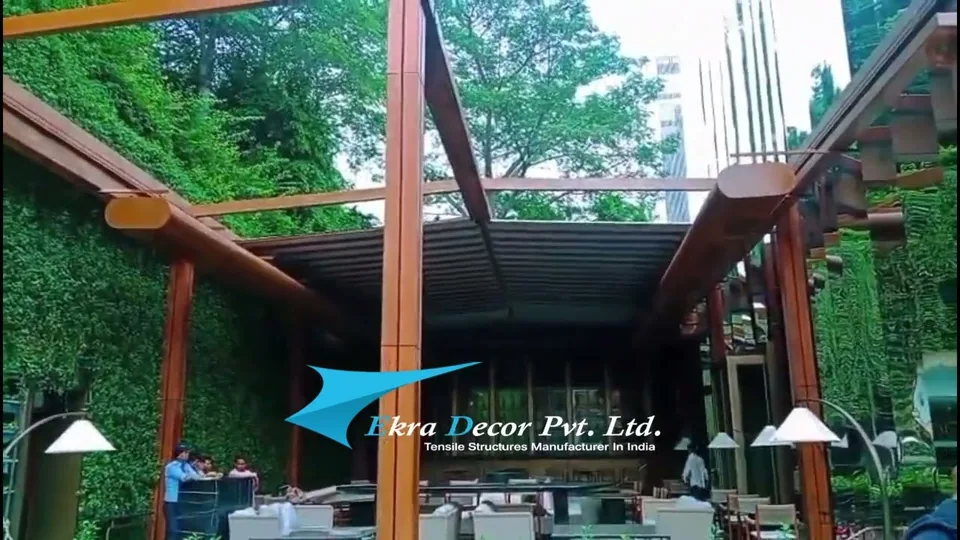 Our installation, Delhi NCR
In short
Reviewed October 2026
What is a retractable roof?
A retractable roof is a fixed frame with a cover, fabric or polycarbonate, that moves on rails or tracks so a space can be closed against sun and rain or opened to the sky. Only the cover moves; the columns, beams and foundations stay put. Most installed projects in India fall between ₹280 and ₹2,500 per sq ft plus GST, and a moving roof sits higher in that range than a fixed one.
- Operation
- Manual or motorised
- Cover
- Fabric or polycarbonate
- Warranty
- 1 year, complete system
- Price range
- ₹280–2,500 / sq ft + GST
- ISO 9001:2015Certified manufacturer
- Since 1998Building membrane structures
- One teamDesign, fabrication and installation
- In writing1-yr structure, 5–15-yr membrane warranty
- ItemisedQuote after a site survey
Watch it move
A still photo can't show whether a roof runs true.
What matters about a moving roof is whether it travels smoothly and stays taut the whole way. These 5 clips are our own installations, filmed on site and in our works.
Retractable roofs
Five ways to build a roof that opens.
The right one depends on the size of the space, how much daylight you want and how often it will move. Manual or motorised, fabric or polycarbonate.
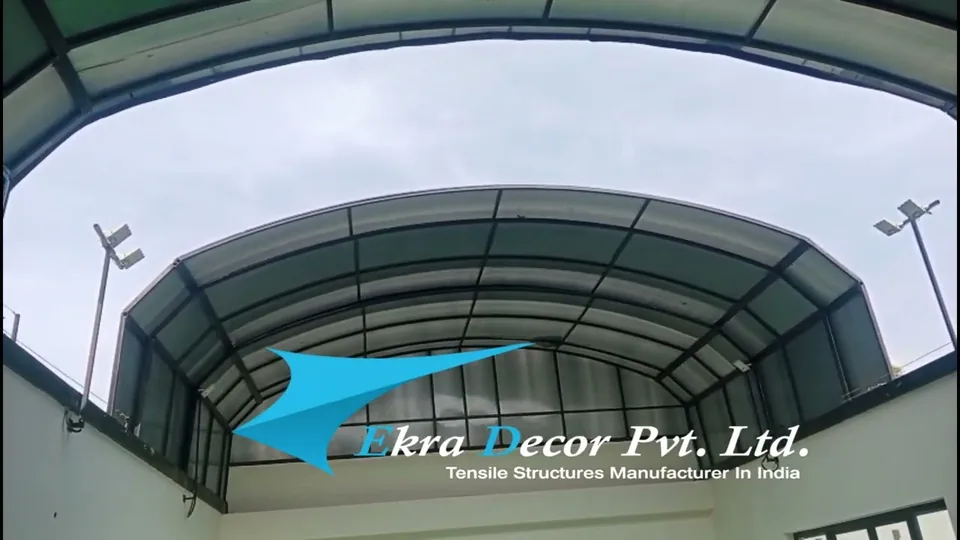
- 01Terrace & balconyOpen on winter evenings, closed against May afternoons and the monsoon.Open on winter evenings, closed against May afternoons and the monsoon.
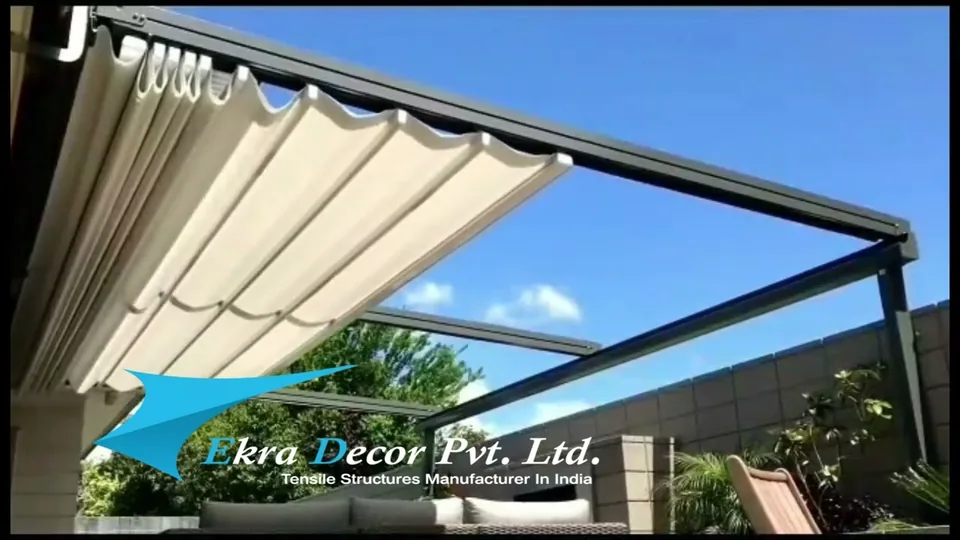
- 02Retractable pergolaA folding fabric roof on a pergola frame, for patios, lawns and sit-outs.A folding fabric roof on a pergola frame, for patios, lawns and sit-outs.
- 03Restaurant & courtyardMotorised fabric bays that turn an open courtyard into covers every night of the year.Motorised fabric bays that turn an open courtyard into covers every night of the year.
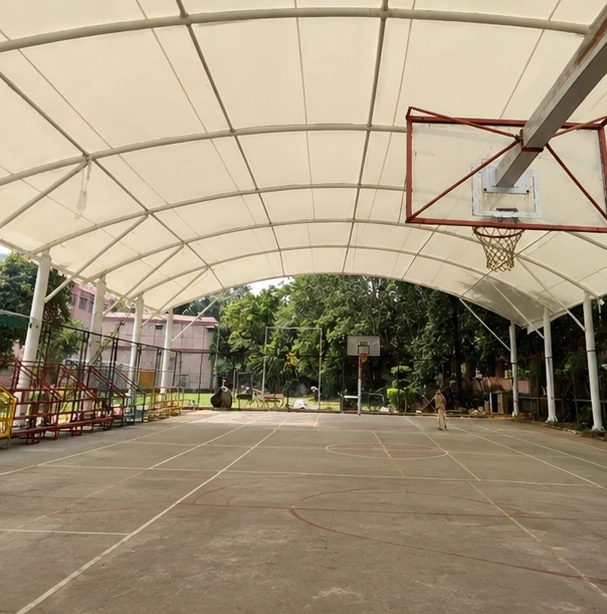
- 04Telescopic & slidingArched bays that nest inside one another, for pools, sit-outs and industrial bays.Arched bays that nest inside one another, for pools, sit-outs and industrial bays.
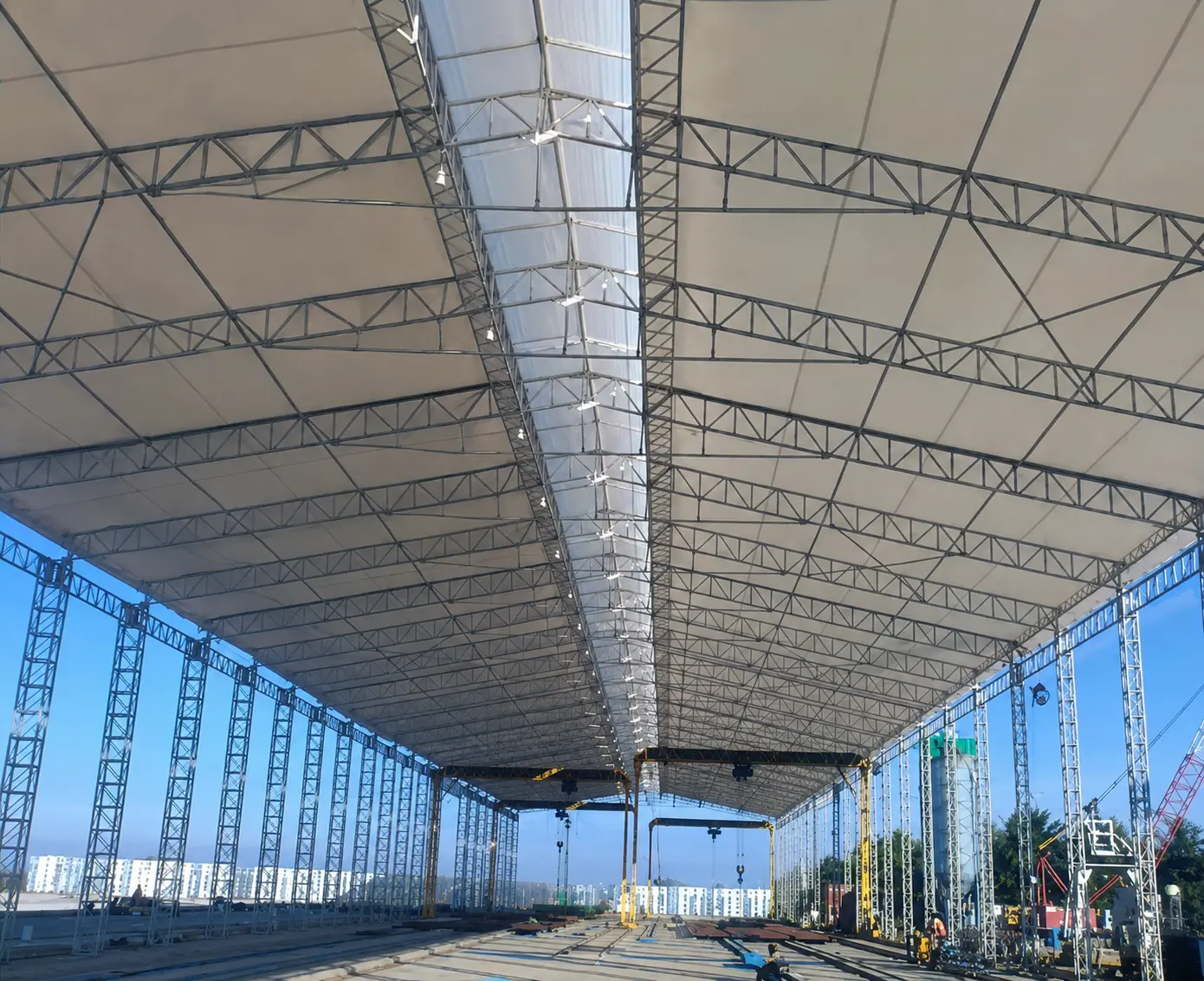
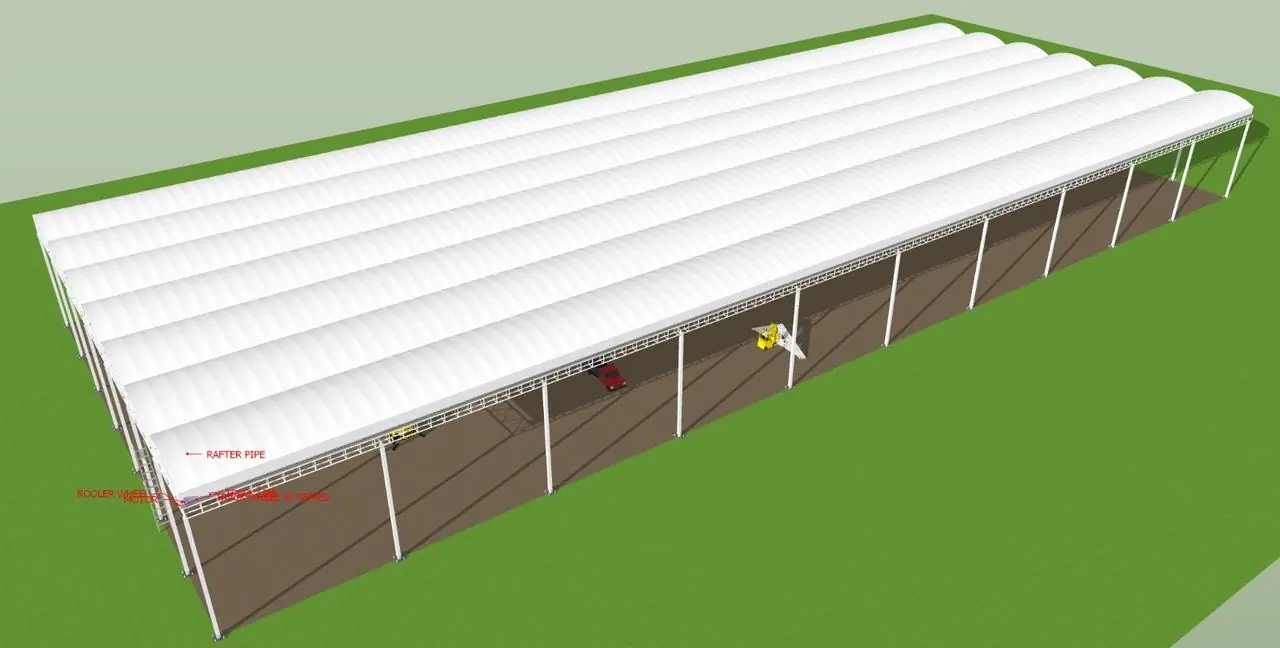
- 05Large-span systemsRail-guided motorised bays over courts, event spaces, yards and halls.Rail-guided motorised bays over courts, event spaces, yards and halls.
One structure, three positions
Scroll to open it.
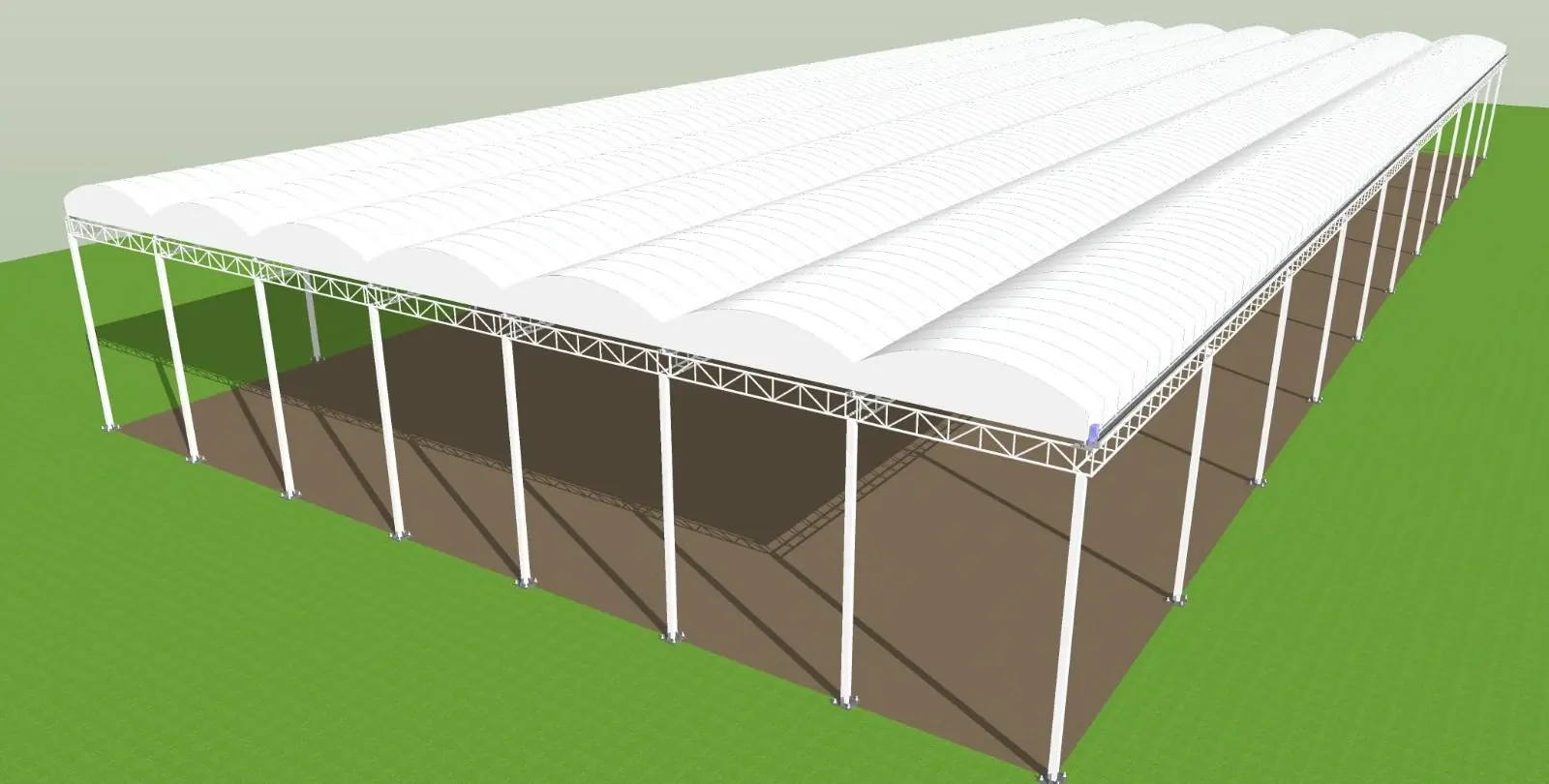
Closed
The membrane bays meet across the opening: full cover from sun and rain.
Part open
Some bays retract toward the parking end. Light and air in, part of the floor still covered.
Open
The bays stack at one end and the floor is open to the sky.
3D model of a five-bay rail-guided system, not a photograph.
Where they fit
Wherever one space has to work as both a covered room and an open one.
Homes
Rooftop terraces, balconies, pergolas, patios, courtyards and villa pools.
Restaurants and hotels
Courtyards, rooftop bars, banquet lawns and hotel courts that earn covers in any weather.
Pools
Telescopic or sliding enclosures that keep leaves and rain out and open fully on a clear day.
Sports and venues
Courts, academies, event spaces and halls that switch between indoor and open-air.
Built like a structure, controlled like a machine
Steel that stays. Bays that move.
The columns, trusses and foundations carry every load at all times. The bays ride on carriages along a fixed rail, so the rail and carriage are the one moving link in the load path. On motorised systems, every movement starts on a deliberate command and passes through the safety logic first.
- Emergency stop
- Limit switches
- Mechanical end stops
- Motor protection
- Safety interlocks
- Position monitoring
What it costs
Area alone won't price it.
Most installed projects fall between ₹280 and ₹2,500 per sq ft plus GST. Two roofs over the same floor area can land in different places, because the moving system does not scale with area.
The full cost guide- 01
The movement system
On a retractable roof the drive, not the fabric, is usually the headline cost. Each moving bay carries its own drive and has to stay in step, so the number of moving bays sets much of the mechanical cost.
- 02
Span
A wider opening deepens the trusses, which grows the columns, which grows the foundations. Span also lengthens the rails and tightens alignment, so it shows up twice on the quote.
- 03
How often it opens
A banquet lawn opened for events, a restaurant opened most evenings and an industrial bay opened for crane access are three different drive specifications for the same opening.
- 04
Power, control and safety
Interlocks, per-bay controllers, limit switches, end stops and position monitoring are not optional over occupied space. Whether three-phase power exists on site is a real line item.
- 05
The membrane
PVC pleats and re-tensions well and is economical. A PVDF finish buys durability and self-cleaning; PTFE costs more and lasts longer. The span and the duty decide, not a preference.
- 06
Drainage in every position
A fixed roof drains one way. A retractable roof drains closed, open and everywhere between, which is coordinated at detailed design.
What we can show you
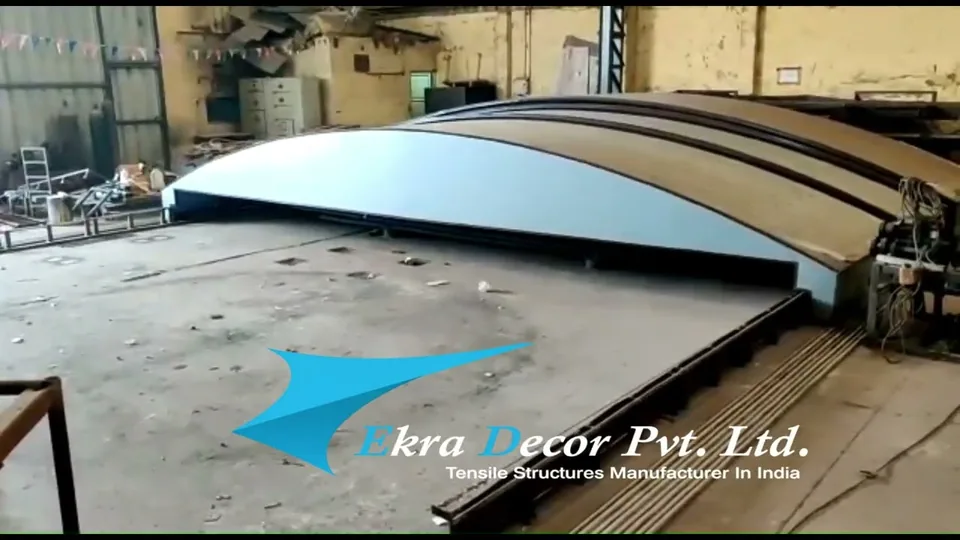
Our retractable work on video is a motorised fabric roof over a restaurant courtyard in Delhi NCR, a sliding polycarbonate terrace roof, a folding fabric pergola and a telescopic roof on test in our works. The large-span images on this site are 3D design models: we have not yet built a stadium-scale retractable roof we can name here, and we would rather say so than let a render stand in for one.
Behind all of it is 28+ years of fixed tensile work: steel, membrane and foundations, built and installed by the same team. See the projects.
A roof whose cover, fabric or polycarbonate, moves on tracks or rails so the space underneath can be closed against sun and rain or opened to the sky. The frame and foundations stay fixed; only the cover bays move.
Most installed projects fall between ₹280 and ₹2,500 per sq ft plus GST, and a moving roof sits higher in that range than a fixed one of the same area. The number of moving bays, the span, how often it opens, the power and safety chain, the membrane and the drainage decide where yours lands.
Manual suits a balcony or small pergola you will not move every day. Motorised is worth it on a large terrace or courtyard, or for anything opened daily. It needs a power point at the drive, and adding a motor later is not simple.
Fabric is lighter, cooler underneath, quieter in rain and folds compactly. Polycarbonate gives more daylight but gets hot in summer, is louder in rain and needs a UV-protected face. It is a structural choice made early.
Closed, yes from above: the cover sheds rain to gutters and downpipes, and the roof is designed for your site wind. It is weather cover, not a sealed room, so air moves at the edges.
A motorised roof stays where it is. If your site loses power often, ask for a manual override or a backup supply at design stage.
One year on the complete system, in writing: mechanism, drive and controls together with the structure. The membrane grade and its warranty are named in your quote.
Lead time is given in writing from final drawing approval. Most of the work is fabrication and testing in our works; every system is run through its full travel before it goes to site.
Yes. Our own installations on video include a motorised fabric roof over a restaurant courtyard in Delhi NCR, a sliding polycarbonate terrace roof, a folding fabric pergola and a telescopic roof tested in our works. We do not yet have a large-span stadium-scale retractable roof to show; those images are design models.
Types
Guides
- How a retractable roof worksModes, load path, drive, controls and safety.
- Retractable roof price in IndiaThe six things that move the number.
- Manual vs motorisedWhich way each factor points.
- Fabric vs polycarbonateLight, heat, rain noise, span and upkeep.
- Watch them move12 clips, 5 of them our own installations.
Start a project
Thinking of a roof that opens? Send the size and a few photos.
Tell us the space, the floor it is on and how often you would open it. We come back with a design direction and the next step, which is usually a site survey.
or call +91 93159 45187