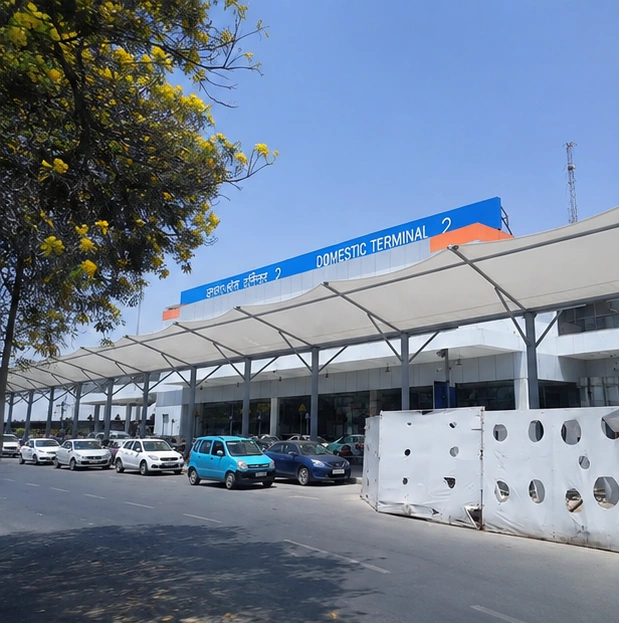
Material 02 — PVDF-lacquered PVC
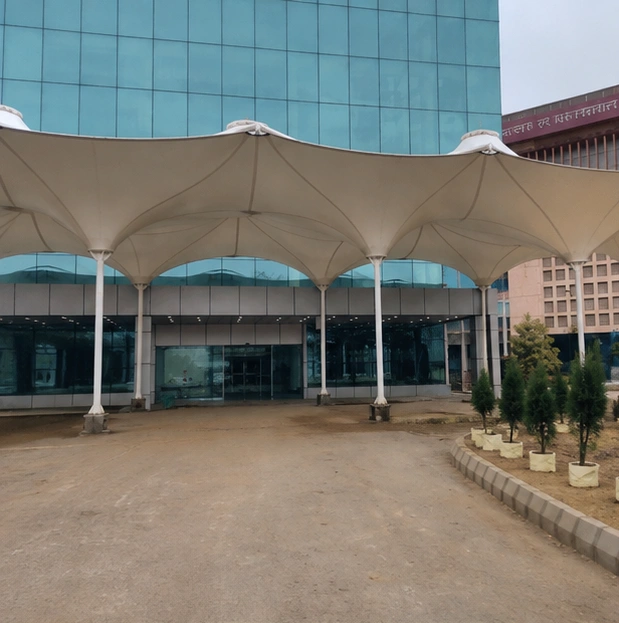
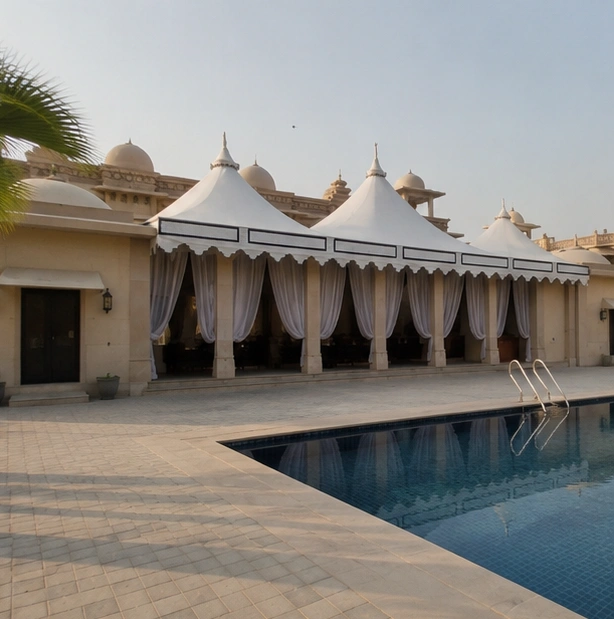
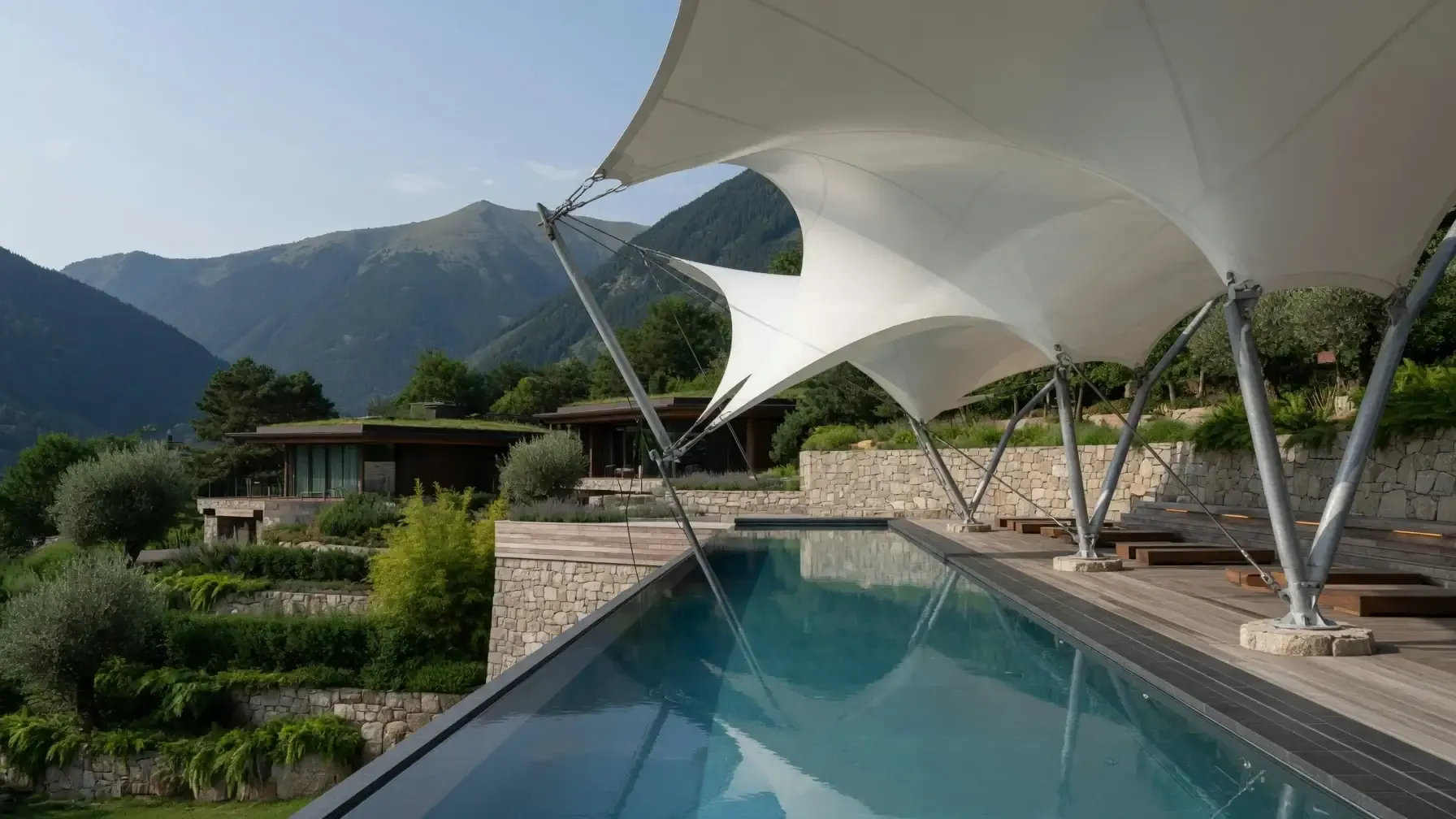
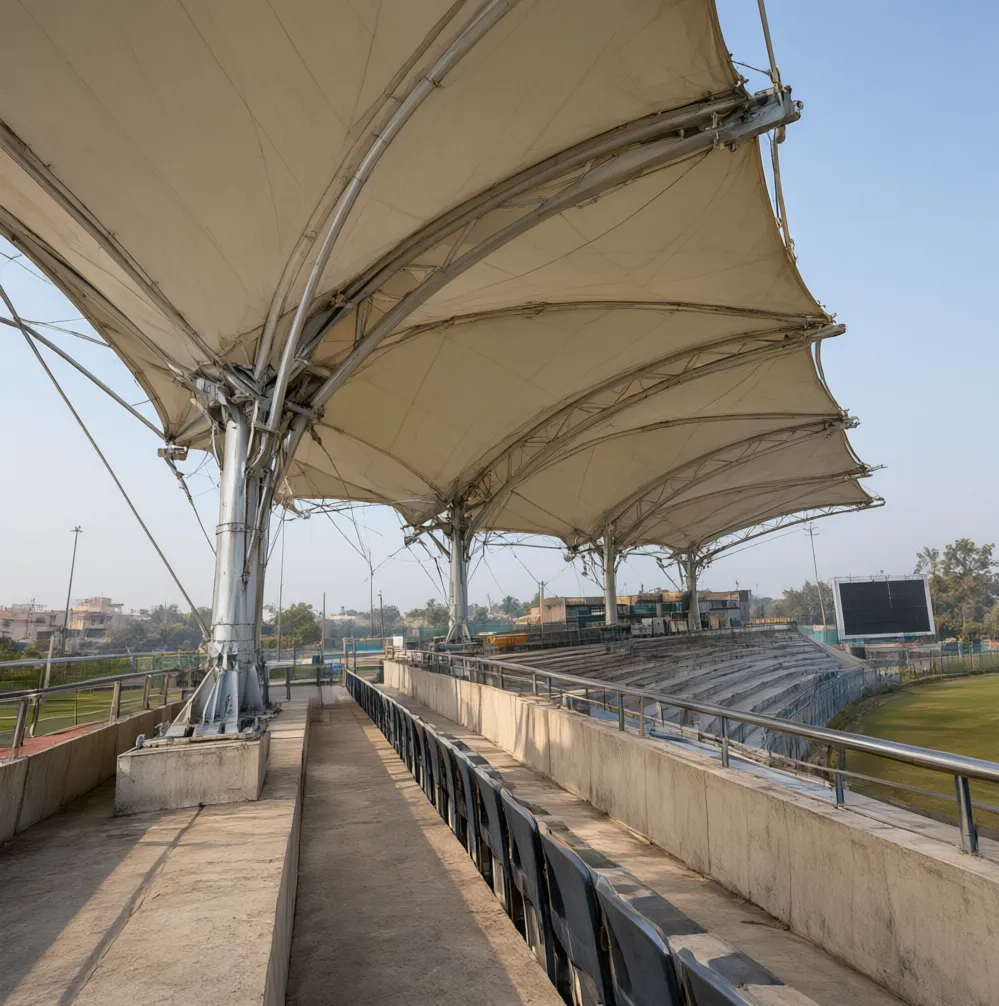
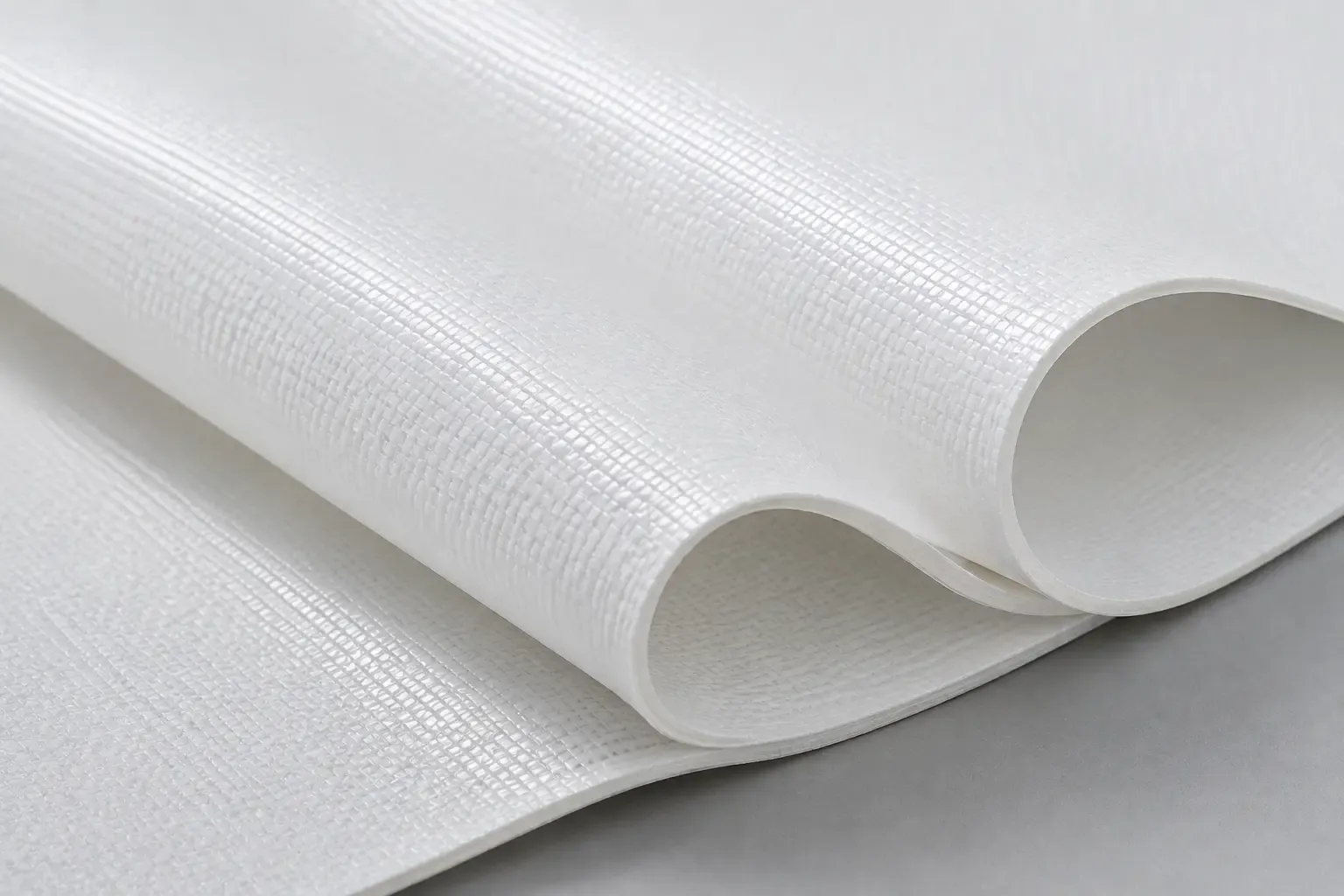
PVDF membrane.
Standard PVC-coated polyester with a thin fluoropolymer lacquer on top. Not a different fabric, but a much longer-lasting surface.
Why it is used
Dirt does not bond to PVDF, so rain carries most of it away. The roof stays brighter, holds its colour and lasts years longer before it needs attention.
How it is built up
Layer by layer.
- 01
Polyester weave
Unchanged from standard PVC membrane. It still carries all of the load.
- 02
PVC coating
Waterproofs and colours the cloth, exactly as before.
- 03
PVDF lacquer
A few microns of fluoropolymer, oven-cured during manufacture. Very UV-stable and low-friction, it protects the PVC and slows the plasticiser loss that ages old membranes.
Typical characteristics
The numbers, with their caveats.
- First surface problems
- ≈ 10–15 years, vs ≈ 5 with acrylic
- System design life
- ≈ 20–25 years, up to 30 in mild exposure
- Fire
- Unchanged: still B-class, self-extinguishing
- Colours
- The full PVC range, held for longer
Typical ranges for the material class. The exact figure comes from the datasheet of the product we specify, checked against your project's structural and fire requirements.
Grades and options
How the finishes compare on the same PVC base.
No lacquer
Holds dirt and shows problems within a few years.
Acrylic lacquer
Fair colour hold; first surface problems around five years; ≈ 15–20 year life.
PVDF lacquer
Sheds dirt in rain, holds colour and gloss; ≈ 20–25 year life, and can be re-lacquered.
PVF film
A laminated fluoropolymer film; the longest-lasting PVC finish, with specialist welding.
Choose it for
- Permanent commercial and civic work
- Dusty, polluted or tree-shaded sites
- White or coloured roofs that must stay presentable
Look elsewhere when
- You need a non-combustible fire class
- You want more daylight than plain PVC gives
- A short-life or temporary structure
FAQ
Common questions.
For a permanent roof, usually yes. The uplift is small and it buys a cleaner surface, better colour hold and several more years of life. It matters most on white roofs and on dusty or polluted sites.
No. It adds no strength and does not change the fire class. It is a weathering skin only.
Start a project
Not sure which membrane? Tell us what it has to do.
Tell us where it is, roughly how big, and what it has to cover. We come back with questions, options and the next step, which is usually a site survey.
or call +91 93159 45187