Compare
Tensile membrane or metal sheet?
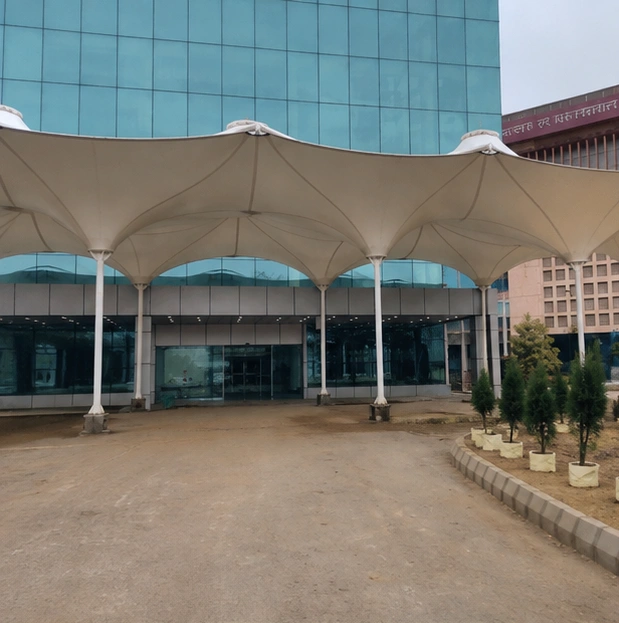
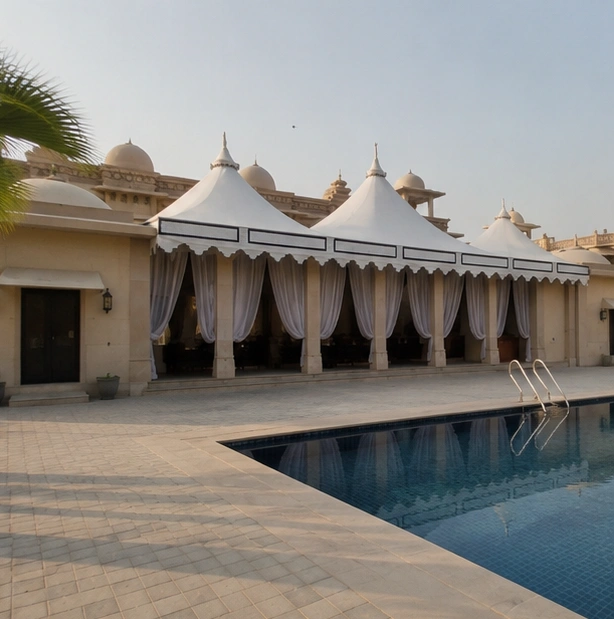
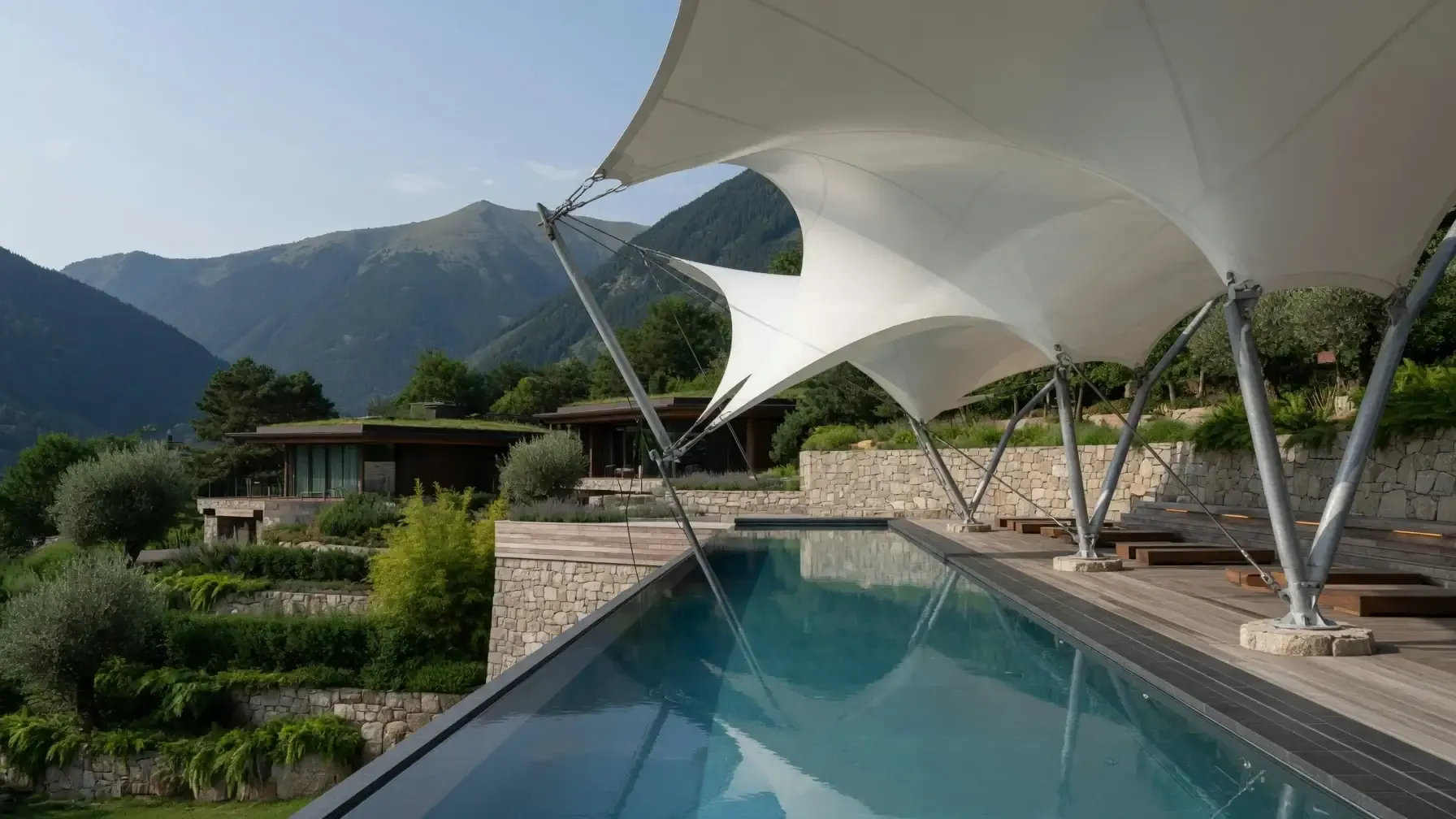
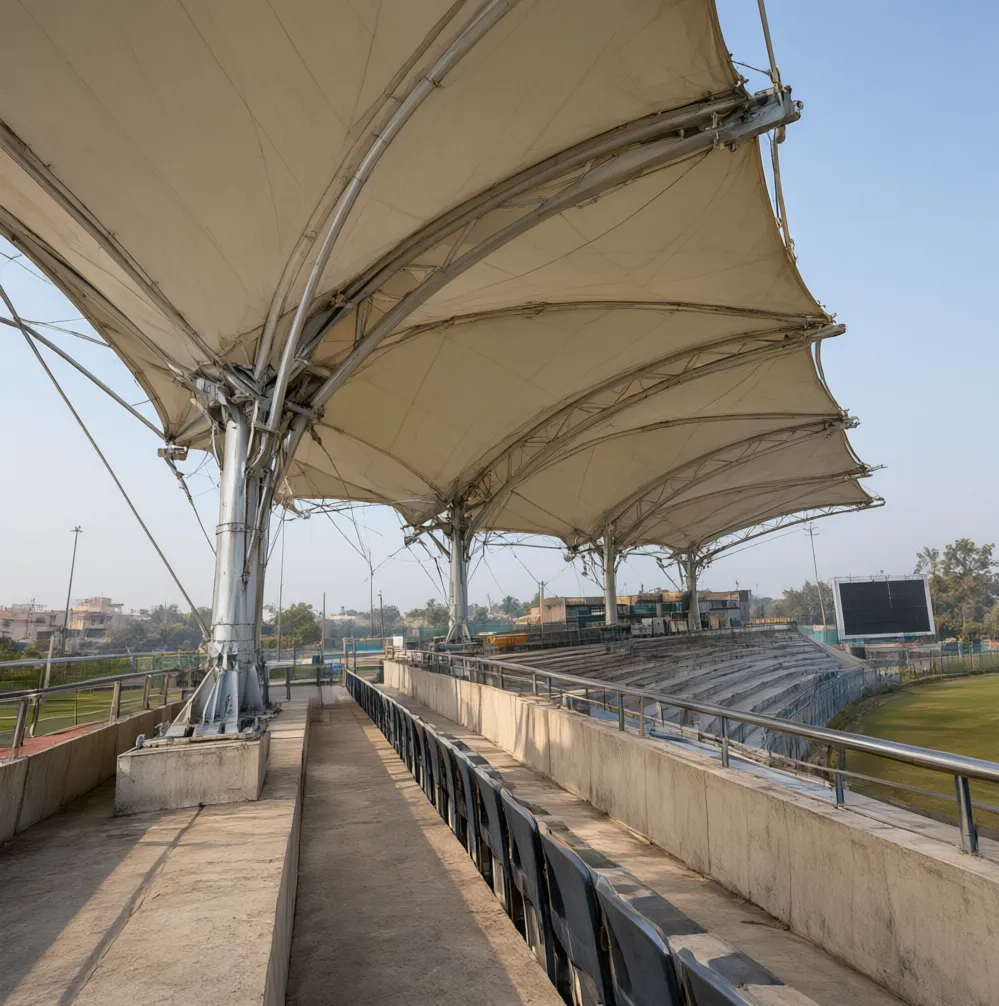
One covers open space. The other builds an enclosed building. Most of the decision follows from that difference.
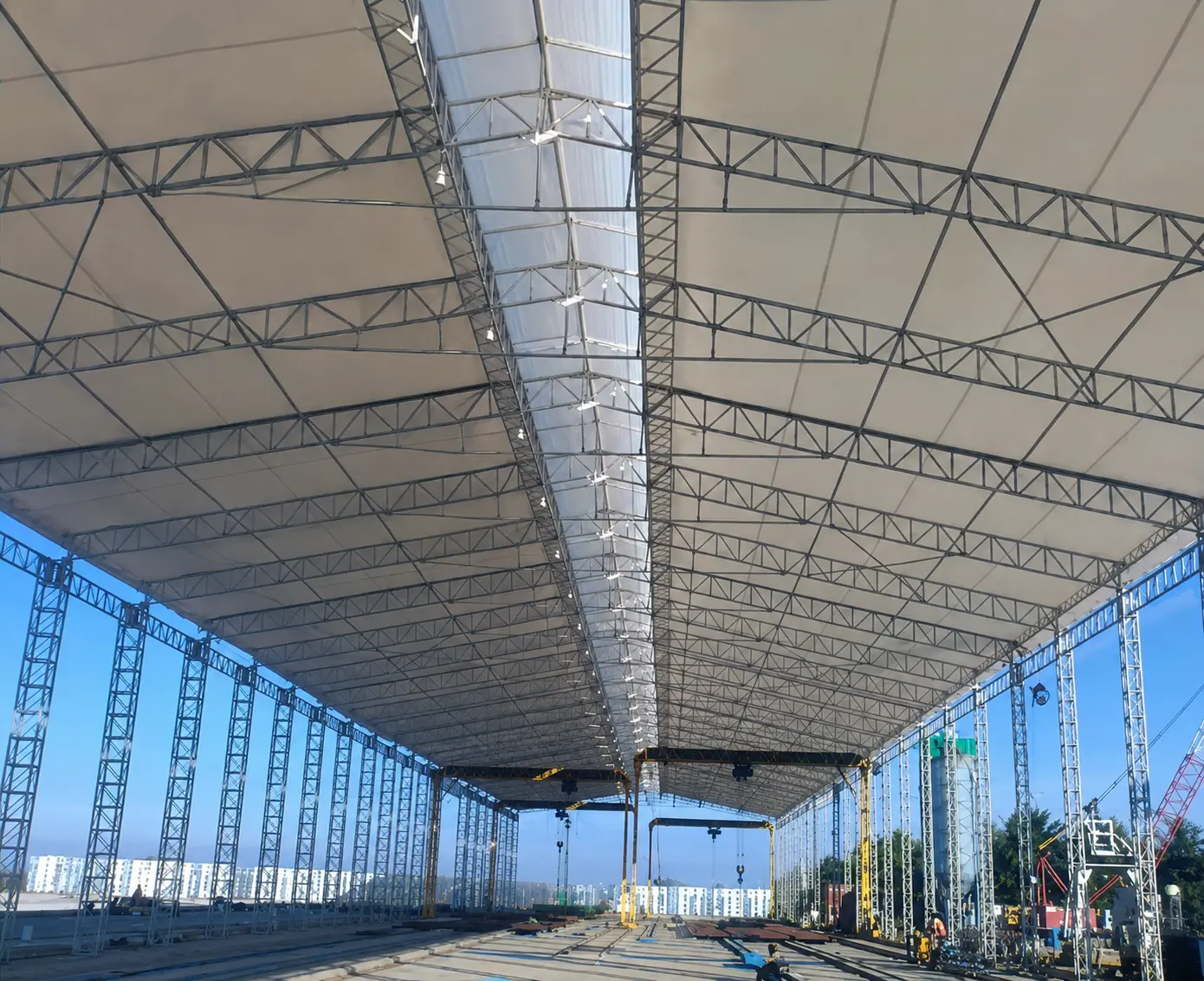
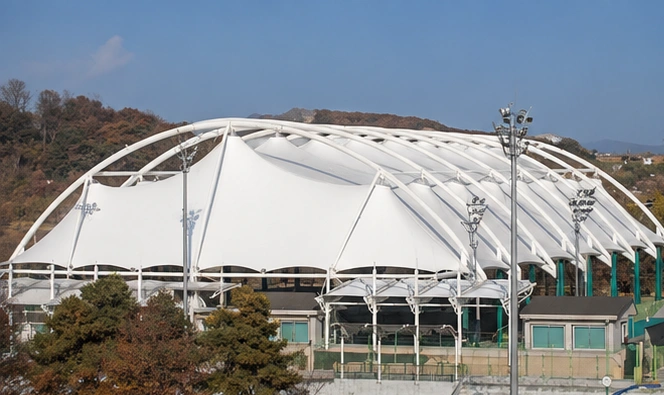
Where the area must stay open, columns must stay clear and the span is large, a membrane usually wins. Where the space must be sealed, insulated or walked on, sheeting does.
Typical figures. The right answer for your site depends on the span, the use and the wind.
When to choose each
It depends on the job, not the brochure.
Tensile membrane
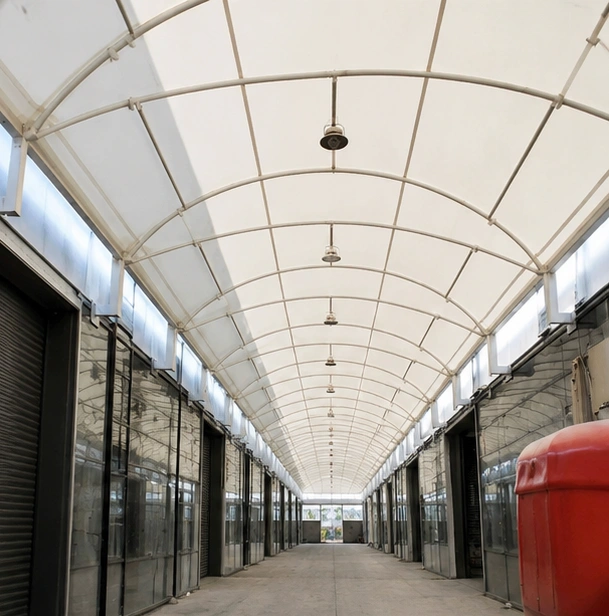
- The area stays open on one or more sides
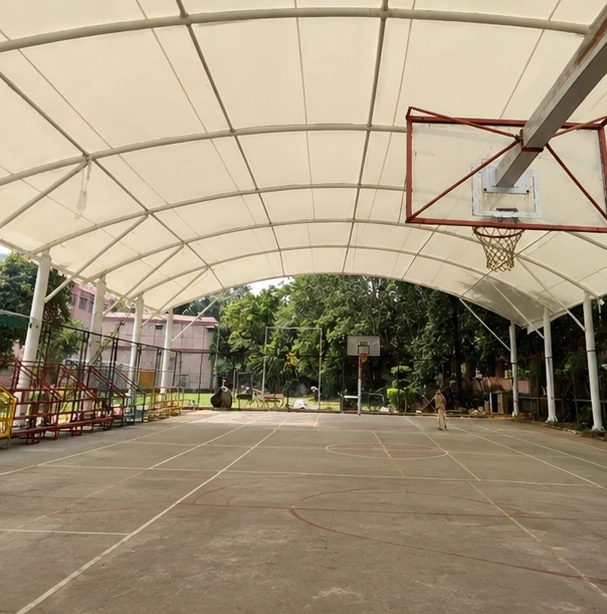
- Columns must stay clear of vehicles, forklifts or play
- You want daylight through the roof
- People use the space in hot weather
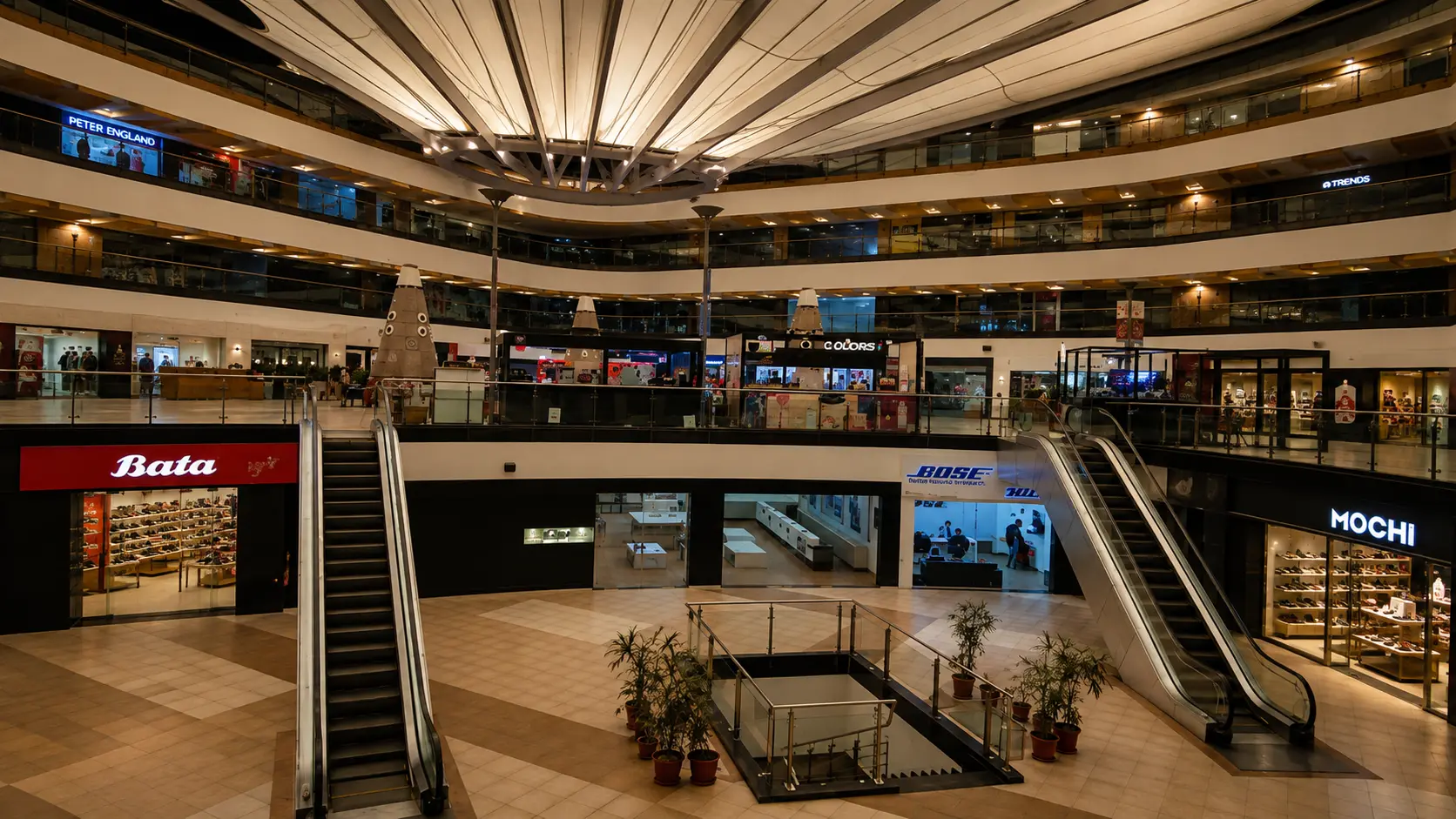
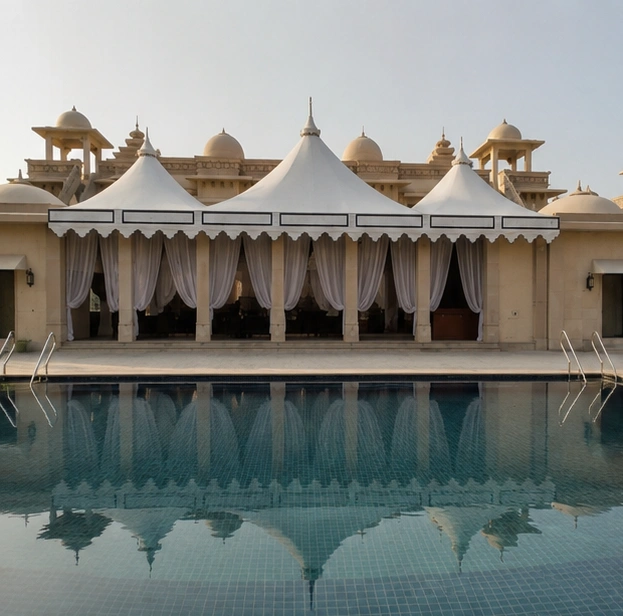
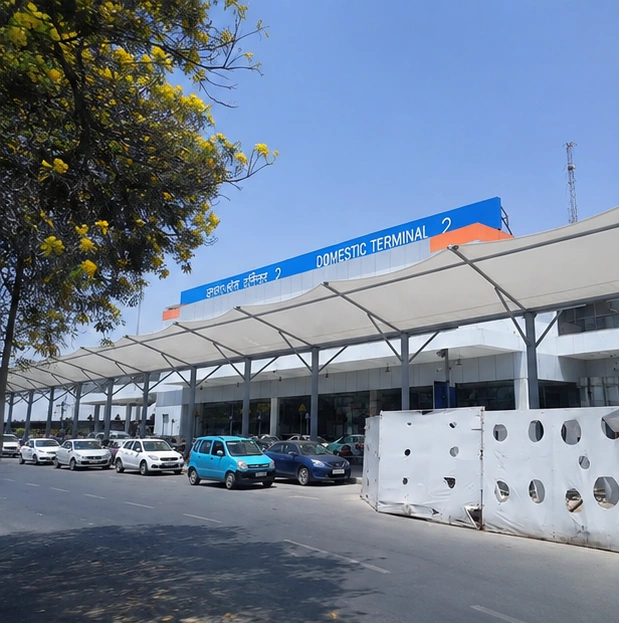
- It faces guests and should look like architecture
- An irregular plot, or a light existing frame
Metal sheet
- The space must be enclosed, insulated or climate-controlled
- Solar panels, plant or services go on the roof
- Someone must walk on it
- Security or dust-tightness needs a sealed building
- A short span with columns anywhere
- A remote site where repairs must be local
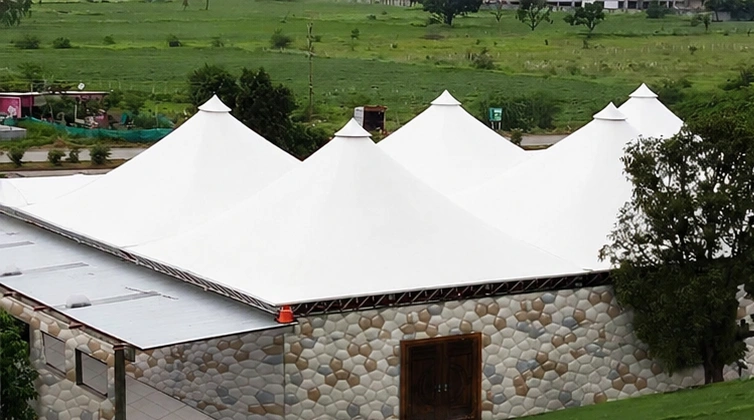
They are often used together: a sheeted production or storage building, with membrane canopies over the loading docks, yards, walkways and parking around it.
It depends on the span. Sheeting usually wins on small sheds with columns anywhere. On large clear spans, irregular plots and light existing frames, a membrane often wins on total cost.
An uninsulated light-toned membrane, because it reflects much of the sun. An insulated metal panel roof is a different comparison.
No. If the roof has to carry solar, plant or foot traffic, it needs to be sheeted.
Comparable over a building's life. Membranes age by chalking and losing gloss before seams fail; sheeting fails at fasteners, laps and cut edges. In both cases the frame outlasts the skin.
Start a project
Not sure which fits? Tell us the span and use.
Tell us where it is, roughly how big, and what it has to cover. We come back with questions, options and the next step, which is usually a site survey.
or call +91 93159 45187