

Pune — Maharashtra
Industrial Structures in Pune.
Industrial tensile structures cover loading docks, yards, staging areas, staff parking and walkways that have to stay open. In Pune, the design is driven by monsoon rain and the gusts off the Ghats, rather than heat.
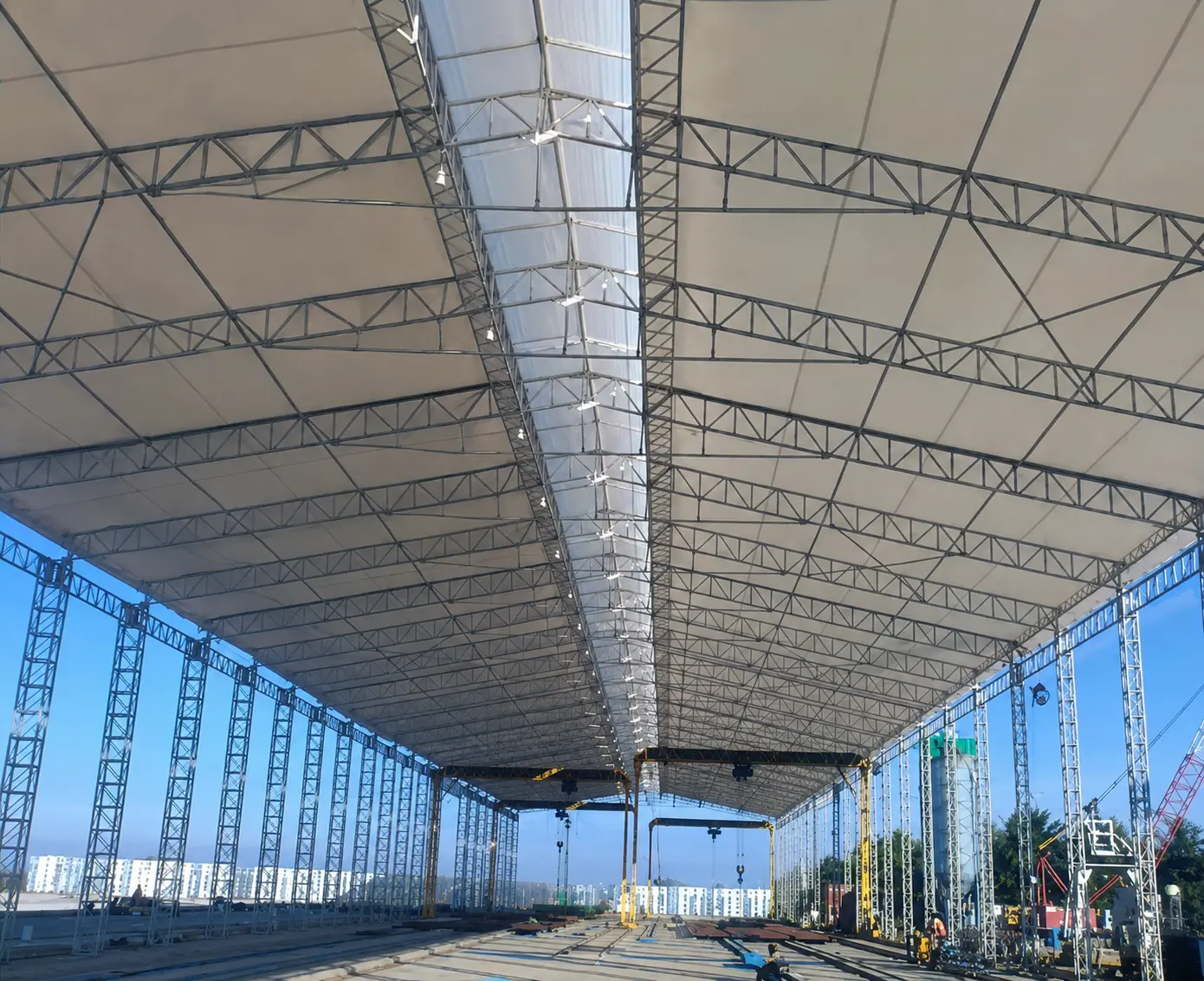 BDA Housing, Bangalore
What makes industrial structures in Pune different?
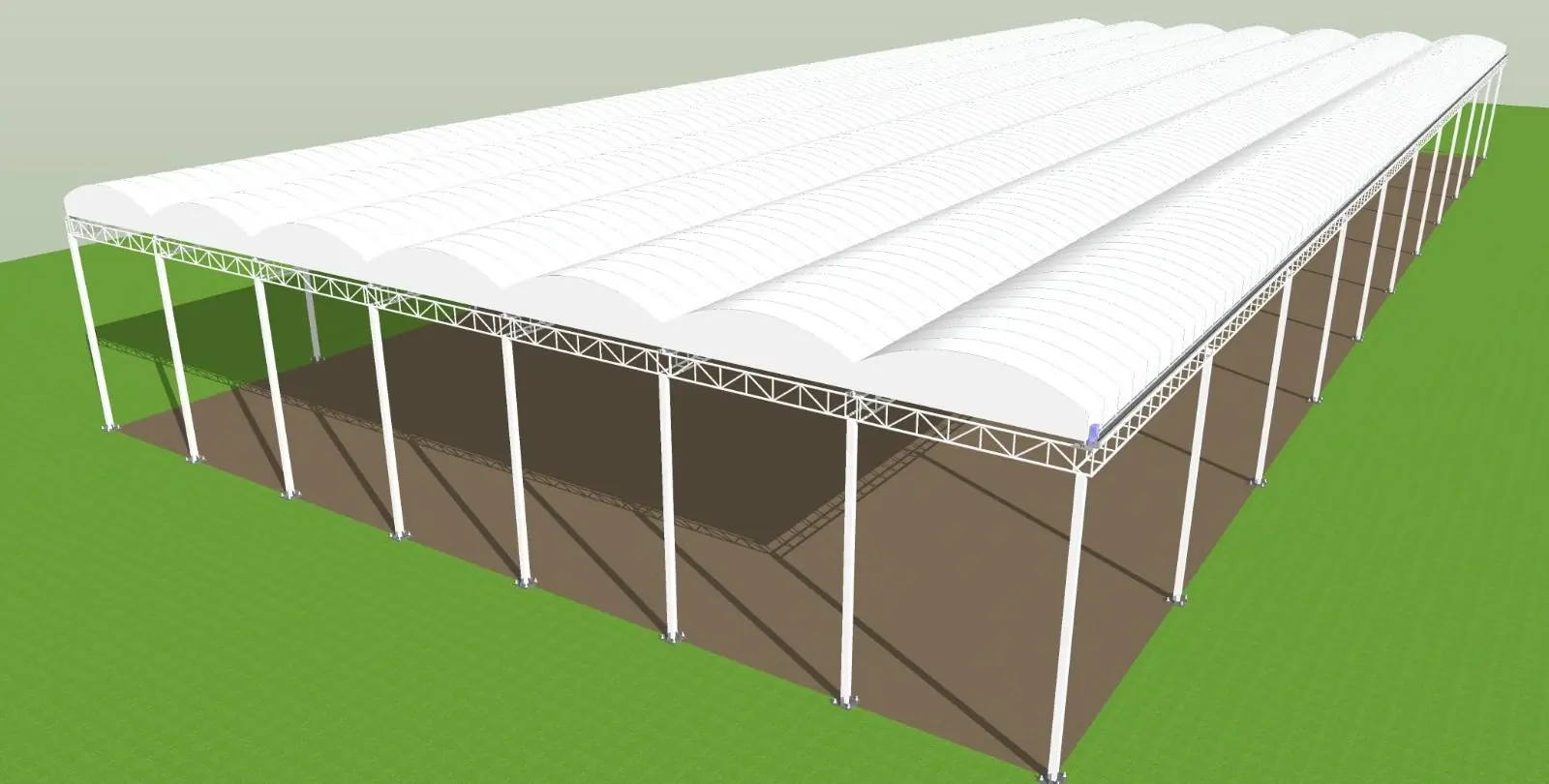
Industrial roofs around Chakan and Ranjangaon are long-span work over plant that cannot stop, so the sequence matters as much as the structure: bays are closed one at a time over a working floor. Ghat gusts arrive with more force than the city average suggests, so uplift governs the frame, and Deccan basalt usually allows shallow footings, which keeps the disruption short.
In short
Reviewed October 2026
Do you build industrial structures in Pune?
Yes. Industrial tensile structures cover loading docks, yards, staging areas, staff parking and walkways that have to stay open. A membrane spans further on less steel than a sheeted shed, keeps columns out of vehicle routes and lets daylight through. Our group's largest single roof is about 20,000 m² for Siemens in Goa, built in roughly two months. For Pune specifically, monsoon rain and the gusts off the Ghats, rather than heat sets the engineering, and pVDF-lacquered PVC handles the industrial-belt dust; PTFE for landmark roofs.
- City
- Pune, Maharashtra
- What drives it
- Monsoon rain and the gusts off the Ghats
- Usual membrane
- PVDF-lacquered PVC handles the industrial-belt dust
- Price range
- ₹280–2,500 / sq ft + GST
- ISO 9001:2015Certified manufacturer
- Since 1998Building membrane structures
- One teamDesign, fabrication and installation
- In writing1-yr structure, 5–15-yr membrane warranty
- ItemisedQuote after a site survey
Designing for Pune
What the site does to the design.
The design wind pressure is worked out for your exact site under IS 875 (Part 3), from its terrain, height and exposure. We do not take a city figure off a list.
A plateau climate: warm days, cool nights and a short hot season.
About 700 mm of monsoon rain on the city side, June to September, far more towards the Ghats.
Gusty winds funnelled off the Western Ghats.
- Ground
- Mostly Deccan basalt, good to build on. Weathered zones and black cotton soil in low-lying areas need investigating.
- What drives the design
- Monsoon rain and the gusts off the Ghats, rather than heat.
- Membrane
- PVDF-lacquered PVC handles the industrial-belt dust; PTFE for landmark roofs.
The structure
Industrial Structures in detail.
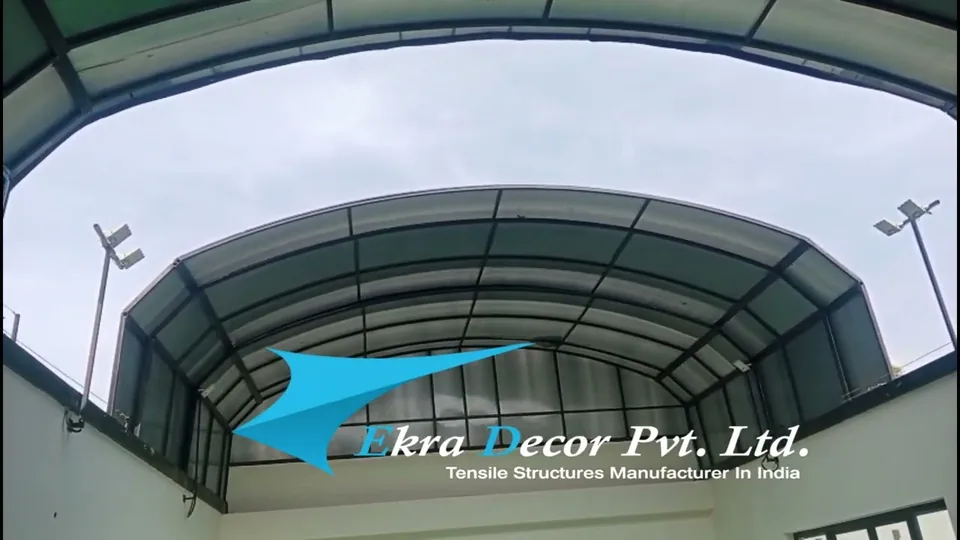
Cover for the spaces a plant has to keep open: docks, yards, staging areas, staff parking and the routes between blocks.
Everything about industrial structures- Largest single roof
- ≈ 20,000 m², Siemens Goa
- Working for plants
- Since 1998
- Underneath
- Daylit and open-sided
Almost every industrial enquiry is one of these six.
Which form suits the site.
Space that has to be covered but cannot be enclosed. That is most of an industrial site.
Loading docks
A roof over the dock face and truck standing area, so loading carries on through the monsoon. The span is set by how far back a reversing trailer needs headroom.
Staging and yard storage
Covered holding for inbound material, finished goods and packaging. Closed overhead, open on the sides for forklifts.
Staff car parking
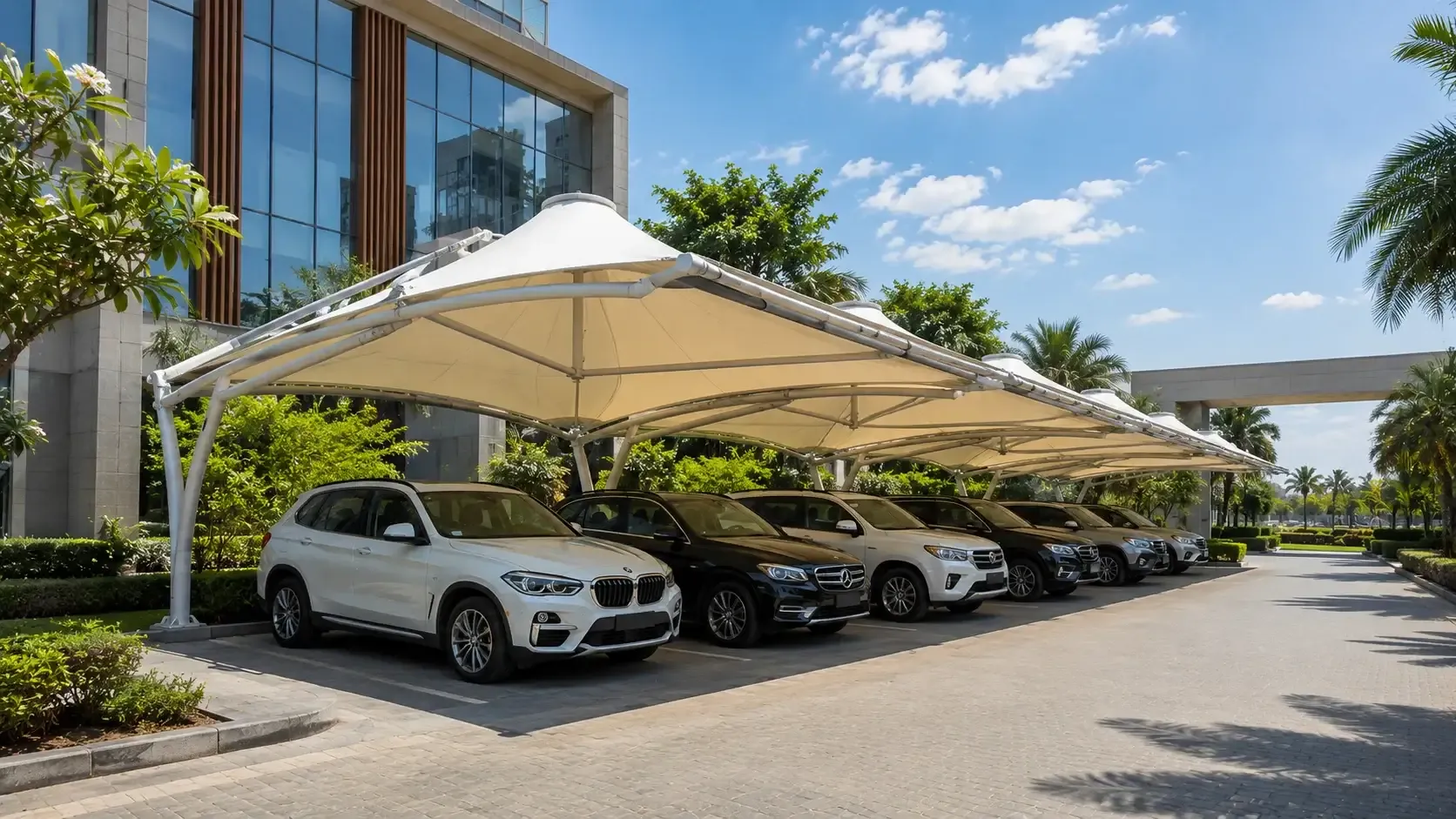
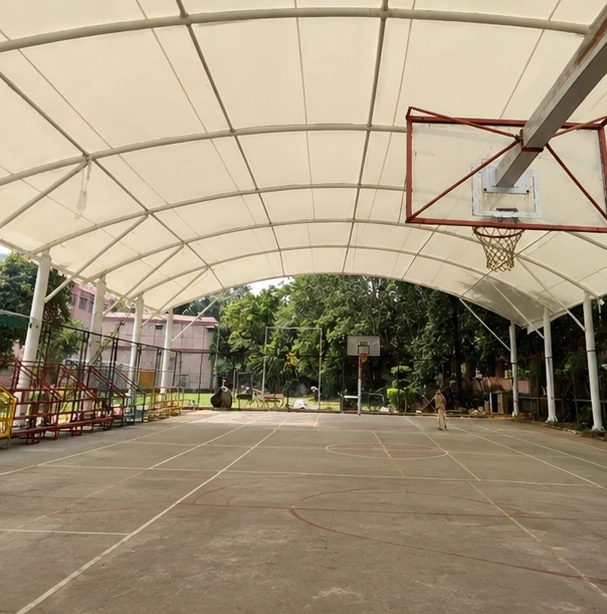
Cantilever shades built as one repeating bay, so a 200-space lot is a production run, not a bespoke job.
Two-wheeler parking
Usually the largest single requirement on an Indian plant, with the column line kept out of the wheeling route.
Inter-block walkways
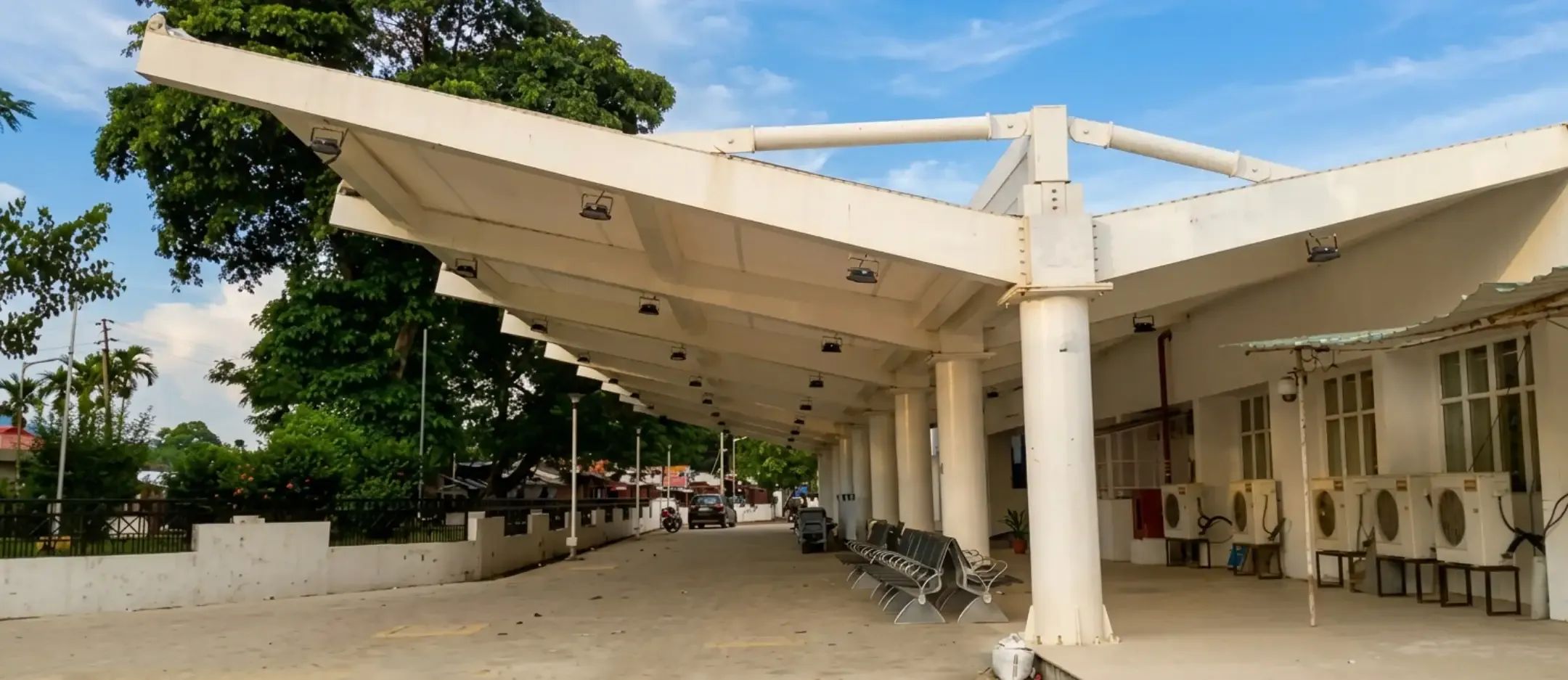
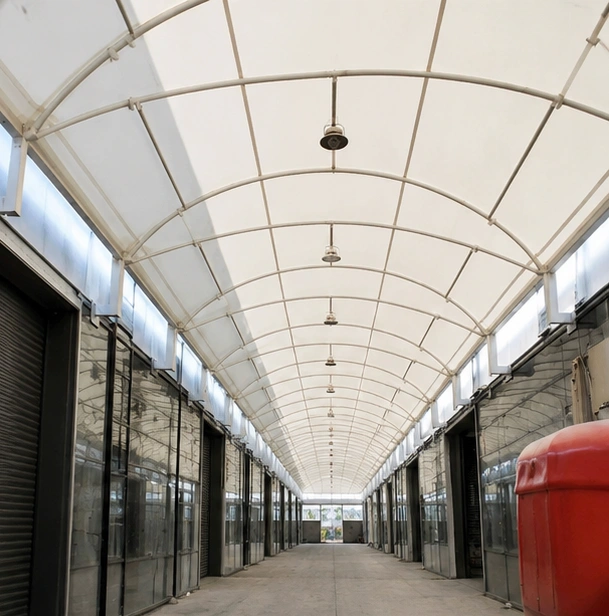
Covered routes between production, stores, canteen and admin, used every shift.
Gate and forecourt canopies
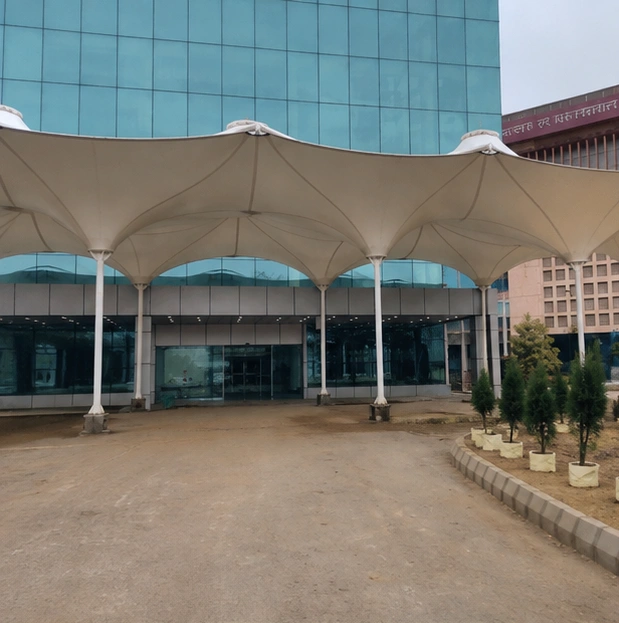
Gatehouse, weighbridge and reception covers: the first thing a visitor or auditor sees.
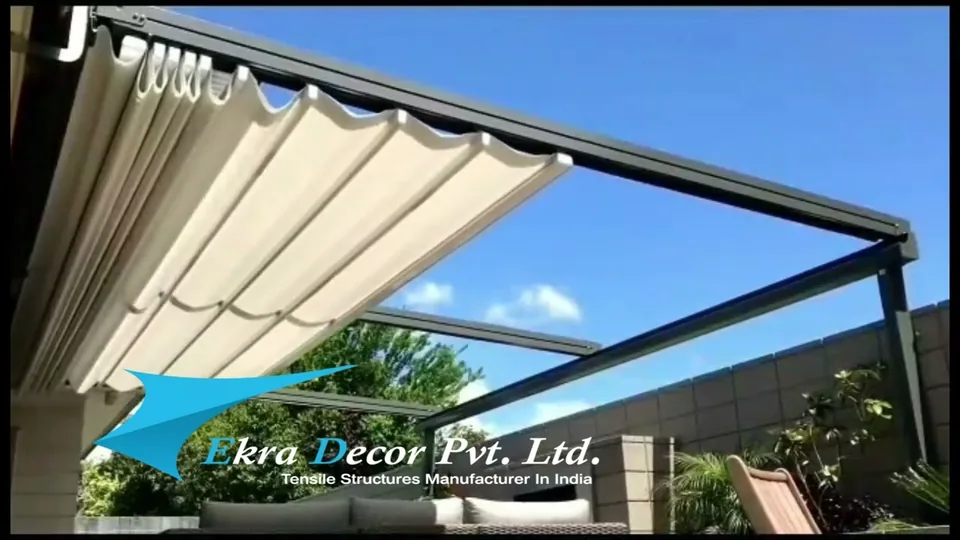
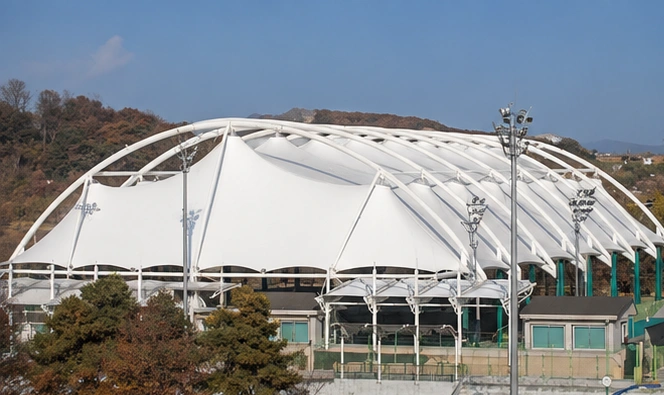
| Structure | Repeating cantilever or portal bays, barrel vaults, or a single large-span roof |
|---|---|
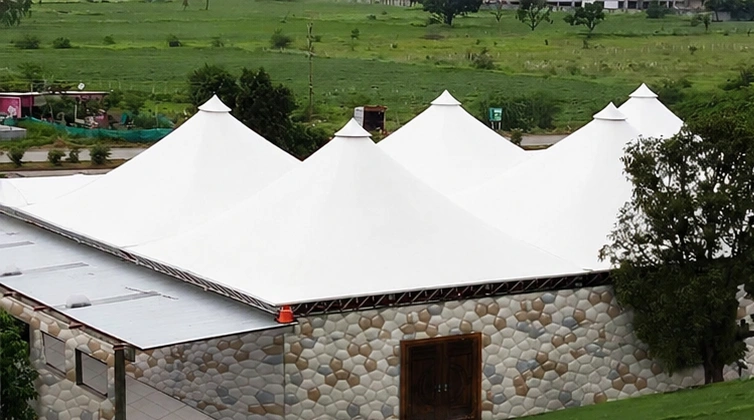
| Membrane | PVC-coated polyester for most areas; PVDF where dust and soiling make cleaning a concern |
| Frame | Galvanised steel; painted or duplex-coated in coastal and chemical atmospheres |
| Clearances | Set from truck, trailer and forklift movements, with columns kept out of the working routes |
| Foundations | Isolated pads in most ground; raft or piles where the soil calls for it |
| Warranty | One year on structure and workmanship; five to fifteen years on the membrane, by fabric grade |
What does industrial structures in Pune cost?
Most installed projects fall between ₹280 and ₹2,500 per sq ft plus GST, set by span, form, steel weight, foundations, membrane grade, height and site access. There is no flat Pune premium; distance and access appear only in the logistics line of an itemised quote.
Start a project
Covering something in Pune? Send us the size and the site.
Tell us where it is, roughly how big, and what it has to cover. We come back with questions, options and the next step, which is usually a site survey.
or call +91 93159 45187