

Pune — Maharashtra
Walkway Canopies in Pune.
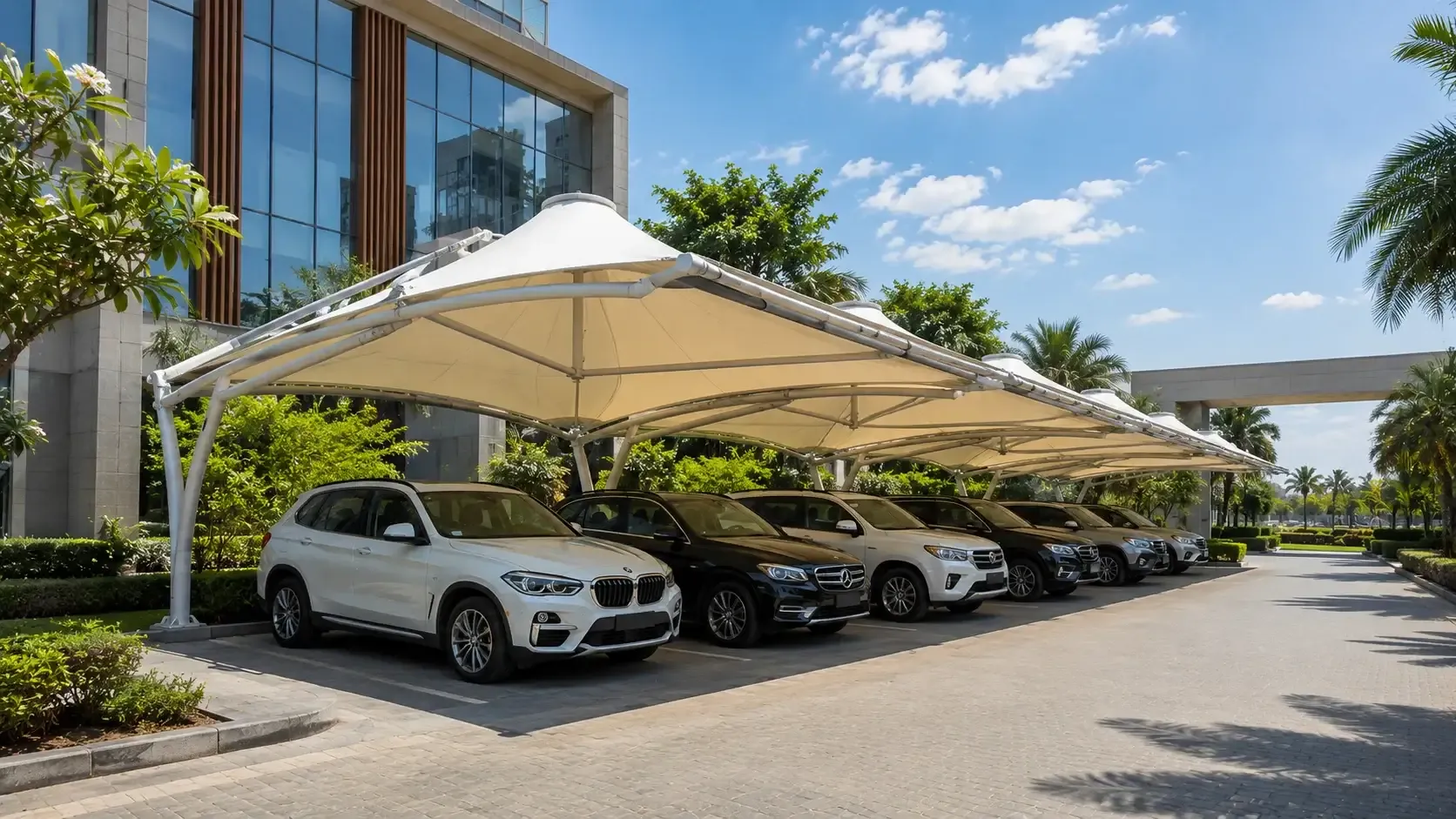
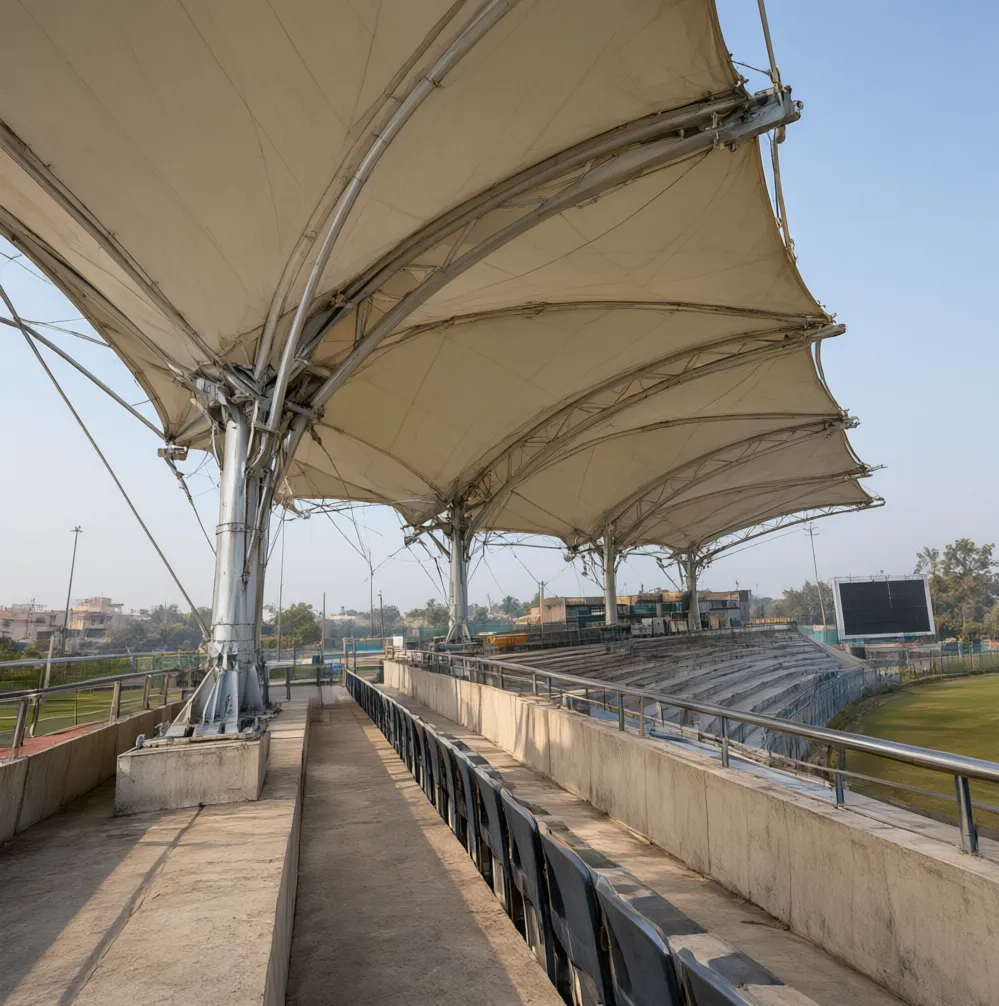
A walkway canopy is a long tensile roof carried on one line of columns at the side of a path, so the walking width stays clear. In Pune, the design is driven by monsoon rain and the gusts off the Ghats, rather than heat.
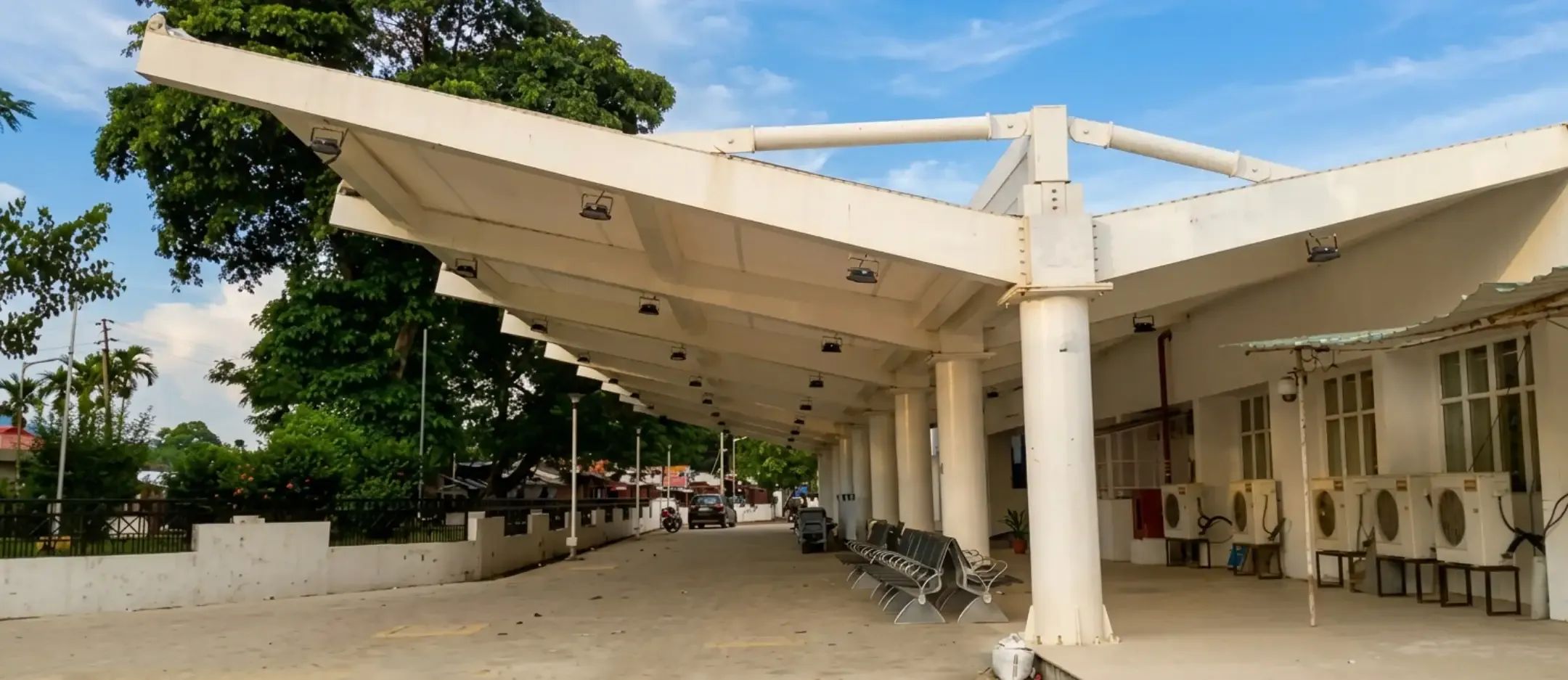 Walkway canopy
Walkway Canopies in Pune
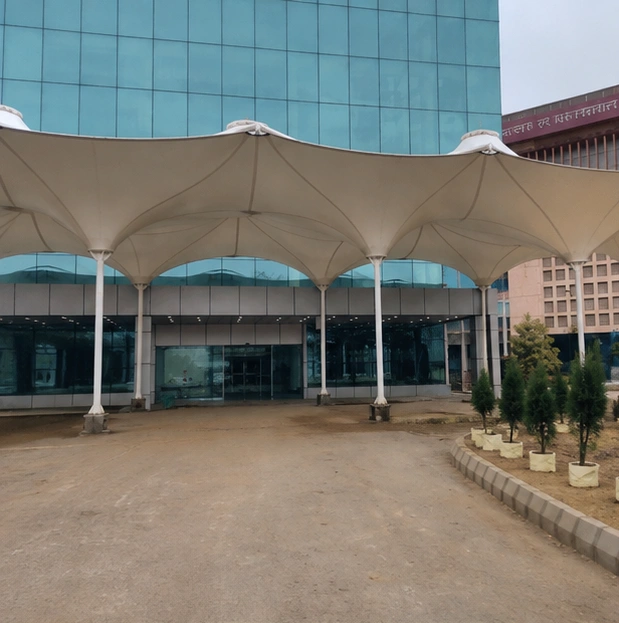
A walkway canopy in Pune spans between buildings on campuses and industrial sites where Ghat gusts cross open ground, so uplift governs. Basalt usually allows shallow footings, which keeps the work quick and the disruption short on a site that stays in use.
In short
Reviewed October 2026
Do you build walkway canopies in Pune?
Yes. A walkway canopy is a long tensile roof carried on one line of columns at the side of a path, so the walking width stays clear. The membrane falls to the supported edge and drains away from the route. It suits campuses, hospitals, plants and airports, and can be extended bay by bay as a site grows. For Pune specifically, monsoon rain and the gusts off the Ghats, rather than heat sets the engineering, and pVDF-lacquered PVC handles the industrial-belt dust; PTFE for landmark roofs.
- City
- Pune, Maharashtra
- What drives it
- Monsoon rain and the gusts off the Ghats
- Usual membrane
- PVDF-lacquered PVC handles the industrial-belt dust
- Price range
- ₹280–2,500 / sq ft + GST
- ISO 9001:2015Certified manufacturer
- Since 1998Building membrane structures
- One teamDesign, fabrication and installation
- In writing1-yr structure, 5–15-yr membrane warranty
- ItemisedQuote after a site survey
Designing for Pune
What the site does to the design.
The design wind pressure is worked out for your exact site under IS 875 (Part 3), from its terrain, height and exposure. We do not take a city figure off a list.
A plateau climate: warm days, cool nights and a short hot season.
About 700 mm of monsoon rain on the city side, June to September, far more towards the Ghats.
Gusty winds funnelled off the Western Ghats.
- Ground
- Mostly Deccan basalt, good to build on. Weathered zones and black cotton soil in low-lying areas need investigating.
- What drives the design
- Monsoon rain and the gusts off the Ghats, rather than heat.
- Membrane
- PVDF-lacquered PVC handles the industrial-belt dust; PTFE for landmark roofs.
The structure
Walkway Canopies in detail.
Long, light covers for the routes people use every day: between blocks, to the gate, along a terminal kerb. The walking width stays completely clear.
Everything about walkway canopies- Columns
- One line, set to the side
- Drainage
- Away from the walking surface
- Extendable
- Bay by bay, as the site grows
Chosen from the width of the path and what is either side of it.
Which form suits the site.
One line of columns to the side of the path, and the membrane reaching across. Nothing to walk around.
Single-side cantilever
One column line along one edge, the roof reaching across the path. The default, with nothing in the walking width.
Central spine
A row of columns down the middle with the membrane falling both ways, for a wide walkway or a covered street.
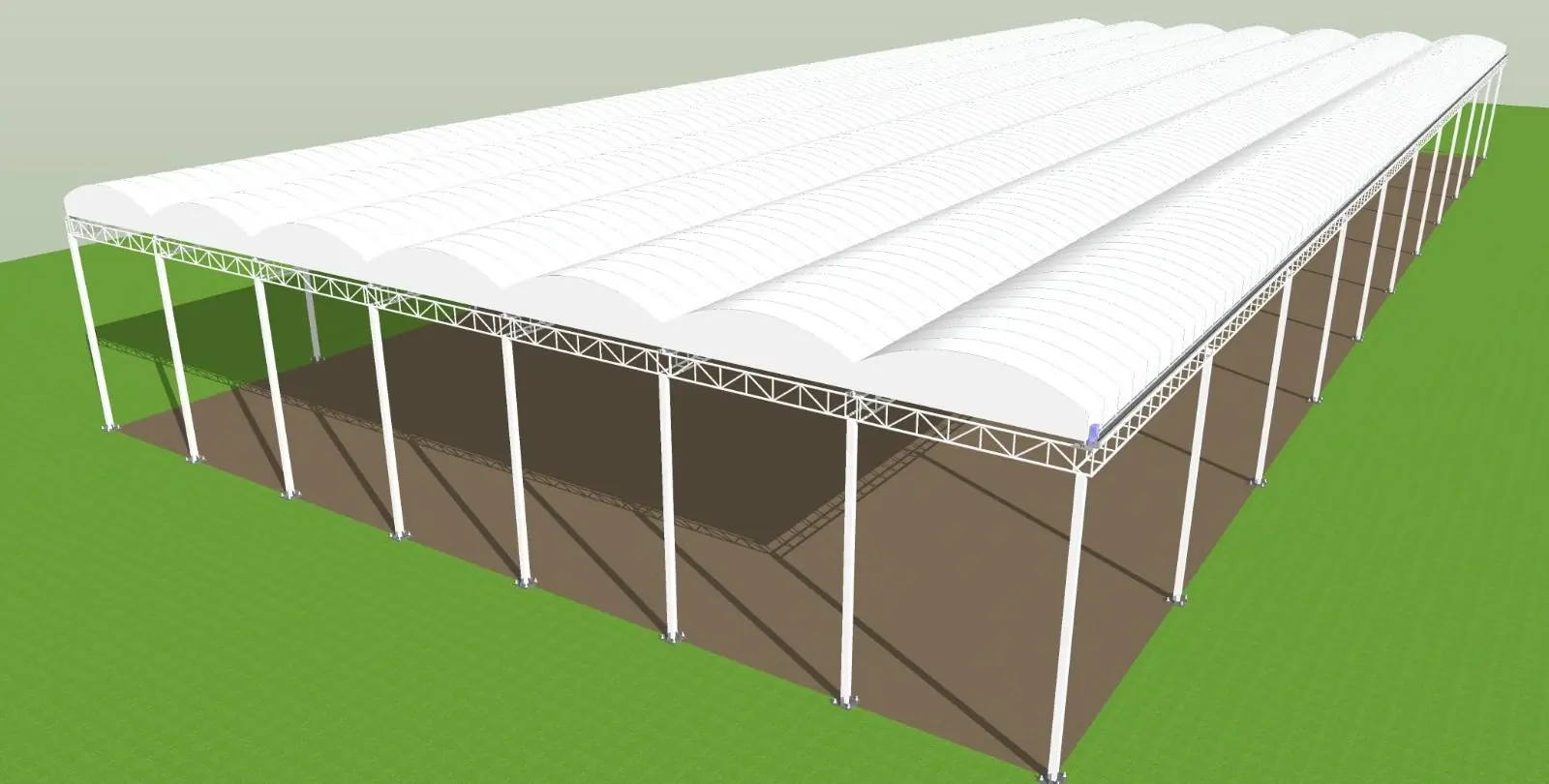
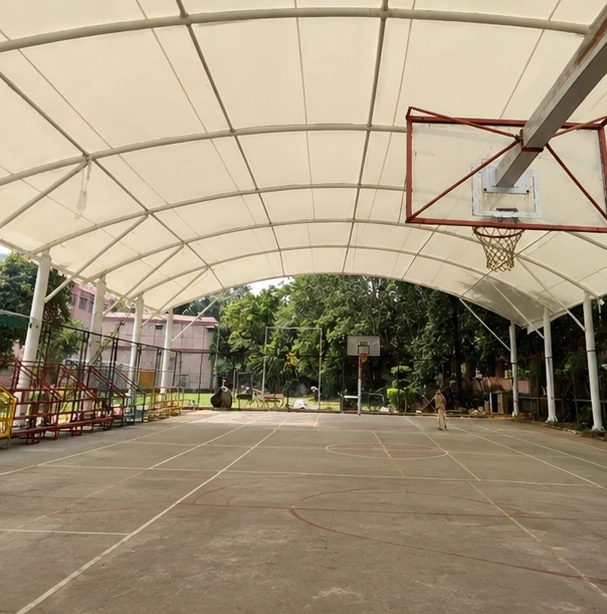
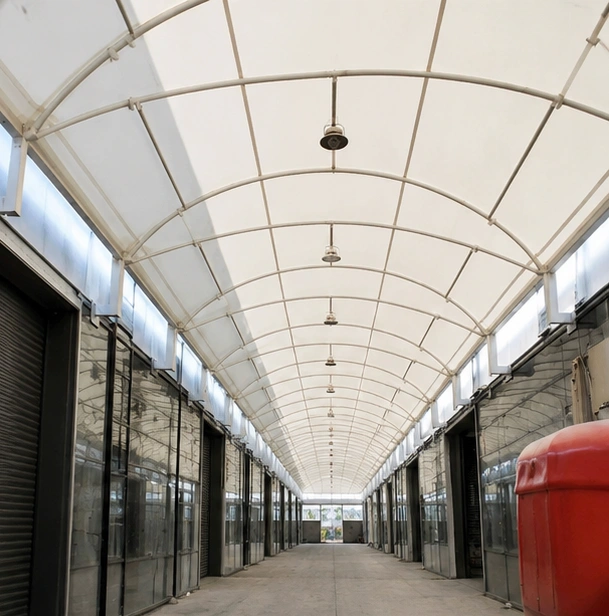
Barrel vault
A continuous arched membrane tensioned on ridge and edge cables: a soft, repeating line over a long run.
Link between buildings
A canopy spanning the open gap between two blocks, tied into both structures.
| Structure | Single-side cantilever, central spine, barrel vault, or a link between blocks |
|---|---|
| Width and height | Set from the pedestrian flow and any wheelchair, trolley or stretcher use |
| Membrane | PVC-coated polyester for most work; PVDF for a longer-lasting finish; PTFE-glass where a fire class or permanence is required |
| Frame | Light galvanised steel column line and roof steel, painted for industrial or coastal sites |
| Drainage | To the supported edge and a gutter, clear of the path |
| Warranty | One year on structure and workmanship; five to fifteen years on the membrane, by fabric grade |
Also built in Pune
Start a project
Covering something in Pune? Send us the size and the site.
Tell us where it is, roughly how big, and what it has to cover. We come back with questions, options and the next step, which is usually a site survey.
or call +91 93159 45187